New research suggests that the spread of toxic α-synuclein in Parkinson’s disease may depend on key transport mechanisms inside neurons. These findings hint at a potential strategy for slowing the disease’s progression.
Scientists have identified two proteins on the surface of neurons that might help Parkinson's disease spread in the brain. Researchers at Yale School of Medicine found these proteins, mGluR4 and NPDC1, could be crucial in how the disease progresses.
Parkinson's disease is a brain disorder where neurons slowly die. This loss of cells is linked to a buildup of α-synuclein, a protein that folds incorrectly and can move from one neuron to another.
We're a new kind of news feed.
Regular news is designed to drain you. We're a non-profit built to restore you. Every story we publish is scored for impact, progress, and hope.
Start Your News DetoxHow Parkinson's Spreads
Scientists haven't fully understood how α-synuclein moves between cells. A new study in Nature Communications suggests that mGluR4 and NPDC1, two proteins on cell membranes, help carry misfolded α-synuclein into healthy neurons. This happens after the protein is released by dying neurons.
Dr. Stephen Strittmatter, a lead author and chair of Neuroscience at Yale, believes this discovery could lead to better treatments for Parkinson's. He explained that misfolded α-synuclein is a key sign of the disease. If we understand how it enters neurons, we might be able to block or slow the disease's spread.
Neurodegenerative diseases like Alzheimer's and Parkinson's are growing health concerns. The Parkinson’s Foundation estimates about 1.1 million people in the U.S. have Parkinson's, with nearly 90,000 new cases each year.
Parkinson's often causes movement issues like tremors, balance problems, and slow movement. These symptoms are linked to misfolded α-synuclein building up in brain cells that control movement. As the protein spreads, symptoms get worse.
Finding the Transport Proteins
One idea is that α-synuclein enters new cells by attaching to proteins on the cell surface. To test this, Strittmatter and his team created 4,400 groups of cells. Each group was designed to show different surface proteins. They then checked which ones bound to misfolded α-synuclein.
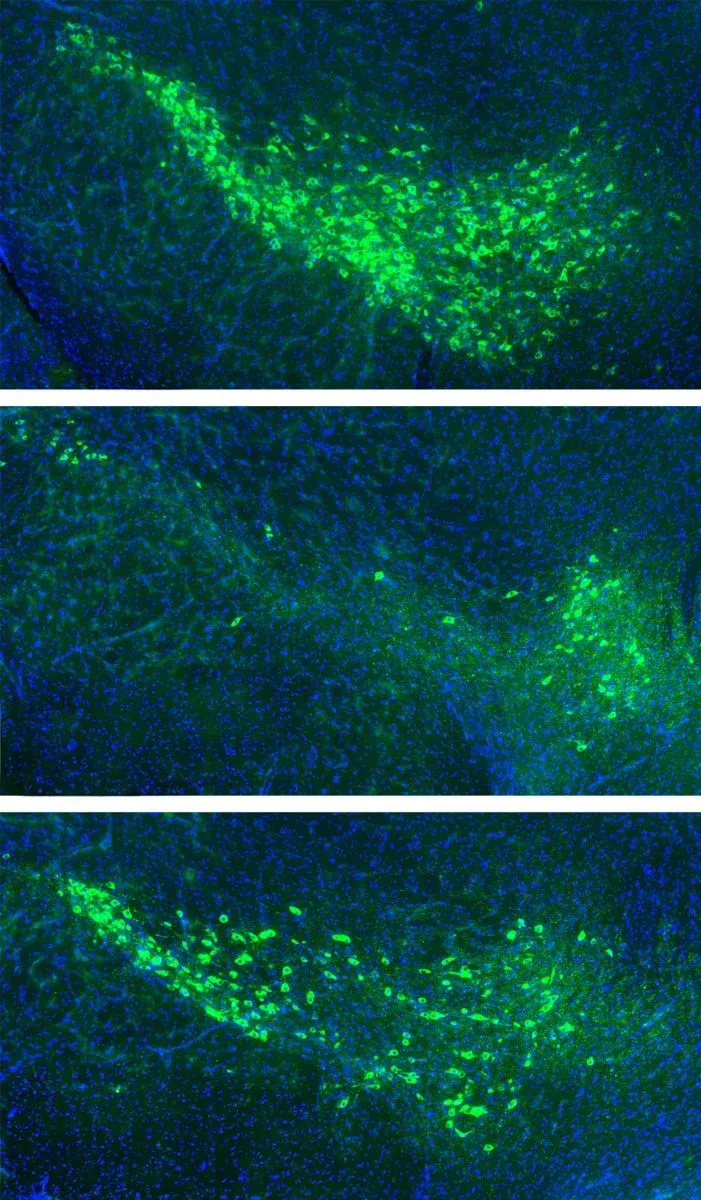
Most surface proteins did not bind to it. However, 16 did, including two found in human dopamine neurons. These neurons are in the substantia nigra, the brain area that breaks down in Parkinson’s disease. The researchers found that these two proteins, mGluR4 and NPDC1, carried misfolded α-synuclein into cells.
Stopping the Spread
These results made Strittmatter and his team think that mGluR4 and NPDC1 might help α-synuclein move between neurons. To learn more, they genetically changed mice so that either mGluR4 or NPDC1 did not work. Then, they introduced misfolded α-synuclein.
In normal mice, the misfolded α-synuclein built up in the brain, and the animals showed Parkinson’s-like symptoms. But mice without working mGluR4 or NPDC1 did not show the same pattern. The researchers also found that removing the genes for these two surface proteins in a mouse model of Parkinson’s reduced the risk of death and slowed symptom progression.
These experiments suggest that mGluR4 and NPDC1 work together to help move misfolded α-synuclein into neurons in mice.
Strittmatter believes these findings point to a new way to treat Parkinson’s disease. Current treatments mainly help manage symptoms but don't stop the disease from getting worse. Targeting the spread of α-synuclein directly could lead to treatments that slow or even stop Parkinson’s disease.
Such treatments will become more important as the population ages. Parkinson’s and other neurodegenerative conditions mostly affect older adults. As more Americans live longer, more people will face a higher risk of developing Parkinson’s disease.
Strittmatter noted, "We have an aging population. How we can stop or slow neurons from dying is an enormous problem. This is really the time to make some inroads into figuring out how to slow it down.”
Deep Dive & References
mGluR4–NPDC1 complex mediates α-synuclein fibril-induced neurodegeneration - Nature Communications, 2025