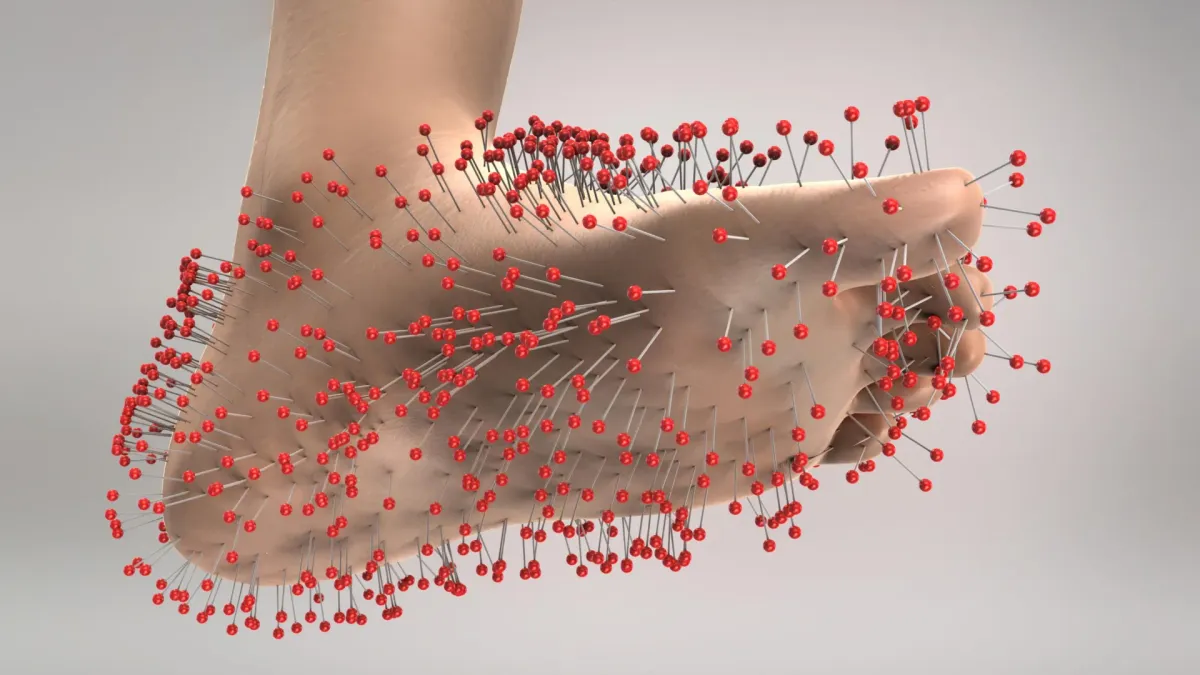
For millions of people with chronic nerve pain, even a light touch can be agonizing. Scientists at Duke University may have found a new way to stop this pain. They discovered that damaged nerves can be revived by giving them healthy mitochondria. Mitochondria are tiny structures inside cells that produce energy.
This new approach could offer a different way to treat chronic nerve pain. Instead of just blocking pain signals, it might fix one of the root causes.
Healthy Mitochondria Help Nerves Recover
The Duke team published their findings in Nature. They used human tissue and mouse models to see if adding mitochondria could help damaged nerve cells heal. The treatment significantly reduced pain linked to diabetic neuropathy and nerve damage from chemotherapy. In some cases, the pain relief lasted up to 48 hours.
We're a new kind of news feed.
Regular news is designed to drain you. We're a non-profit built to restore you. Every story we publish is scored for impact, progress, and hope.
Start Your News DetoxRu-Rong Ji, PhD, a senior author of the study, explained that giving damaged nerves fresh mitochondria can reduce inflammation and help them heal. This could ease pain in a completely new way.
This research adds to the idea that cells can share mitochondria. Scientists are seeing this as a natural support system. It might play a role in many conditions, including obesity, cancer, stroke, and chronic pain.
The Duke researchers focused on satellite glial cells. These cells surround and support sensory neurons. The study found that satellite glial cells can pass healthy mitochondria directly into sensory neurons. They do this through tiny tunnels called tunneling nanotubes.
When this transfer stops working, nerve fibers can break down. This damage can cause pain, tingling, and numbness. These symptoms often appear in the hands and feet, where nerve fibers are longest.
Ji noted that by sharing energy, satellite glial cells might help keep neurons from feeling pain. When researchers increased this mitochondrial transfer in mice, pain-related behaviors dropped by up to 50%.
A Key Protein Identified
The team also tried a more direct method. They injected isolated mitochondria from humans and mice into dorsal root ganglia. These are clusters of nerve cells that send sensory information to the brain.
The results depended on the quality of the mitochondria. Healthy donor mitochondria reduced pain. However, mitochondria from people with diabetes did not help.
Researchers also found a protein called MYO10. This protein is crucial for creating the tunneling nanotubes that allow mitochondria to move between cells.
Jing Xu, PhD, was the lead author of the study. Cagla Eroglu, PhD, a Duke professor known for her work on glial cells, also collaborated on the research.
A New Path for Chronic Pain Treatment
More studies are needed, including detailed imaging. This will help scientists better understand how nanotubes deliver mitochondria in living nerve tissue.
Still, these findings point to a previously unknown communication system between nerve cells and glial cells. This system could lead to new treatments for chronic pain. These treatments would target the source of the pain, rather than just hiding the symptoms.