


For decades, scientists studying black holes have had to cheat a little. They'd build mathematical models of how matter spirals into these cosmic drains, but they'd have to skip steps, make simplifying assumptions, ignore certain physics. It was like trying to understand traffic flow by pretending cars don't interact with each other.
Now, researchers have built the first simulation that doesn't cheat. Using exascale supercomputers and new algorithms, they've modeled how luminous black holes pull in surrounding matter under full general relativity—the actual physics, no shortcuts. And here's what matters: when they compared their simulations to real observations of black holes in the sky, they matched.
"This is the first time we've been able to see what happens when the most important physical processes in black hole accretion are included accurately," says Lizhong Zhang, the study's lead author. "These systems are extremely nonlinear—any over-simplifying assumption can completely change the outcome."
We're a new kind of news feed.
Regular news is designed to drain you. We're a non-profit built to restore you. Every story we publish is scored for impact, progress, and hope.
Start Your News DetoxWhy This Matters
The breakthrough solves a frustrating problem. Stellar-mass black holes—objects about 10 times the Sun's mass—can't be photographed directly like their supermassive cousins. We can only study them through the light they emit as they devour nearby stars. That light carries clues about what's happening at the edge of the black hole, but interpreting those clues required guessing at the underlying physics.
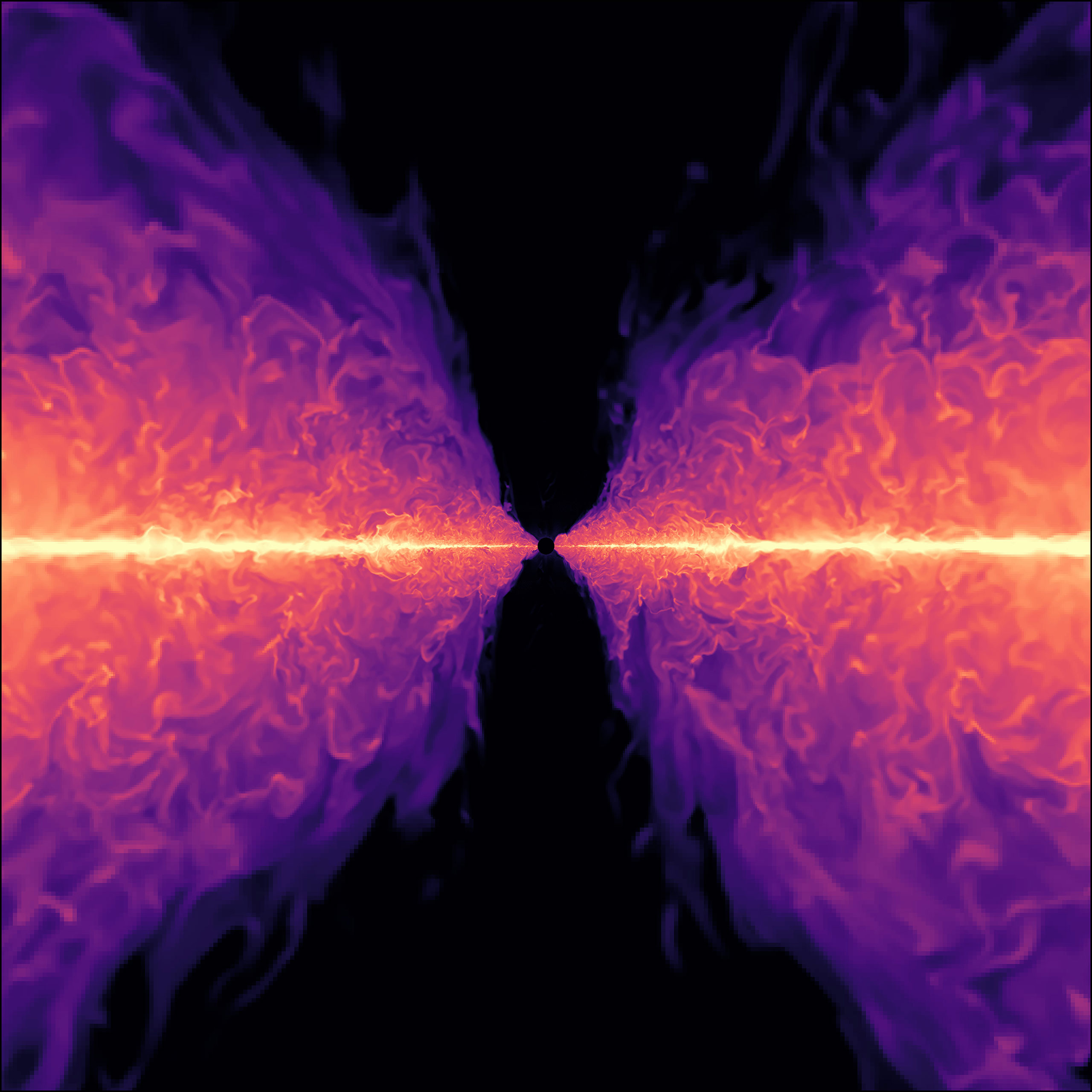
Previous models treated radiation as a simple fluid. The new approach actually solves the full equations of how radiation behaves in extreme gravity, accounting for how it really moves and interacts. When the team ran their simulations, they watched matter spiral inward, forming turbulent, radiation-dominated disks, launching powerful winds, and sometimes producing jets that shoot outward at near light-speed.
Most importantly: the simulations reproduced behaviors observed across multiple black hole systems in the sky—from ultraluminous X-ray sources to X-ray binaries. That consistency isn't coincidence. It suggests the model has finally captured something real about how these systems work.
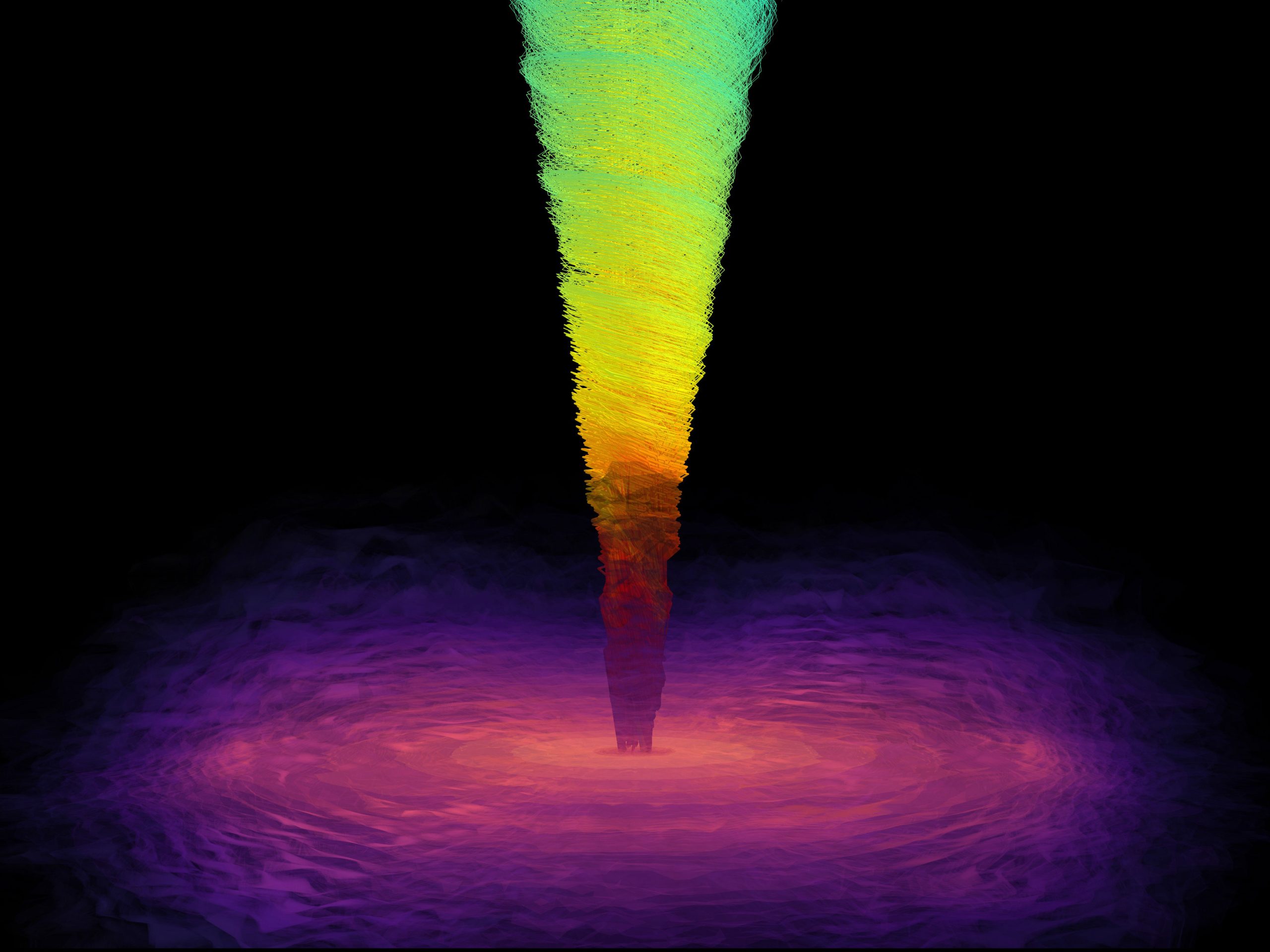
James Stone, co-author of the study, points out what made this possible: "What makes this project unique is, on the one hand, the time and effort it has taken to develop the applied mathematics and software capable of modeling these complex systems, and, on the other hand, having a very large allocation on the world's largest supercomputers to perform these calculations." In other words, this required both intellectual breakthrough and computational muscle—years of work to write code that could actually run these equations, then access to machines powerful enough to execute them.
The next step is testing whether this approach works for supermassive black holes—the monsters at the centers of galaxies that shape how entire star systems evolve. If it does, scientists will have a tool for understanding not just black holes themselves, but the cosmic machinery that builds galaxies.





