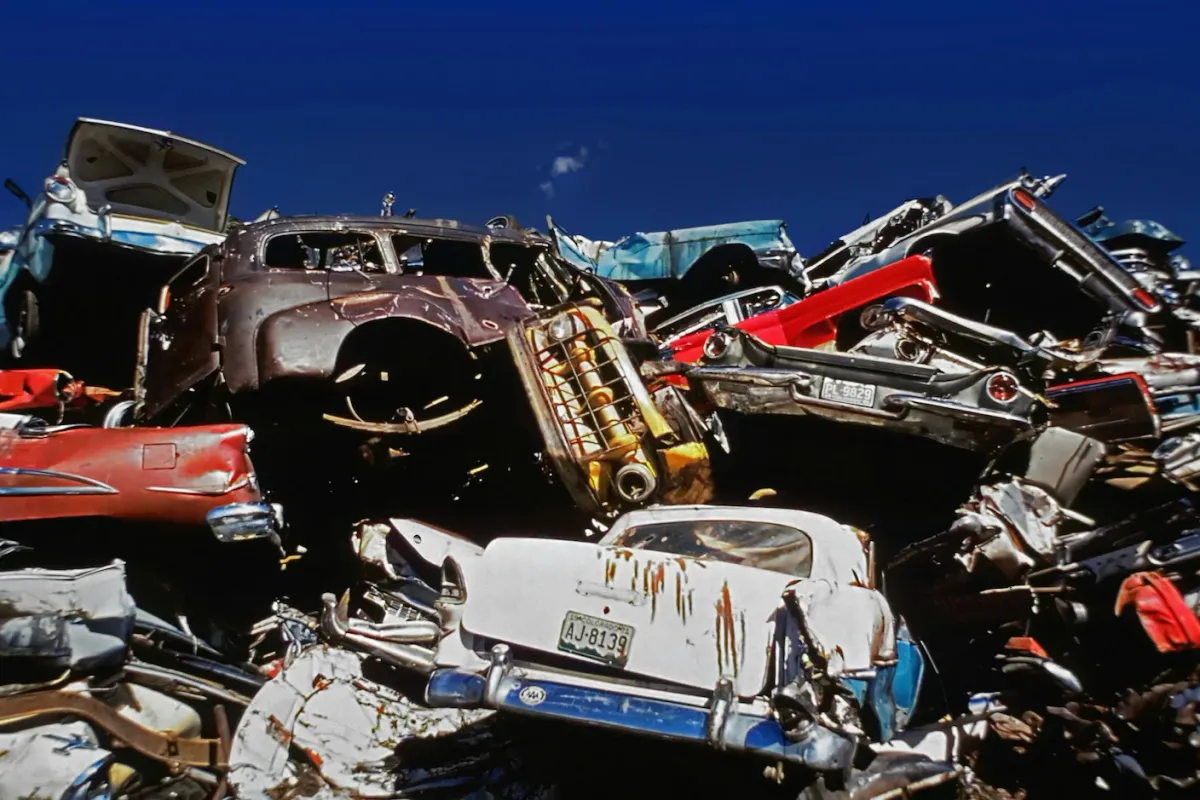
You just drove that shiny new gas car off the lot a year or two ago. Surely, getting rid of it now would be an environmental sin, right? A total waste of all that manufacturing energy?
Turns out, probably not. New research suggests that even if your gas-guzzler is practically fresh off the assembly line, ditching it for an electric vehicle (EV) is still the greener move.
The Surprising Math of the Switch
Here’s the thing: transportation is a massive climate culprit, and passenger cars are responsible for nearly half of those emissions. So, getting people into EVs, and fast, is pretty critical.
We're a new kind of news feed.
Regular news is designed to drain you. We're a non-profit built to restore you. Every story we publish is scored for impact, progress, and hope.
Start Your News DetoxNow, EVs themselves have a carbon footprint. Manufacturing them uses a lot of energy, sometimes more than building a traditional gas car. And their charging relies on the local electricity grid, which can be cleaner or dirtier depending on the energy mix. All of which makes the comparison tricky.
But a new study in Science dug into the lifetime emissions for over 400 different car models, crunching scenarios for vehicles across the US. The overwhelming finding? In most cases, switching to an EV, even from a very new gas car, cut total emissions. Elliott Campbell, the lead author from UC Santa Cruz, called it a "definitive study," noting that even in extreme scenarios, the EV comes out on top. He suggests switching "as soon as it's financially possible."
Previous studies already confirmed that new EVs beat new gas cars on lifetime emissions. But the big unknown was when to make the jump if you already had a gas car in your driveway.
When to Pull the Trigger
The researchers looked at everything: efficiency, battery size, mileage, manufacturing emissions, and the energy mix of the charging grid. The key insight? Emissions from building a gas car are a "sunk cost." What matters from that point forward is the fuel that car burns versus the emissions from building and charging a new EV.
Consider an average SUV. If you replaced it after just two years with an EV, on a typical US grid, you'd cut total emissions over 16 years by a whopping 44%. The emissions from building that new EV? Offset within three years. Let that satisfying number sink in.

In fact, scrapping a gas car after only one year cut lifetime emissions in 92% of cases, with an average saving of 58%. The benefit only disappears in really specific, rather gnarly situations. We're talking about a super power-hungry EV (like, say, a GMC Hummer electric SUV) charging on a grid that's practically fueled by coal.
There are a few other edge cases: if you barely drive, or if you have a plug-in hybrid. Plug-in hybrids, with their larger batteries, actually made things worse for cars, increasing lifetime emissions by 11%. So, maybe hold onto that one.
Of course, as Gregory Keoleian from the University of Michigan points out, most people aren't going to scrap a one-year-old car for shits and giggles. Those cars would likely be resold, potentially making used gas cars cheaper and pulling people away from even lower-emission options like public transit. More research is needed there, but it does bolster the case for more generous subsidies to help people scrap gas cars and keep them off the used market.
Until then, the takeaway is clear: if you're holding onto an older gas car, this study gives you some pretty solid science to consider an upgrade. Your conscience (and the planet) might thank you.