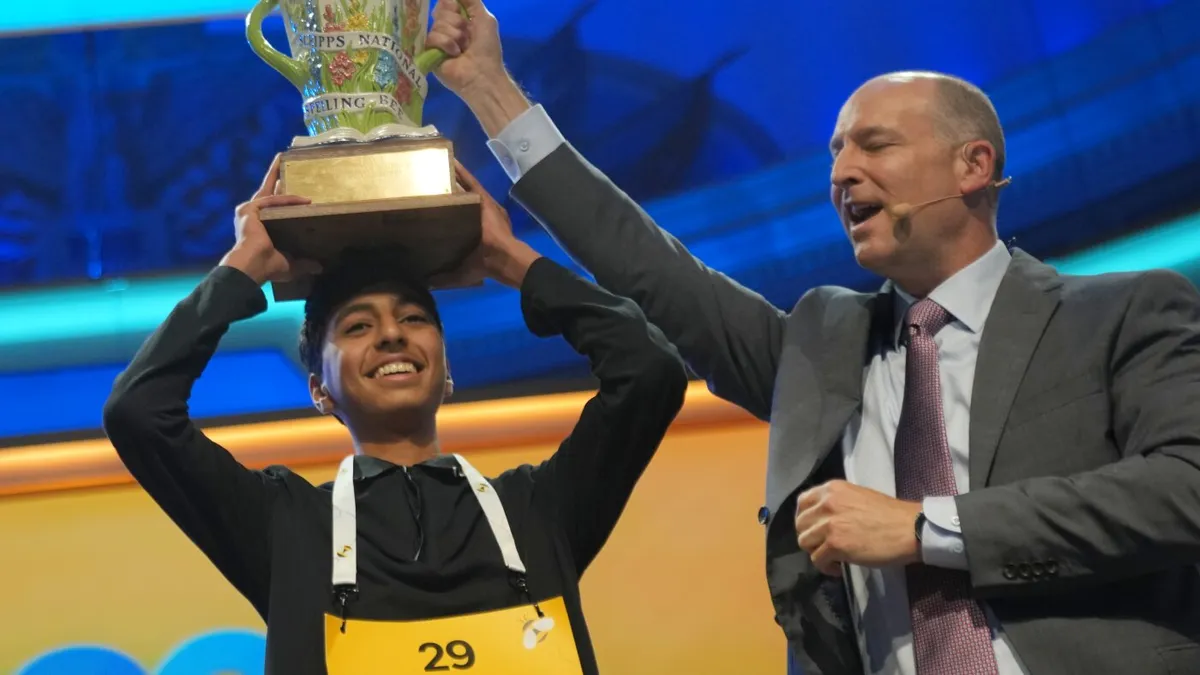
Shrey Parikh, a 14-year-old from Rancho Cucamonga, California, won the 2026 Scripps National Spelling Bee. The competition lasted three days, included 18 rounds, and ended with a fast-paced "spell-off."
A Nail-Biting Finish
On Thursday night, the nine finalists were narrowed down to two: Shrey Parikh and 12-year-old Ishaan Gupta from Jersey City, New Jersey. After both spellers correctly spelled their eighth word, a silver podium with a buzzer was brought onto the stage. This signaled the start of a spell-off.
Parikh admitted he wasn't thrilled about the spell-off. He felt regular spelling better showed a speller's skill. However, he accepted it, calmed himself, and focused on doing his best.
We're a new kind of news feed.
Regular news is designed to drain you. We're a non-profit built to restore you. Every story we publish is scored for impact, progress, and hope.
Start Your News DetoxDuring the spell-off, each speller had 90 seconds to spell as many words as possible. Parikh correctly spelled 32 words, while Gupta spelled 25. Parikh's final word was "cashaw," a type of plant. This set a new spell-off record. Parikh said that once he gets a word, he isn't nervous because it's then "all in my control."
Parikh will receive $52,500 in cash, reference books, flight credits, and a chance to meet an astronaut. The 8th grader has spent about five hours a day practicing spelling over the past year. He plans to spend more time on his other hobbies, like tennis and math competitions. Parikh's advice to others is to "just keep trying."
This was Parikh's third time at the bee. He placed 89th in 2022 and third in 2024.
The Bee Returns to Washington, D.C.
This year marked the first time in 15 years that the competition was held in Washington, D.C. It had previously been in Maryland and Florida. Organizers brought the bee back to D.C. for its 101st year. They noted the "prestige and honor" the city brings, along with access to its museums and monuments.
Executive Director Corrie Loeffler said it's a fitting prize for spellers to see the nation's capital, especially as the country celebrates 250 years. A total of 247 competitors, aged nine to 15, came to D.C. for "Bee Week." They represented all 50 states and places like Guam. Many spellers and their families enjoyed exploring D.C.'s historical sites.
Even those who didn't make the finals filled the 3,700-seat venue. Outside, attendees explored a timeline of the bee's history and took photos with people dressed as bees. Locals like Christy Kim and Maia Owens became "bee people" after attending. Erika Minor, who sold merchandise, noted that stuffed bee plushies sold out on the first day. She found the event exciting and plans to follow it in the future.
How the Competition Works
The competition included seven spelling rounds and one multiple-choice vocabulary round. The vocabulary round was added in 2021 to reduce the focus on memorization. Dr. Jaques Bailly, a former champion, has been the head pronouncer for over two decades. He gives each speller one word per round.
Spellers have 90 seconds and can ask for information like the word's origin and definition. If they spell a word incorrectly, head judge Mary Brooks rings a bell. She then offers words of encouragement. Logan Bailey, a 12-year-old, was praised for bringing "happiness to everyone in this room" with his cheerful reactions.
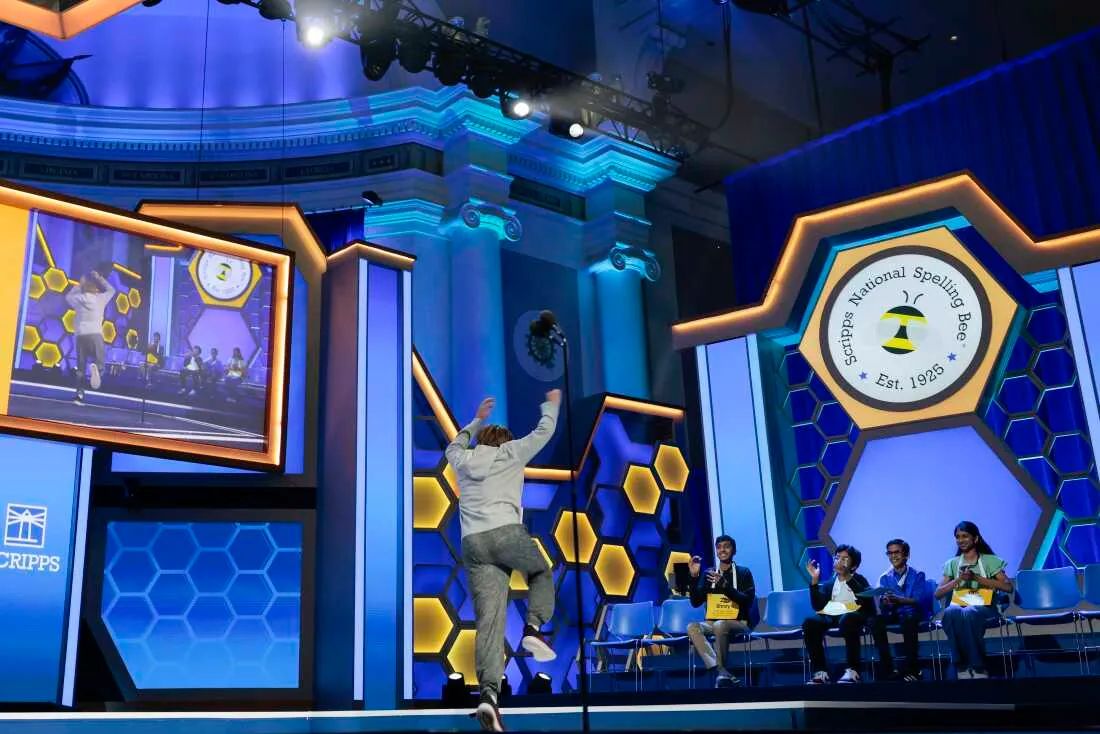
The words come from the Merriam-Webster Unabridged dictionary. Some words from Thursday's competition included Kadohadacho, quillai, hwyl, and Quincke tube. The first eliminations happened in the third round. By the end of the seventh round, only Parikh and Gupta remained, leading to the spell-off.
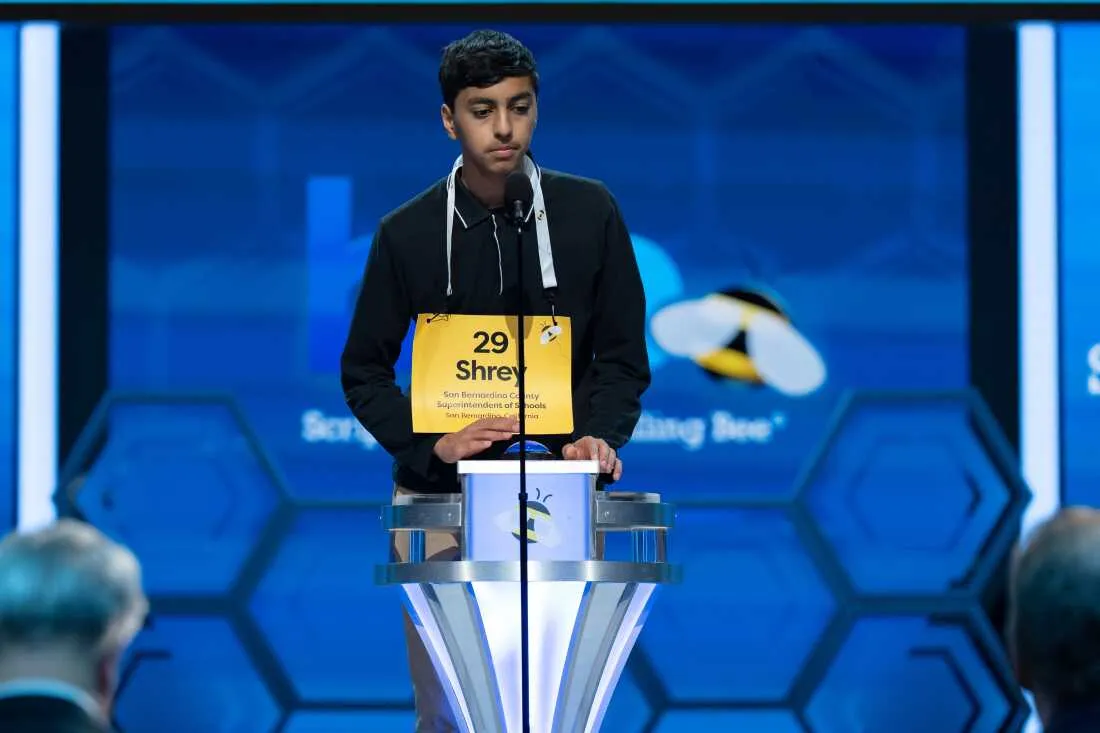
This was the third spell-off since the format was introduced in 2021. Harini Logan won the first spell-off in 2022 with 22 words. Bruhat Soma won in 2024 with 29 words.
Parikh said the hardest word for him was "Bhubaneswar," a city in India. He was 99% sure of the spelling but doubted himself. He stuck with his gut feeling. Winning words become part of the bee's history. Some past winning words include "croissant" (1970), "luge" (1980), and "Purim" (1983). More recent words have been less common, such as éclaircissement, abseil, psammophile, moorhen, and Murraya.