Peas and beans have always had a quiet advantage: they don't need fertilizer. They partner with bacteria in the soil that pull nitrogen from the air and hand it over. Wheat, corn, and barley can't do this. They're dependent on synthetic fertilizer — the kind that burns fossil fuels to produce and accounts for about 2% of global energy use.
Now researchers at Aarhus University have found the genetic switch that controls this ability, and it's simpler than anyone expected.
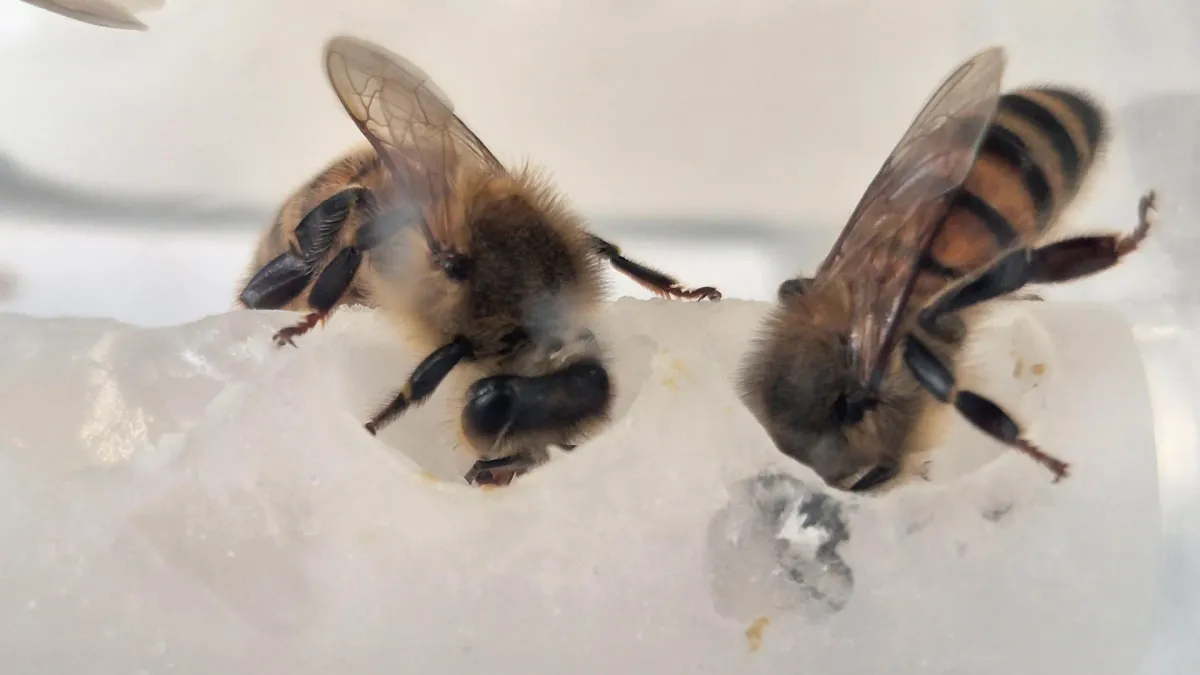
Kasper Røjkjær Andersen and Simona Radutoiu discovered that legumes (peas, beans, clover) have a special protein in their roots that acts like a bouncer at a club. When nitrogen-fixing bacteria arrive, this protein reads their chemical signals and decides: friend or foe. If friend, the plant lowers its immune defenses and lets the bacteria colonize its roots. The bacteria convert atmospheric nitrogen into a form the plant can eat. Both organisms benefit.
We're a new kind of news feed.
Regular news is designed to drain you. We're a non-profit built to restore you. Every story we publish is scored for impact, progress, and hope.
Start Your News DetoxThe breakthrough: this decision-making happens because of just two amino acids — two small building blocks — within the root protein. Change those two amino acids, and you flip the switch from "reject bacteria" to "welcome bacteria."
"We have shown that two small changes can cause plants to alter their behavior on a crucial point — from rejecting bacteria to cooperating with them," Radutoiu explains.
In the lab, the team made these changes in Lotus japonicus, a test plant. Then they tried it in barley. It worked. The mechanism that lets legumes self-fertilize suddenly became active in a cereal crop.
"It is quite remarkable that we are now able to take a receptor from barley, make small changes in it, and then nitrogen fixation works again," Andersen says.
This matters because synthetic fertilizer is expensive, energy-intensive, and a major source of agricultural emissions. If wheat, corn, or rice could grow without it — or with far less — the ripple effects would be enormous. Farmers would cut costs. Emissions would drop. The soil chemistry would shift. It's not a complete solution to agriculture's environmental footprint, but it's a lever.
There's a catch. The researchers have unlocked one door, but there are others. Legumes can form this partnership because they have other genetic machinery that cereals lack. "We have to find the other, essential keys first," Radutoiu notes. "Only very few crops can perform symbiosis today. If we can extend that to widely used crops, it can really make a big difference on how much nitrogen needs to be used."
The team is now hunting for those other keys. If they find them, the next phase would be testing whether these changes work in real soil, in real weather, across multiple growing seasons. Lab success doesn't always translate to the field. But the fact that a two-amino-acid tweak can trigger symbiosis in a crop that's never done it before suggests the fundamental biology is within reach.