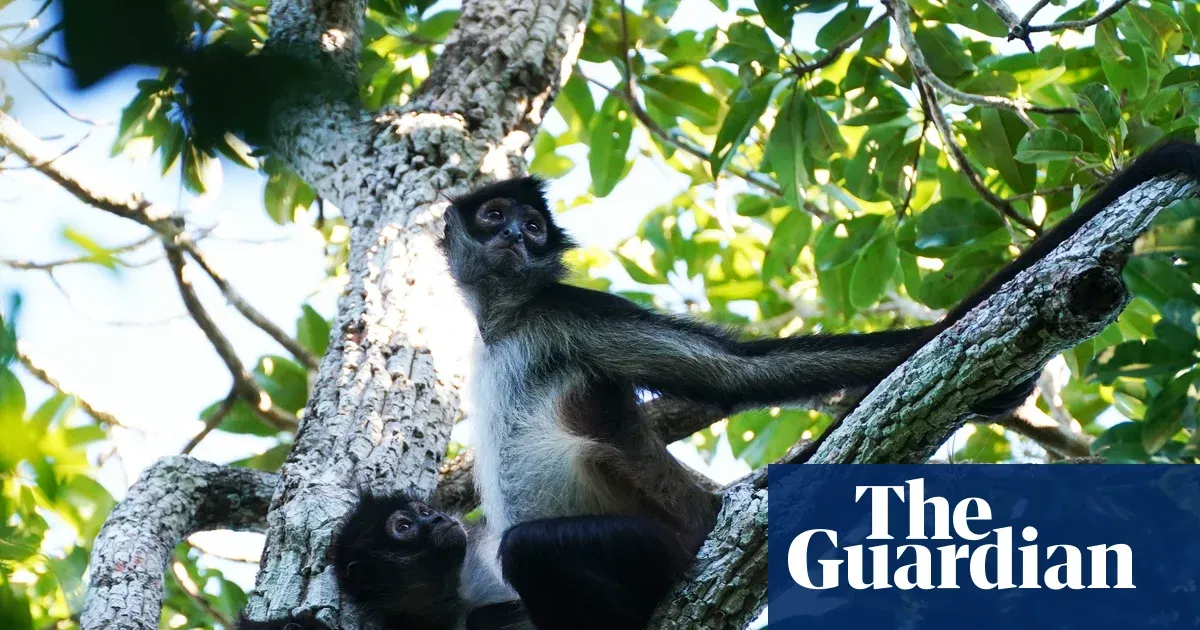
Spider monkeys have cracked something that looks a lot like a knowledge-sharing network. They split into smaller groups to explore different parts of the forest, then reconvene to pool what they've learned about where the best fruit trees are and when they'll ripen. It's not random wandering — it's a deliberate system for turning scattered information into collective intelligence.
Researchers tracking seven years of monkey movements in Mexico's Yucatán peninsula found that this fluid social structure serves a clear purpose. Some areas of the forest are known by multiple monkeys (the popular spots everyone knows about), while others are familiar to just one or two individuals (the hidden gems). When monkeys rejoin the larger group after exploring separately, they bring back different pieces of the puzzle. One subgroup might know where a fruit tree grows; another knows when that fruit will be ready to eat. Together, the group knows the forest better than any individual could alone.
"It's a clever system for sharing insider knowledge," explains Dr. Matthew Silk, an ecologist from the University of Edinburgh who led the study. "By constantly changing their subgroups, monkeys who know different parts of the forest can share information about where fruit is available."
We're a new kind of news feed.
Regular news is designed to drain you. We're a non-profit built to restore you. Every story we publish is scored for impact, progress, and hope.
Start Your News DetoxThe mathematics behind this is telling. The researchers used modeling to work out the optimal balance — and found that the monkeys have actually hit it. They need to spread out enough to scout new territory and gather diverse information, but reconnect frequently enough that knowledge doesn't get lost in isolation. Too much sticking together and they're redundantly covering the same ground. Too much splitting up and the information never gets shared.
"We've shown that there's an optimal middle ground between the monkeys sticking together and spreading out too far," says Ross Walker, a PhD student at Heriot-Watt University. "It's best when individuals explore different areas, but still reconnect often enough to pool what they've learned."
What's striking here isn't just that spider monkeys cooperate — many animals do that. It's that they've developed a system that actively generates new knowledge by combining what different individuals have learned. They're not just sharing a map; they're building one together, updating it with seasonal timing, and using that collective picture to feed the whole group more efficiently.
The findings, published in njp Complexity, suggest that this kind of distributed exploration paired with regular information exchange might be one reason spider monkeys have survived and thrived across Central and South American forests. As their habitats face pressure from deforestation, understanding how they navigate and share knowledge about their environment adds another dimension to why protecting their forests matters — we're not just saving a species, we're preserving a system of collective intelligence that took generations to develop.