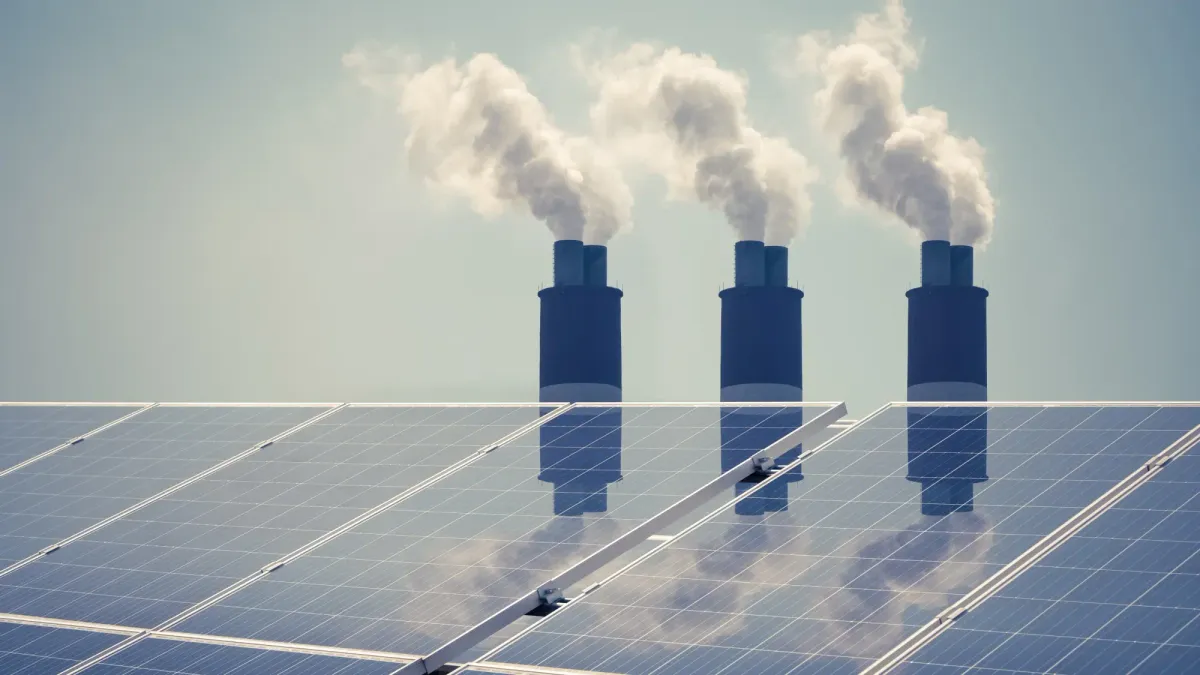
Data centers, the brains of our digital world, have a dirty little secret: they're energy hogs. By 2030, they could guzzle up to 17% of all U.S. electricity. And a third of that is just to keep the AI chips from melting down. Because apparently, even robots get hot under the collar.
Enter Ferveret, a startup that looked at the problem and thought, "You know what's really good at managing heat? Nuclear reactors." And thus, a surprisingly brilliant solution was born: cooling AI chips with zero water and way less power, all thanks to some atomic-level inspiration.
The Secret Sauce? Tiny Bubbles.
Ferveret's approach sounds like a spa day for servers: they submerge them in a special liquid. This isn't just any liquid; it's a heat-transferring superstar, far better than your average fan. The magic happens with its "Adaptive Phase Cooling" (APC) solution, which creates incredibly tiny bubbles right on the server's surface. These mini-bubbles then zip away, carrying heat with them faster than you can say "supercomputer."
We're a new kind of news feed.
Regular news is designed to drain you. We're a non-profit built to restore you. Every story we publish is scored for impact, progress, and hope.
Start Your News DetoxThey're not just playing around in a lab, either. Ferveret is already testing its tech with big names like CleanSpark and FuriosaAI. And the results? In a UCLA study, their APC system boosted computational power efficiency by 15% compared to other liquid cooling solutions. Pair it with Ferveret's power control system, and data centers can squeeze 35% more "tokens" (think: units of data) out of their AI models using the exact same amount of power. Let that satisfying number sink in.
Ferveret co-founder Reza Azizian, a former MIT nuclear engineering postdoc, explained that their mission is to make data centers as sustainable as possible. Which, when you consider the energy demands of AI, is basically a heroic quest.
From Reactor Cores to Server Racks
The genesis of this idea goes back to 2017 when Azizian visited a data center. He saw the massive, roaring fans sucking up 40% of the facility's power and realized there had to be a better way. He then teamed up with MIT professor Matteo Bucci, his former colleague in nuclear reactor heat transfer, to figure out how to apply decades of nuclear science to the burgeoning issue of overheating AI chips.
Because, as it turns out, the same principles that keep a nuclear reactor from going Chernobyl can also keep your ChatGPT queries running smoothly. Scientists have spent ages perfecting heat transfer in reactors because, well, it's pretty critical. Now, with AI chips getting denser and hotter, data centers are turning to liquid cooling, often by dunking chips into specialized fluids. Boiling liquid, it turns out, is incredibly efficient at this, as the phase change sucks a huge amount of energy (heat) away.
The challenge, of course, is managing all those bubbles and controlling the system. Ferveret's genius lies in using a nuclear reactor process called "subcooled boiling." This system uses a low-boiling-point liquid (and critically, no toxic PFAS "forever chemicals"). It creates smaller, more frequent bubbles that recondense quickly, making heat transfer incredibly efficient without all the operational headaches.
Ferveret delivers its APC system in small, modular boxes, each holding a single server. This makes them easier to deploy and maintain than the giant tanks often used in immersion cooling. Plus, their control software fine-tunes power to each server in real-time, optimizing energy use.
This tech also has a bonus superpower: it enables data centers to be built in remote, sunny locales. No water needed means you can set up shop where solar energy is abundant but H2O is scarce—think parts of Africa, the Middle East, or even the American Southwest. Because sometimes, the most sustainable solution is also the most unexpected.
Ferveret is currently expanding partnerships, including with Nvidia's Inception program. Their goal? To help the AI industry scale up without dragging the planet down. And if that's not a bright idea, we don't know what is.