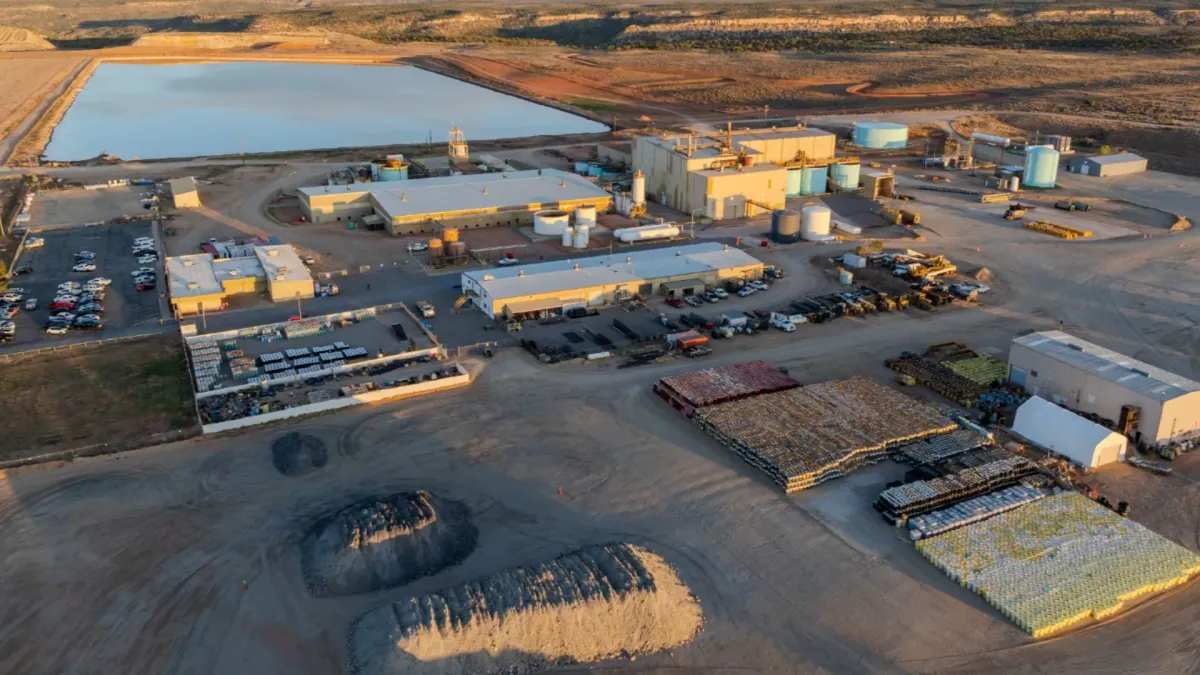
For decades, if you wanted heavy rare earth elements — the microscopic magic dust that makes your EV purr and your smartphone… well, smart — you mostly had one address: China. This created a bit of a bottleneck for Western manufacturers, especially those building the future of transportation, defense, and robotics. But one company in Utah is about to change that, and they're doing it with a $104 million expansion that's less about a new factory and more about geopolitical chess.
Energy Fuels is supercharging its White Mesa Mill in Utah, transforming it into one of North America's only facilities capable of processing both light and heavy rare earth oxides. Think of it as building a Western alternative to a supply chain that's been largely dominated by a single player. Their goal? A complete "mine-to-magnet" pipeline, because apparently, that's where we are now.

The Heavy Lifting Begins
The White Mesa Mill already churns out a respectable 1,000 metric tons of neodymium-praseodymium (NdPr) oxide each year. But by the end of 2027, they'll be adding the heavy hitters: terbium and dysprosium oxides. Samarium, europium, and gadolinium will follow in 2028. Why do these obscure-sounding elements matter? Because they make permanent magnets incredibly resilient to heat and high performance — crucial for everything from electric vehicle motors to advanced military systems. Without them, your EV might just melt down on a hot day, which is less than ideal.
We're a new kind of news feed.
Regular news is designed to drain you. We're a non-profit built to restore you. Every story we publish is scored for impact, progress, and hope.
Start Your News DetoxEnergy Fuels' President and CEO, Ross Bhappu, noted they've already stress-tested the tech. Now, it's time for the big leagues. Once the expansion is complete, the Utah facility aims to produce 20 metric tons of terbium, 120 metric tons of dysprosium, 140 metric tons of samarium, 20 metric tons of europium, and 140 metric tons of gadolinium oxides annually. Let that satisfying string of numbers sink in.
This isn't just about digging stuff out of the ground. The plan is to source raw materials from Australia's Donald Project, process them at White Mesa, then ship the rare earth oxides to Australian Strategic Materials' facilities in South Korea to be turned into metals and alloys. From there, they'll head to Vacuumschmelze’s magnet factory in Sumter, South Carolina. It’s a global dance of allied nations, all to get a magnet into your next car.

Energy Fuels estimates this entire endeavor will cost around $104 million, with government loans and grants doing most of the heavy financial lifting. And because apparently, you can never have too many rare earths, another expansion is already slated for 2029, promising to further boost production with materials from Madagascar, Brazil, and other global partners.
If all goes to plan, this integrated network could eventually pump out enough permanent magnets for up to six million electric or hybrid vehicles every single year. Or, if you prefer, four million humanoid robots (because of course) and thousands of offshore wind turbines. Suddenly, those obscure elements don't sound so obscure anymore, do they?