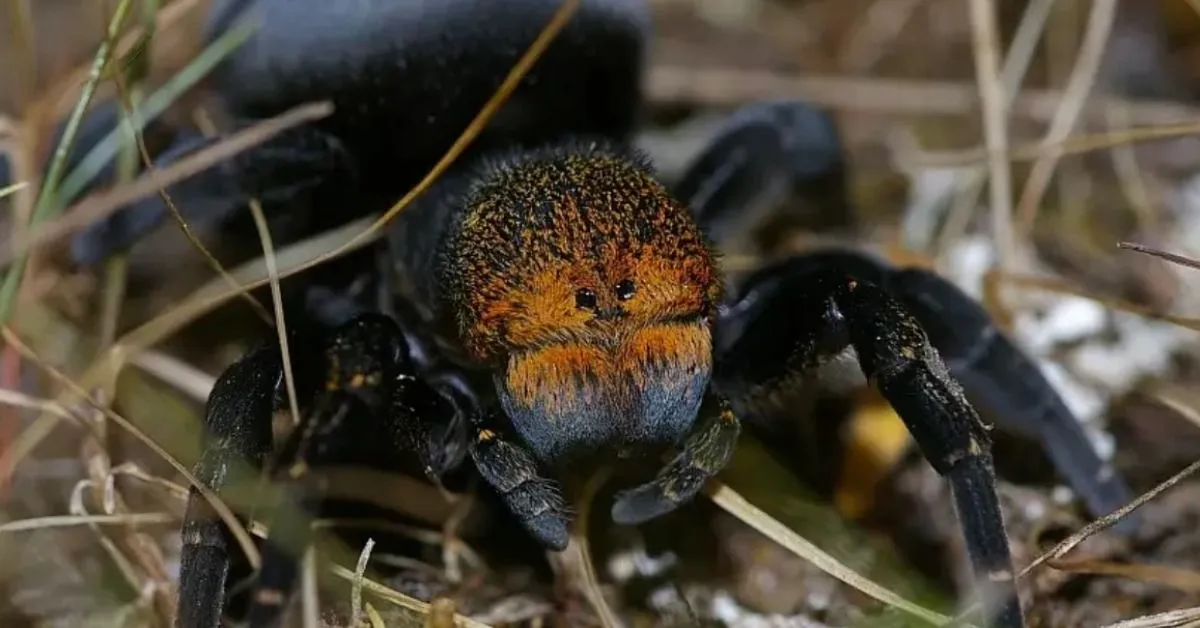
A spider with a glossy red head and body has turned up in the cork oak forests of southern Morocco—and it's unlike anything scientists have documented before.
The newly identified Eresus rubrocephalus belongs to a family of spiders known as velvet ladybirds, named for their uncanny resemblance to ladybird beetles. These spiders are already celebrated among naturalists for their jewel-like appearance. But this Moroccan find stands out even within that striking group: its deep red head, front body, and mouthparts are completely new to the scientific record. Researchers combing through decades of literature on the genus found no European, North African, or Asian species with this particular combination of features.
The discovery matters beyond aesthetics. Ladybird spiders are efficient hunters, trapping beetles and ants in vertical silk-lined burrows that they dig into lowland heathland soil. In doing so, they help regulate local insect populations—a quiet ecological service that depends on having healthy populations in the first place.
We're a new kind of news feed.
Regular news is designed to drain you. We're a non-profit built to restore you. Every story we publish is scored for impact, progress, and hope.
Start Your News DetoxA family under pressure
That's where the urgency comes in. Across Europe, these spiders have faced steep declines. Habitat loss has hit populations in Sweden, Germany, and the UK particularly hard. One UK species, Eresus sandaliatus, vanished entirely for over 70 years, only to be rediscovered in 1980. That rediscovery sparked conservation work that has since established 19 populations and bred nearly 1,000 individuals—a genuine recovery story, though the species remains vulnerable.
The newly described Eresus rubrocephalus now joins a genus that scientists are working to understand and protect. There are 38 known velvet ladybird species scattered across North Africa, southern and central Europe, the Middle East, and Asia. Each one fills a specific ecological niche in its region. The fact that a new species was hiding in Morocco's cork forests suggests there's still more to learn about where these spiders live and how to keep them there.
The researchers behind this discovery are already calling for wider surveys across different regions—a signal that the real work is just beginning. Finding a new species is a reminder that even in well-studied parts of the world, nature still has surprises. It's also a reminder that protecting those surprises requires paying attention to the places where they live.