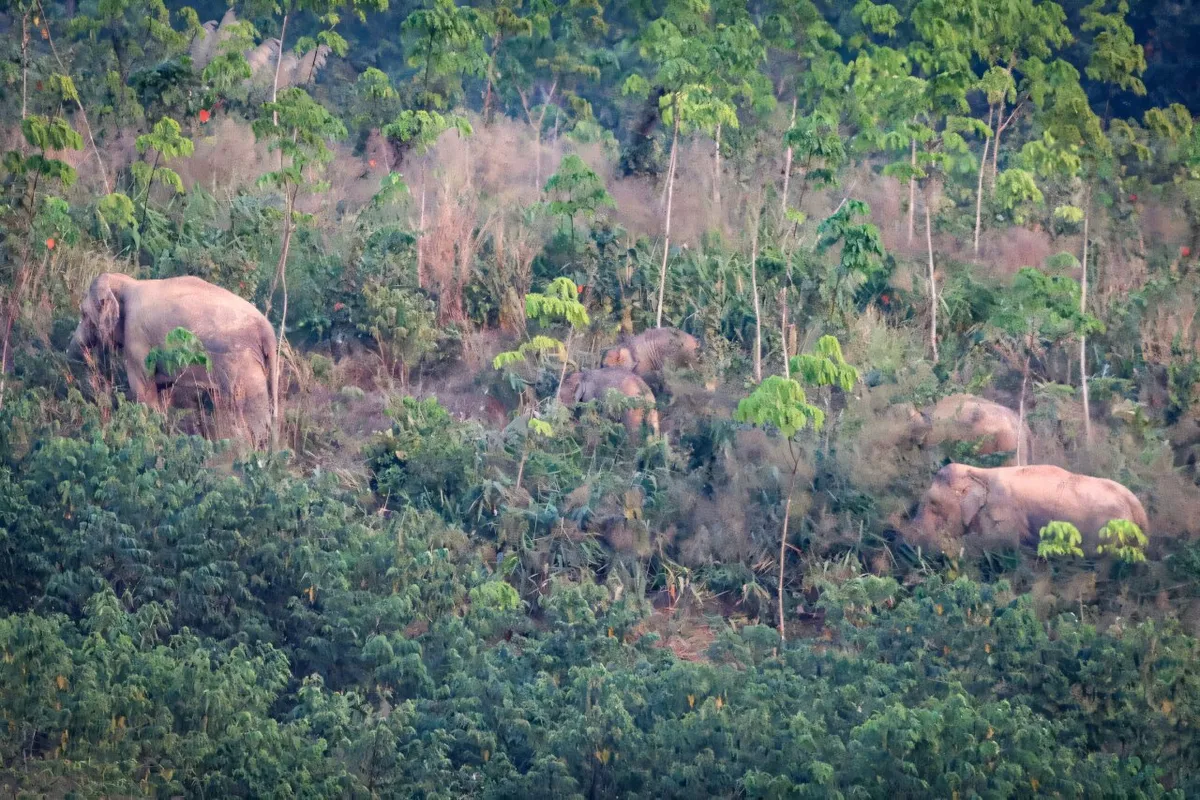
Thailand just administered a contraceptive vaccine to wild elephants for the first time—a pragmatic response to a collision between conservation and coexistence that's turning deadly.
Three female elephants in southeastern Trat province received the shots this week via dart gun, no anesthesia needed. It's part of a larger effort to slow a population boom that's creating genuine danger. In five eastern provinces, wild elephant numbers are growing at 8% annually, nearly triple the rate elsewhere in Thailand. Since 2012, human-elephant conflict has killed almost 200 people and more than 100 elephants.
The numbers tell the story. Thailand's wild elephant population jumped from 334 in 2015 to almost 800 last year—a 140% increase in less than a decade. Add thousands more in captivity, and you have a situation where more elephants means more encounters with human settlements, farms, and roads. "If we let this continue, it will cause more conflict between humans and elephants in the long term," said Sukhee Boonsang, a director of Thailand's Wildlife Conservation Office.
We're a new kind of news feed.
Regular news is designed to drain you. We're a non-profit built to restore you. Every story we publish is scored for impact, progress, and hope.
Start Your News DetoxThis isn't a quick fix born from panic. The vaccine was tested on seven captive elephants in Chiang Mai two years ago. The approach is careful: the three vaccinated elephants are being monitored with blood checks every six months to ensure they're healthy and living normally. Fifteen more doses are planned for other herds before the rainy season begins in May.
What makes this interesting is the tension it sits within. Asian elephants are Thailand's national animal and globally endangered—which means simply culling populations isn't an option most countries would accept. But doing nothing means more deaths, more crop raids, more desperate humans and desperate animals. The contraceptive vaccine is a middle path: it lets wild elephant populations stabilize without removing animals from the landscape.
There's a larger question underneath: whether Thailand can actually sustain this many wild elephants given how much of the country is now human-dominated. The vaccine buys time to answer that—and to figure out how to create enough space for both species to exist without constant collision.