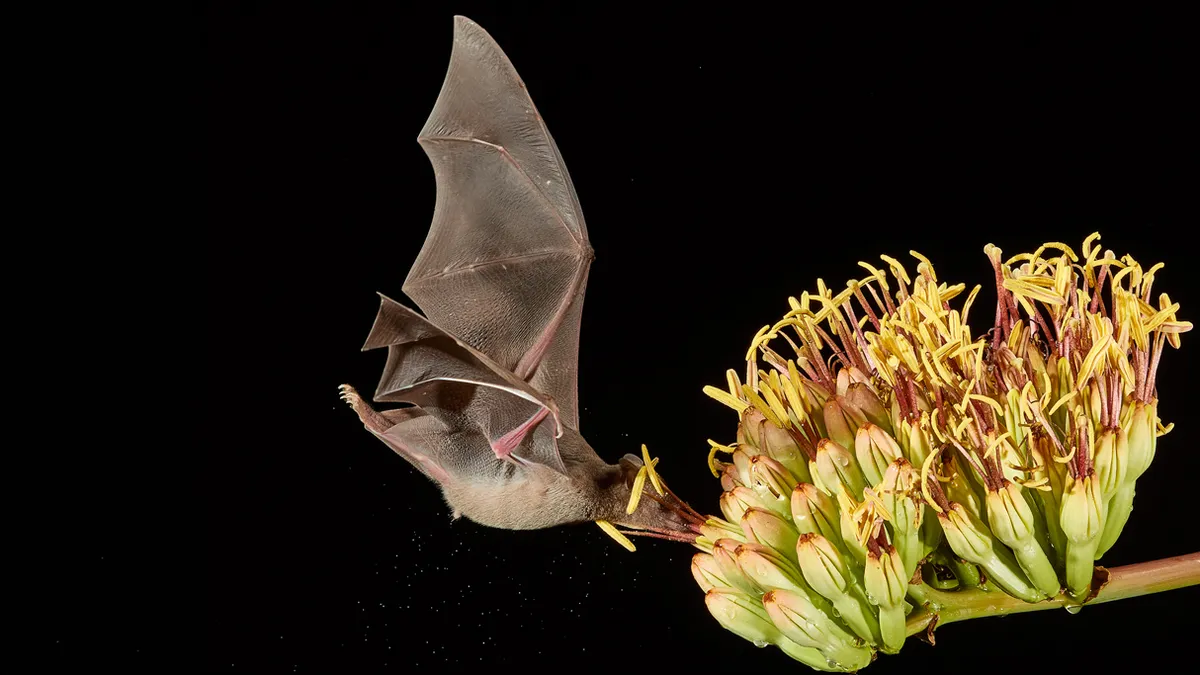
Next time you're sipping a margarita, spare a thought for the tiny, furry, and surprisingly critical hero behind your drink: the Mexican long-tongued bat. Turns out, these nocturnal nectar-fiends are essentially the unsung wingmen for agave plants, which, as you might know, are the backbone of tequila and mezcal.
These aren't your average garden-variety bats. We're talking about creatures with tongues that can stretch nearly three inches, perfect for diving deep into agave blooms to slurp up nectar. As they go about their sugary business, they inadvertently become tiny, flying pollen couriers, ensuring the agave plants can, you know, make more agave plants.

The Sugar Rush That Fuels an Industry
Biologist Peter Hudson managed to snap one of these speedy pollinators in action back in 2019, deep in Arizona's Sonoran Desert. He described them as being "like little kids on a sugar rush" — which, if you've ever seen a kid after a birthday party, paints a pretty vivid picture. The bats' tongues aren't just long; they're covered in tiny, hair-like bumps called papillae, basically nature's perfect straw for maximum nectar intake.
We're a new kind of news feed.
Regular news is designed to drain you. We're a non-profit built to restore you. Every story we publish is scored for impact, progress, and hope.
Start Your News DetoxThey're not just agave connoisseurs, either. These bats diversify their diet with cactus flowers, soft fruits, and the occasional insect. Hudson, clearly a man dedicated to his craft, used a special movement trigger and flash to capture these blur-fast creatures on camera.
And why does all this matter beyond a cool photo? Because the demand for mezcal alone has skyrocketed by over 700% in the last decade. That's a lot of agave, and a lot of tiny bats working overtime. So, the next time you're raising a glass, remember the original party animals — the bats who keep the good times flowing.