For six months, snow seals the Tulail valley in the Himalayas. In this frozen silence, nine-year-old Zubeida dreams of becoming a doctor. Twelve-year-old Irfan wants to study solar energy. But there is no high school in their village. The path to their ambitions ends at eighth grade.
Amreen Qadir, an academic head in Srinagar, grew up in this valley. Her father became the first professor of commerce from Tulail—a man who walked through waist-deep snow to reach higher education. That journey gave her wings. But the girls she left behind remain grounded.
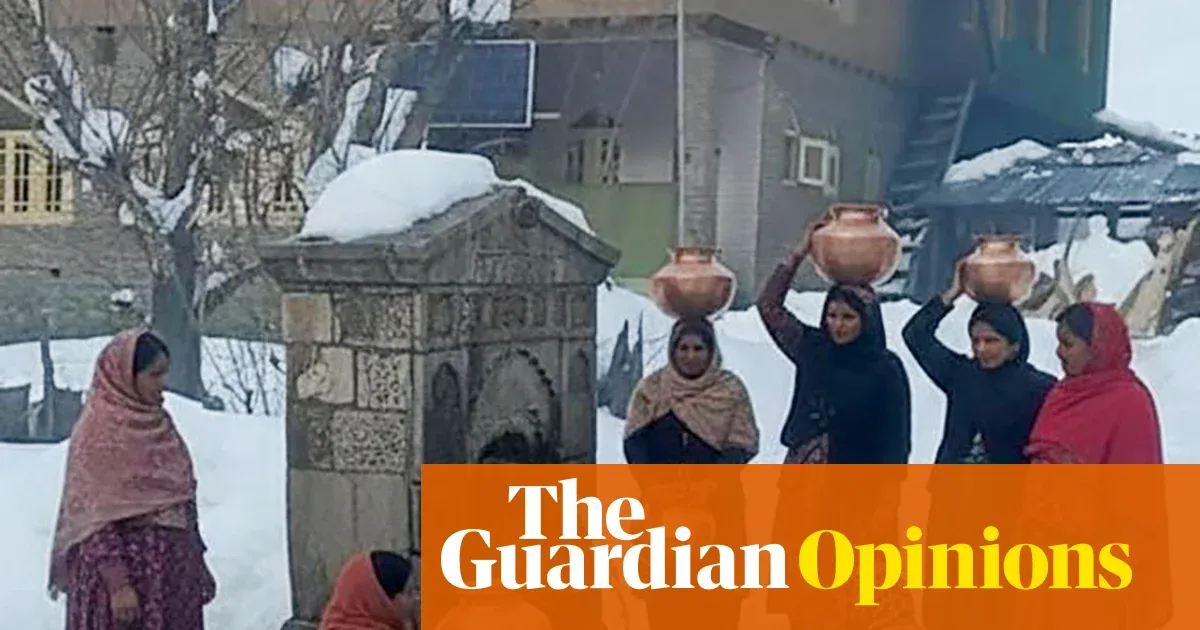
The Tulail valley sits 130 kilometers north of Srinagar, behind the Razdan Pass. It is home to the Dard Shin people, whose history is etched into Himalayan granite. During winter, the women become the architects of survival: breaking ice on water at dawn, spinning wool, kneading dough, working until collapse. The men leave for construction sites in Shimla or apple orchards in Himachal Pradesh. "We leave because the snow is a wall that stands between my children and a full stomach," one father explains.
We're a new kind of news feed.
Regular news is designed to drain you. We're a non-profit built to restore you. Every story we publish is scored for impact, progress, and hope.
Start Your News DetoxIn the village of Saradab, electricity arrives for only three hours a day. Women trek for hours with axes to gather wood for heat. They cook over open fires in rooms so thick with smoke that children's coughs become the rhythm of winter. Some give birth in the dark, on cold floors, because of haya—shame—that prevents them from seeking help.
Yet the dreams persist. Zubeida told Qadir: "I want to be a doctor. When the snow is deep and the mothers are in pain, I want to be the one who knows how to make them better. I will wear a white coat like the snow, but I will bring warmth."
The work of staying
What makes Qadir's essay distinctive is her refusal to frame these women as victims needing rescue from outside. Instead, she argues that the Dard Shin are intellectuals waiting for infrastructure—not charity. Her father's transformation from a boy walking through snow to a university professor proved the valley's mind was never the problem. The barrier was always access.
This matters because it shifts how we think about rural education gaps. The narrative often centers on poverty or cultural resistance. Qadir's account reveals something sharper: these girls have agency and ambition. What they lack is not motivation but a digital bridge—a way to continue school through winter, to access teachers, to imagine futures beyond the valley without abandoning their families.
Qadir's father now calls men in Tulail, explaining why daughters must stay in school. "A book is as vital as the harvest," he tells them. "An educated girl can change the fate of the village." This is not sentimentality. In communities where men migrate seasonally, educated women become the economic and social anchors. They manage households, make decisions, and can eventually earn income—whether through teaching, healthcare, or other professions.
The trajectory matters too. Qadir's own path—from Tulail to Srinagar, from student to academic head—is not unique in aspiration but remains rare in outcome. She sees girls in Srinagar who dream of the stars. In Tulail, a girl's dream ends by eighth grade. The difference is not ambition. It is access.
"Empowerment should not be a miracle or a lottery won by the lucky few," Qadir writes. "It requires bringing the university to the valley, not just the girl to the university." That means digital infrastructure that works when roads are impassable. It means recognizing the Dard Shin woman not as an exotic photograph but as an intellectual force waiting for a path.
The bridge Qadir describes is not metaphorical. It is fiber optic cables, online tutoring, and a shift in how communities value their daughters' futures. It is her father's voice crossing mountains, steady and insistent, telling his people that Zubeida the doctor and Irfan the scientist are not fantasies—they are possibilities waiting for infrastructure to match ambition.