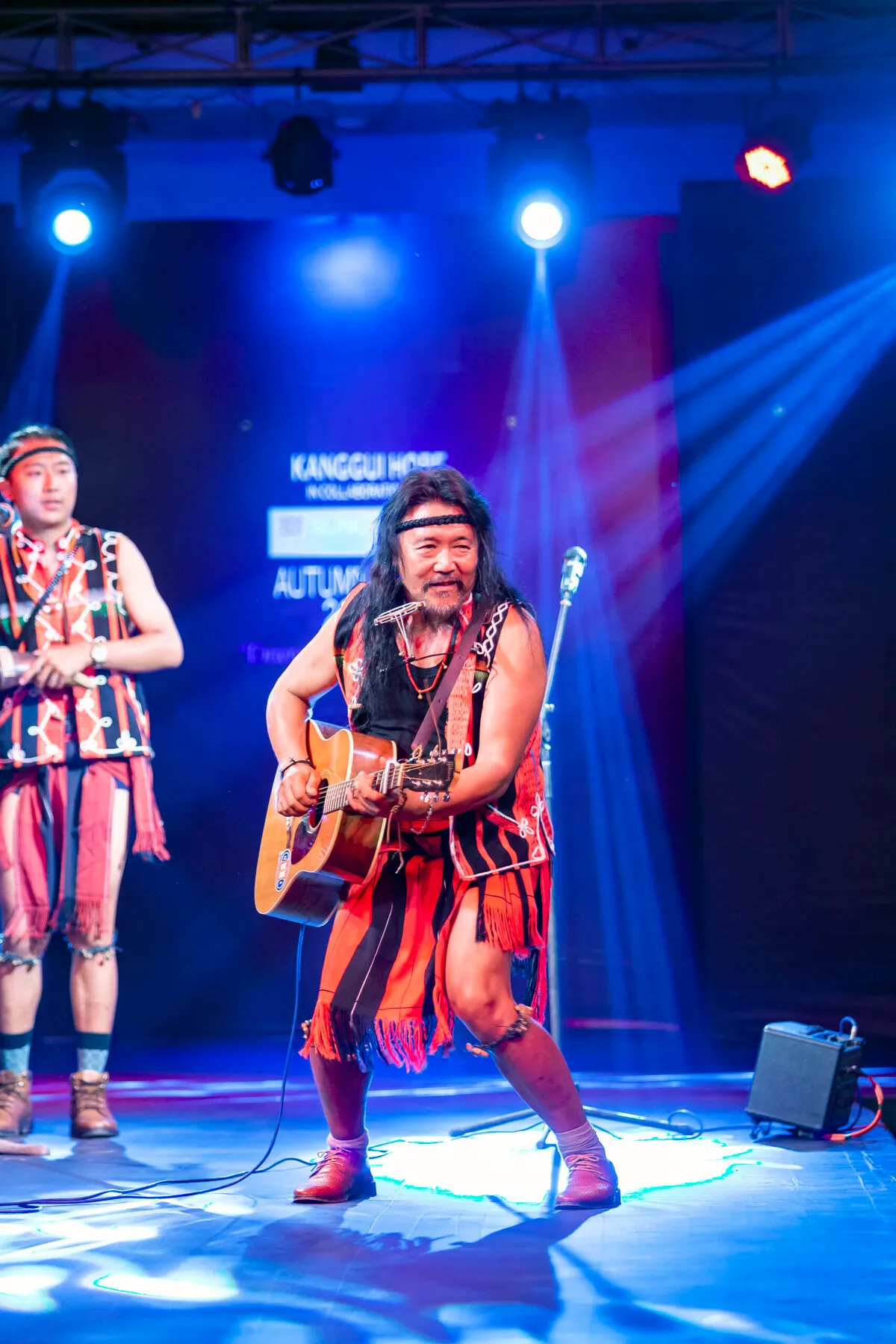
In 2011, Rewben Mashangva and his son Saka performed in Delhi. Mashangva wore the traditional red and black jacket of his Tangkhul Naga tribe. Both father and son had the haokuirut hairstyle, with long ponytails and shaved sides.
Mashangva shared that the Tangkhul Naga, about seven percent of Manipur's population, have an oral culture over 1,000 years old. Their history passes down through songs and stories. However, these traditions were slowly disappearing.
The Threat to Oral Traditions
The decline began in the 1890s when the British colonized Manipur. A Scottish missionary, William Pettigrew, converted many villages to Christianity. Tribal cultural symbols like headgear and beadwork were discouraged or destroyed. Oral traditions, often shared by elders singing around a fire, were replaced by church practices.
We're a new kind of news feed.
Regular news is designed to drain you. We're a non-profit built to restore you. Every story we publish is scored for impact, progress, and hope.
Start Your News DetoxBy the 1980s, few elders remembered the old songs and stories. They lived in remote villages without modern communication. Mashangva felt he had to act.
Indigenous cultures often rely on oral traditions, which UNESCO calls fragile. These traditions depend on an unbroken chain of knowledge passed between generations. Experts warn that nearly half of India's languages could vanish in the next century. The world loses a language every two weeks, and about 40% of the 8,324 global languages are at risk. Each lost language means a loss of cultural heritage, knowledge, and ways of life.
The UN declared 2022-2032 the International Decade of Indigenous Languages. Mashangva's challenge from the 80s remains: how best to save unwritten languages?
Recording the Past
Mashangva decided to record his culture's sounds. He traveled to over 200 remote Tangkhul Naga villages, often trekking long distances. He recorded songs sung by tribal elders. Some songs were hard for him to understand due to multiple dialects. He listened repeatedly and revisited elders for clarification.
Sometimes, he invited elders to stay with him. They recorded songs and taught him traditional instruments like the yangkahui (a four-hole flute) and tingteila (a single-string lute). Mashangva funded this work himself, using concert earnings, and his wife, a teacher, supported him.
 Courtesy of Rewben Mashangva
As a musician influenced by Bob Dylan and the blues, Mashangva found the songs fascinating. They were not for performance but for people who already knew them. Many used a call-and-response format with rhythmic cries. The themes covered daily life: weddings, funerals, epics, battles, feasting, and farming. Some were "work songs" about tasks like pounding paddy. Mashangva had not grown up with these traditions, making the subtext difficult to grasp. He realized these oral traditions focused more on words and life transmission than melodies. He felt he could hear his ancestors' voices in them.
Bridging Old and New
Today, Mashangva has the only extensive archive of Tangkhul Naga songs and oral traditions. Archiving is a key way to preserve histories of tribes without written languages. In Gujarat, the Vaacha: Museum of Voice documents oral histories of Adivasi communities. The Archives and Research Center for Ethnomusicology digitizes old recordings of musical and oral traditions from Rajasthan's desert communities.
However, Mashangva realized archiving alone was not enough. When he first sang these old songs in concerts, people laughed. Manipur and northeast India prefer Western rock, pop, and K-Pop. Even though Mashangva was a known musician, audiences reacted negatively to his folk songs. They called them "outdated" and "backward."
 Courtesy of Augustine Shimray / Yuimirin’s photography
Instead of criticizing the youth, Mashangva, a self-taught guitarist, adapted the folk songs into his blues style. He kept the essence of the folk songs but made them more appealing to modern audiences. He calls his music "folk blues," explaining that folk elements add flavor to modern blues, "like salt makes curry more tasty."
His son, Saka, 24, describes his father's music as a "bridge between the old and the new." This approach reflects a living oral tradition that evolves.
Mashangva received the title of Guru (teacher) from the government in 2004. He has won many awards, including India’s fourth-highest civilian honor, the Padma Shri, in 2021. He believes his greatest achievement is knowing his tribe's songs will continue. His son, with a master’s degree in tribal studies, has digitized over 90% of his father's cassette collection. Some old cassettes no longer play. The digitized archive is now publicly available at Imphal’s Tribal Research Institute.
Younger audiences and bands in Manipur are now singing Tangkhul Naga songs. Augustine Shimray, frontman of the band Featherheads Haokui, was inspired by Guru Mashangva's concert. He now sings old songs and feels he is "finally getting to know myself." Shimray learned about his tribe from his grandmother's stories and now enjoys spending time with elders. He says their songs are stories, and their stories are history. When these are retold, their culture will survive.
Saka Mashangva shares this sentiment. He first performed Tangkhul Naga songs with his father at age three. Growing up with this music has shaped his life. He sees the songs as conversations with his father and ancestors. He is glad to help keep them alive.