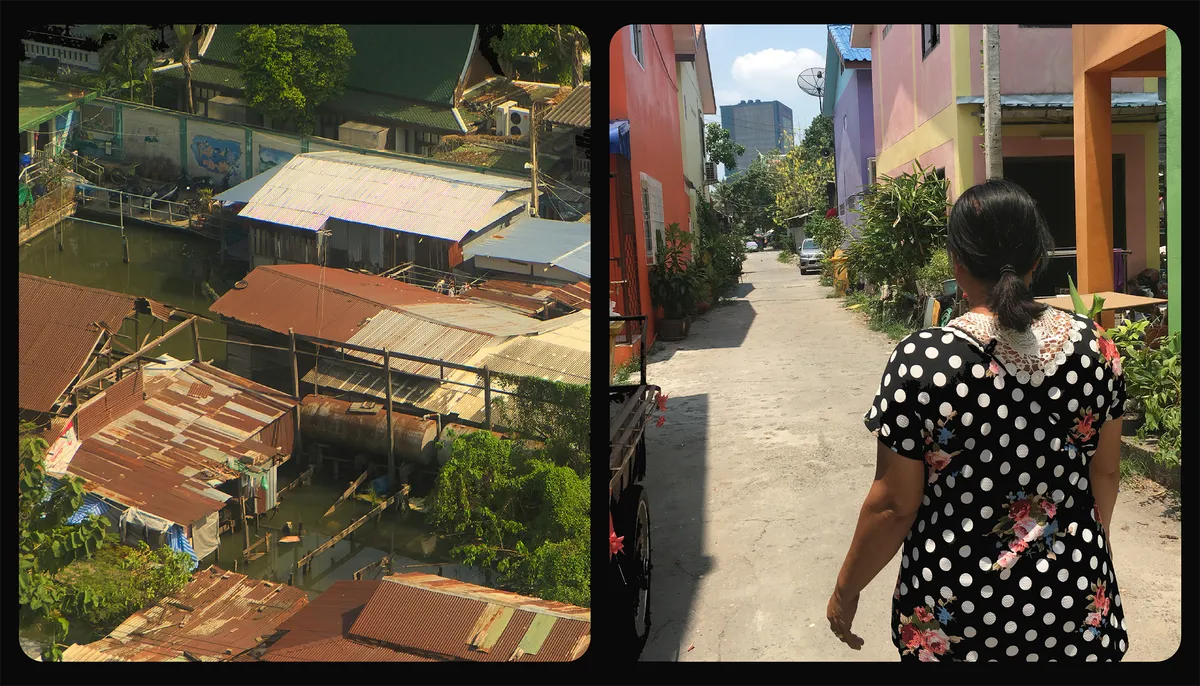
The U.S. treats housing like a stock market — buy low, sell high, hope you're on the right side of the bet. Thailand treats it like a basic right.
That distinction matters more than it sounds. While American cities grapple with evictions, homelessness, and rents that consume half a household's income, Thailand's Baan Mankong program ("secure housing" in Thai) has been quietly upgrading informal settlements since 2003 by treating shelter as something communities build together, not something markets allocate to the highest bidder.
Hayden Shelby, a UC Berkeley Ph.D. student in 2014, noticed this gap and decided to investigate whether the Thai model could translate to American soil. But first, she had to actually understand it — which meant more than reading policy papers. It meant learning Thai.
We're a new kind of news feed.
Regular news is designed to drain you. We're a non-profit built to restore you. Every story we publish is scored for impact, progress, and hope.
Start Your News DetoxWhat language opens
Shelby enrolled in advanced Thai language courses through UC Berkeley's Department of Southeast Asian Studies. The decision wasn't academic performance theater. Speaking Thai with community members and housing experts on the ground dissolved the distance that typically separates foreign researchers from local knowledge. "People open up when they know you've made this really deep and difficult investment in learning their language," Shelby says. "It breaks down that expert/non-expert barrier."
That barrier matters. When you show up as the American researcher with the clipboard, you get one version of the story. When you show up having spent months wrestling with tonal language and grammar, you get invited into a different conversation.
What Shelby found in Thailand was a housing philosophy built on a premise the U.S. has largely rejected: that secure shelter is a collective responsibility, not an individual consumer choice. Baan Mankong works by bringing together residents of informal settlements, local governments, and financial institutions to upgrade neighborhoods in place — improving infrastructure, securing land tenure, and building community assets rather than displacing people to make room for market-rate development.
The program isn't perfect. Implementation varies, funding is limited, and not every settlement has benefited equally. But it exists at scale. Tens of thousands of households across Thailand have moved from precarious informal housing to secure, upgraded communities through this model.
Now recognized as a leading expert on Thai housing policy in the U.S., Shelby argues that America's individualist framework — the assumption that housing is primarily a personal financial investment — isn't the only way forward. It's just the way we've chosen.
That choice has consequences. When housing becomes a speculative asset rather than a home, neighborhoods become portfolios. Residents become renters in their own communities, vulnerable to market swings and investor decisions made in boardrooms they'll never enter.
The Thai model suggests an alternative exists. Not a perfect one, not a one-to-one transplant, but a different set of assumptions about what housing is for and who it's supposed to serve. In a country where homelessness is rising and affordable housing is vanishing, that kind of alternative thinking might be exactly what's needed.