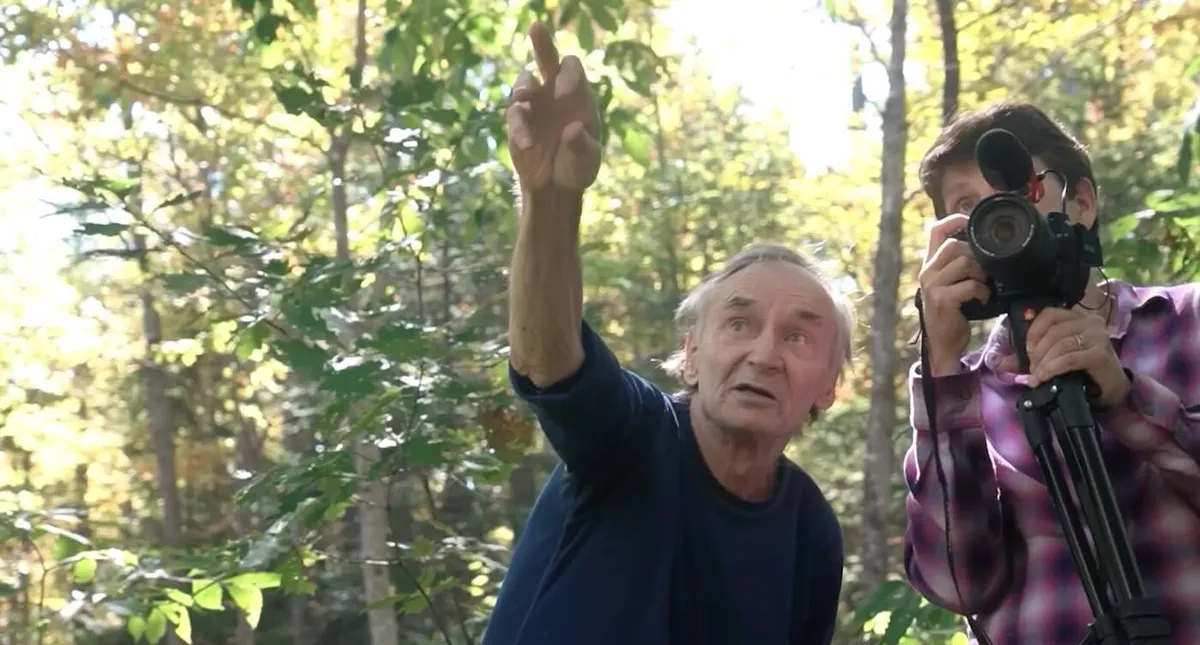
Gyatso Bista remembers sacks of kutki arriving on horseback. As a child in Nepal's Lo Manthang, he watched the bitter herb—prized for fever, coughs, and liver problems—pile up from the surrounding mountains. He was learning Sowa Rigpa, an ancient Tibetan healing system that's sustained people for more than 2,500 years. Those harvests reached 40 kilograms. Now Bista finds barely 5 kilograms a year.
What's happening in his village is happening everywhere. More than 80% of the world's population relies on traditional medicine for primary health care. Yet across every continent, the plants that form the backbone of these healing systems are vanishing—pushed out by rising temperatures, shifting rainfall patterns, deforestation, and overharvesting.
"For many common illnesses, these traditional remedies are really our first aid," says Mingay Dakias, a member of the Manobo-Dulangan Indigenous community in the southern Philippines. "We usually rely on these treatments first."
We're a new kind of news feed.
Regular news is designed to drain you. We're a non-profit built to restore you. Every story we publish is scored for impact, progress, and hope.
Start Your News DetoxA recent global review in Frontiers in Pharmacology studied 367 medicinal plant species over two decades. Climate change has already reduced suitable habitats for 106 of them. Another 94 face similar threats. The pattern is clear: as temperatures rise and rainfall becomes unpredictable, high-altitude and moisture-dependent plants are losing the specific conditions they need to thrive.
The knowledge at stake
This isn't just about losing plants. It's about losing centuries of accumulated knowledge. Healers like Bista carry understanding passed down through generations—which plants work for which conditions, how to prepare them, when to harvest. When the plants disappear, that knowledge often disappears with them.
The challenge cuts deeper in regions where modern pharmaceutical access is limited or unaffordable. In rural areas across Asia, Africa, and Latin America, traditional medicine isn't a preference—it's the available option. When kutki vanishes, people don't simply switch to an alternative. They lose access to a treatment they've relied on.
Some communities are responding by documenting traditional knowledge before it's lost, and by working with botanists to understand which plants are most vulnerable. In Nepal, conservation efforts are underway to protect kutki and other threatened species. Indigenous communities in the Philippines are mapping medicinal plants and their habitats, creating records that might help future generations adapt.
The deeper question emerging is whether traditional medicine systems can evolve as their plant base shifts. Some healers are experimenting with cultivating threatened species in protected conditions. Others are exploring how climate adaptation—shade-growing techniques, irrigation, relocating cultivation—might preserve access to these plants.
What happens next depends partly on whether governments and conservation groups treat traditional medicine as seriously as they treat pharmaceutical supply chains. So far, the attention has been uneven.