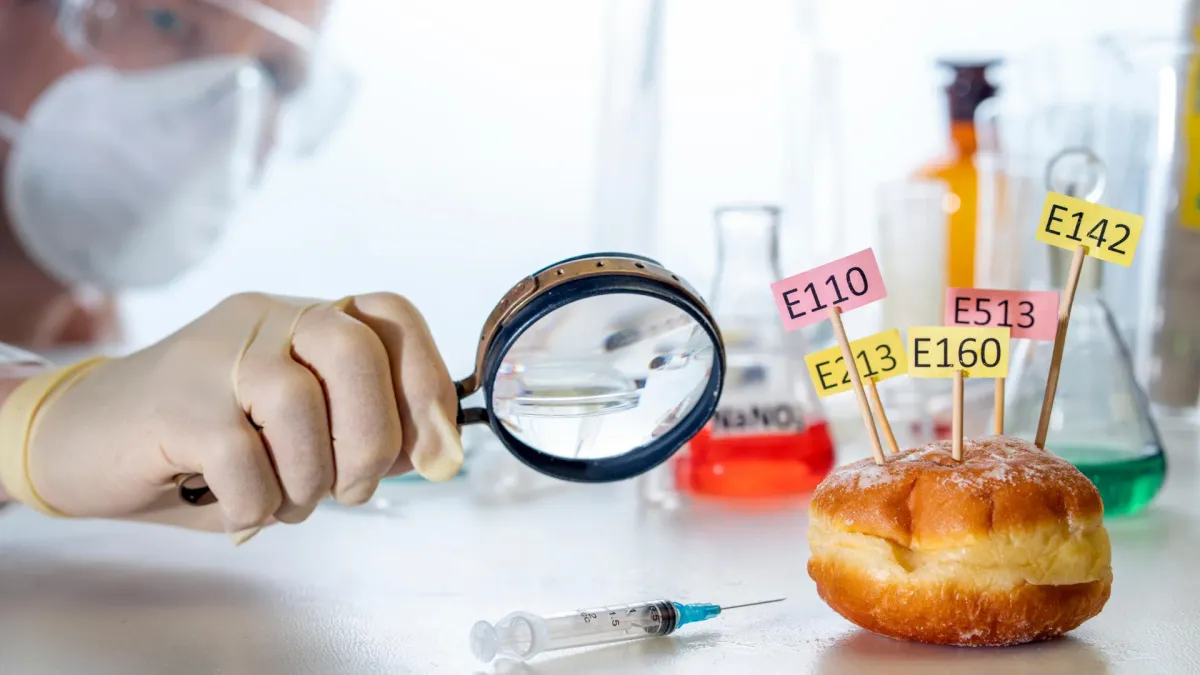
A decade-long study of over 100,000 French adults has found that regularly consuming certain food preservatives is tied to a modestly higher cancer risk—raising questions about how much oversight these additives actually get.
The research, published in BMJ, tracked people's diets in detail and followed their health records through 2023. While most preservatives showed no clear connection to cancer, several widely used ones—potassium sorbate, sulfites, sodium nitrite, and potassium nitrate—appeared linked to increased overall cancer risk and specific types like breast and prostate cancer.
What the numbers show
Higher intake of potassium sorbate was associated with a 14% increase in overall cancer risk and a 26% increase in breast cancer risk. Sodium nitrite showed a 32% higher risk for prostate cancer. Sulfites were linked to a 12% increase in overall cancer risk.
We're a new kind of news feed.
Regular news is designed to drain you. We're a non-profit built to restore you. Every story we publish is scored for impact, progress, and hope.
Start Your News DetoxThese aren't huge jumps—the absolute risk for any individual remains small—but they're large enough that researchers think they warrant attention. The study followed 105,260 participants (average age 42, mostly women) who were cancer-free at the start, making it one of the largest real-world investigations of this question.
Why this matters now
Preservatives have been used in food for decades. They do a real job: they keep packaged foods from spoiling, lower costs, and make nutrition more accessible to people on tight budgets. Lab research has long suggested some preservatives can damage cells, but until now, there's been limited evidence from actual human populations eating these foods over years.
The regulatory response has been slow. Most preservatives approved for use in the US and Europe were deemed safe based on older research, often with less scrutiny than modern standards would require. Their use is widespread but rarely monitored in any coordinated way—unlike salt or trans fats, where governments have tracking systems in place.
What comes next
Researchers aren't calling for a ban. Instead, they're suggesting regulators revisit how much of these additives we actually need in food, require clearer labeling so people know what they're eating, and establish better monitoring systems. Some food manufacturers are already experimenting with alternatives—fermentation, salt, or simply shorter shelf lives—but this remains the exception.
The study doesn't prove these preservatives cause cancer, only that people who consume more of them tend to have higher cancer rates. But it's enough to shift the conversation from "are these safe" to "do we need this much of them."