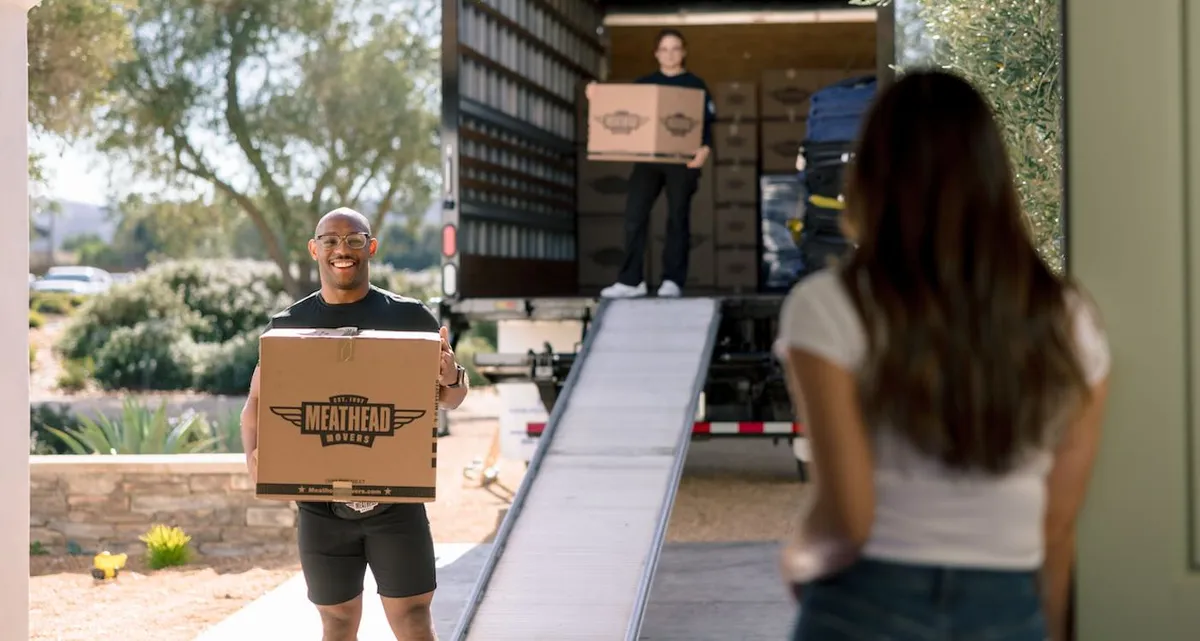
Getting out of an abusive relationship takes courage. Packing up and leaving takes logistics—which shouldn't be another barrier. That's why Meathead Movers, California's largest independently-owned moving company, has spent 25 years absorbing the cost of relocations for domestic violence survivors, asking nothing in return.
In 2015, they formalized what had become personal practice into something bigger: #MoveToEndDV, a coalition that now includes nine moving companies across eight states. The ripple has grown far beyond that. Over 200 businesses have pledged free services—moving, storage, security escorts—creating a quiet infrastructure of support for people rebuilding their lives.
A Network Built on One Day a Month
Last year alone, Meathead Movers completed 106 free moves for domestic violence survivors across San Luis Obispo, Ventura County, Orange County, Fresno, and Bakersfield. The model is deliberately lean: moving companies dedicate one day per month, with employees volunteering their labor—the largest cost. When Aaron Steed, one of the company's founders, explained this approach to a moving company owner in Fort Worth, Texas, the response was immediate. Veterans Moving America now works with local shelters to move survivors across their region.
We're a new kind of news feed.
Regular news is designed to drain you. We're a non-profit built to restore you. Every story we publish is scored for impact, progress, and hope.
Start Your News DetoxThe network includes Helping Hands Moving and Maids in Salt Lake City; We Help! Cincinnati Movers in Ohio; Elite Moving Services in Des Moines; Gentle Giant Moving Company in Boston; Parks Moving & Storage across Pennsylvania; Always Professional Moving in Phoenix; and Brown Box Movers in Dallas. Each operates the same way: one day, volunteer labor, zero cost to the person leaving.
What makes this work is the partnership with local shelters. Domestic violence organizations screen requests, provide counseling, coordinate logistics—and crucially, they ensure movers aren't walking into unsafe situations. "They're vetting the requests, supporting survivors with counseling, making sure restraining orders are in place or police are on hand if needed," Aaron explained. The shelter becomes the trusted intermediary, protecting both the person leaving and the people helping.
In 2020, the National Coalition Against Domestic Violence took over program facilitation, bringing national resources and shelter partnerships that have expanded reach beyond what any single company could manage alone. The infrastructure now exists: when someone leaves, there's a network waiting.
The impact compounds quietly. Employees report feeling proud to be part of something that matters. Communities see businesses rallying around their most vulnerable residents. And people rebuilding their lives discover that strangers have their back. "These women are completely abandoning their life as they know it," Aaron said. "We want them to know people in the community have their back." The next step is what he's been saying for years: doing this in communities all over the country—and the structure to make it happen is already there.