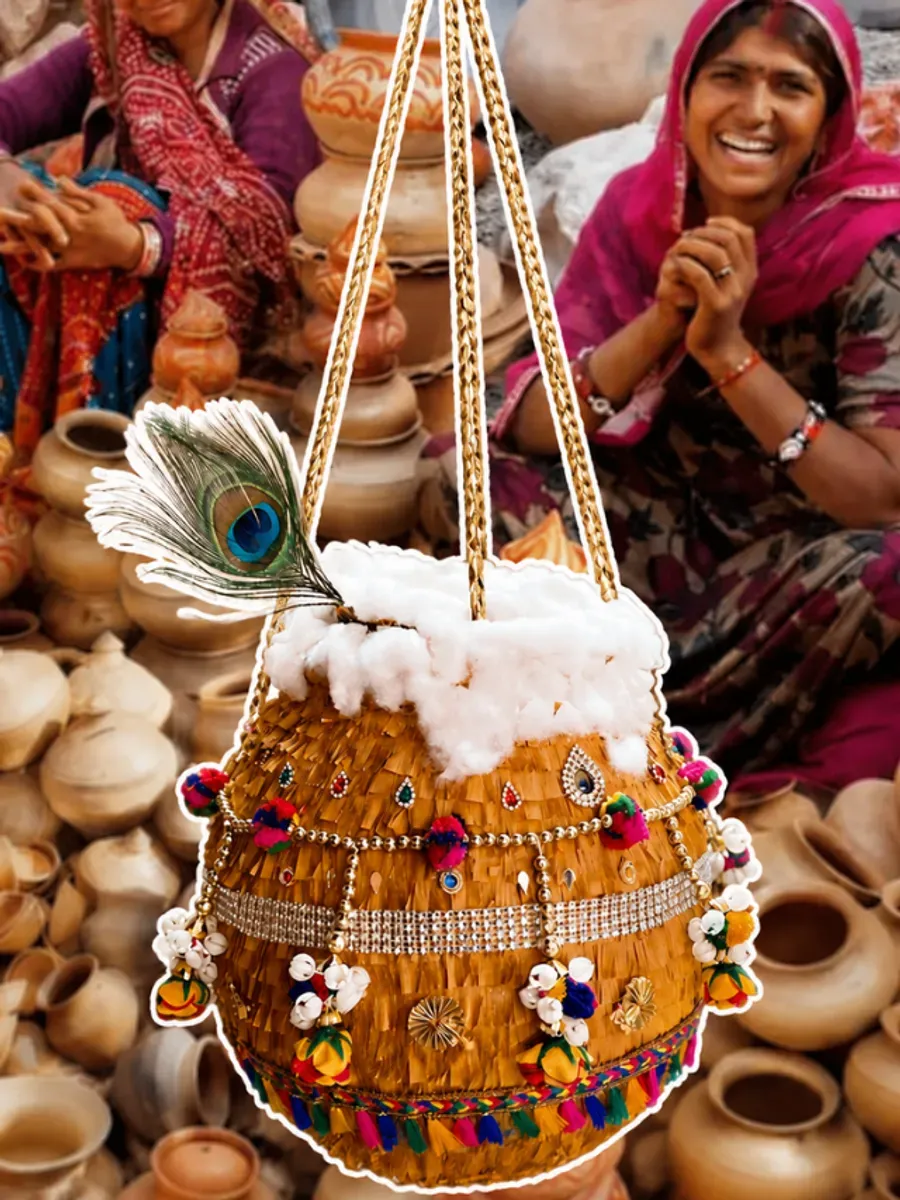
When you see those human pyramids celebrating Janmashtami, flailing upwards to smash a clay pot, you're not just witnessing a festival. You’re looking at an engineering marvel that’s been chilling drinks for three millennia without a single watt of electricity. Your fridge could never.
Turns out, the humble matka — that terracotta pot found in homes across India — is one of humanity's longest-running hacks against the heat. Archaeologists trace its origins back to the Indus Valley Civilization, over 3,000 years ago. Yes, it’s older than most of our written histories, still doing its job.
The Original Cool Kid
So, how does a dirt pot keep water colder than your average tap? It’s all down to tiny, almost invisible pores in the clay. Water seeps through these microscopic tunnels to the outside surface, where it then evaporates. And as anyone who’s ever stepped out of a pool knows, evaporation takes heat with it. This ancient evaporative cooling trick can drop water temperatures by several degrees in just a few hours. No compressor hum, no refrigerant gases, just pure, unadulterated physics.
We're a new kind of news feed.
Regular news is designed to drain you. We're a non-profit built to restore you. Every story we publish is scored for impact, progress, and hope.
Start Your News DetoxCreating one of these masterpieces is a craft passed down through generations. Potters blend surface clay with deeper, more elastic clay, shaping it on a wheel before beating its walls into submission with a wooden paddle. Five days in a kiln, and boom: a functional, sustainable cooler. Hindu legend even suggests the first matka emerged from the cosmic ocean during the churning for the nectar of immortality. Which, if you think about it, is a pretty epic origin story for a water jug.
In villages like Sangasani near Jodhpur, over fifty families still make matkas full-time. Mangu Khan Kumbhar, for instance, is a fourth-generation potter. His family doesn't just make water pots; they craft vessels for buttermilk, pickles, grains, and even the holy kalash for rituals. Food cooked in clay, they say, retains steam and imparts a unique, earthy flavor. Your stainless steel pot is probably feeling a little inadequate right now.
And in an era where we’re all supposed to be reducing our carbon footprint, the matka is having a bit of a moment. Zero power, almost zero carbon footprint compared to those plastic water bottles. Architects are even studying their design for inspiration in modern buildings. Because apparently that’s where we are now: looking to 3,000-year-old pottery for sustainable design solutions.
As for Janmashtami, the tradition of Dahi Handi — where teams form human pyramids to break a pot of curd hung high above — recreates young Krishna’s legendary curds-stealing escapades. The smashed pot symbolizes the shattering of ego by faith. And with every pot broken, thousands of clay shards return to the earth. As modern Indian kitchens fill with plastic, one has to wonder if this ancient design will simply outlast everything else.