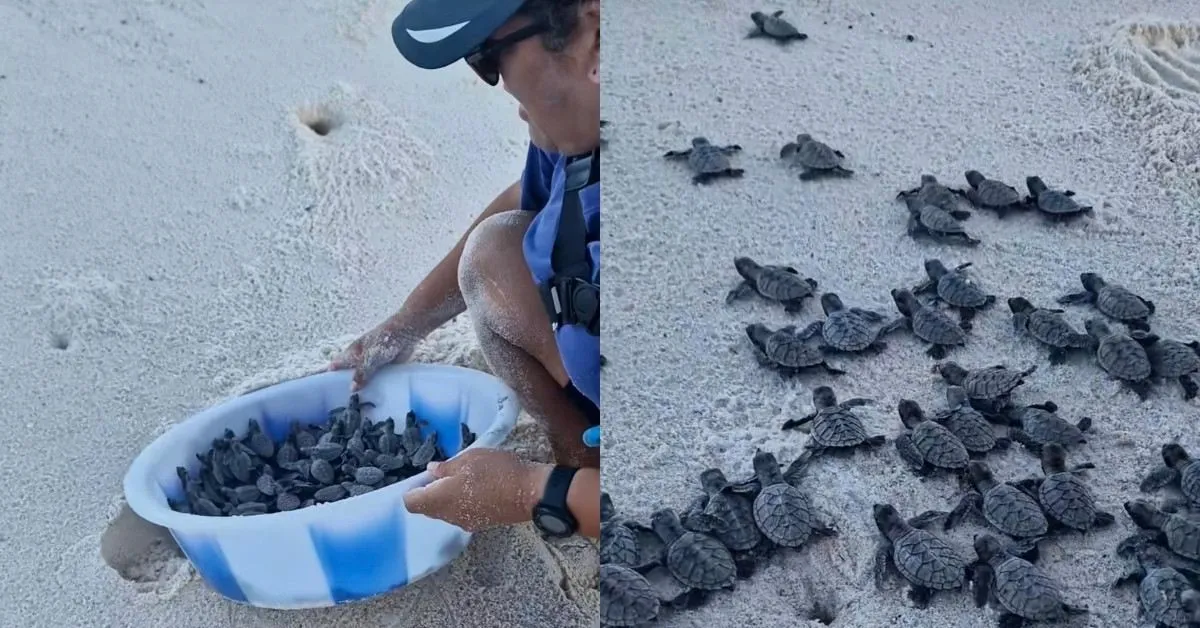
Coastal erosion, it turns out, isn't just for dramatic movie scenes and real estate agents' nightmares. Sometimes, it inadvertently sets the stage for a dramatic rescue. Case in point: a sea turtle nest in the Seychelles that was on the verge of becoming one with the tide.
Luckily, a conservation team stepped in, relocating the entire clutch to a safer spot. And then, hundreds of tiny, flippered heroes made their mad dash for the ocean, a moment captured in a viral video shared by marine biology Ph.D. student Alessia Lavigne. Because apparently, even endangered hawksbill sea turtles get a second chance at their big screen debut.
Hawksbill sea turtles, for those keeping score at home, are very much endangered. They prefer the kind of warm, tropical waters you'd find around island nations like the Seychelles, about a thousand miles off the coast of mainland Africa. Which makes their survival, especially for the hatchlings, a pretty big deal.
We're a new kind of news feed.
Regular news is designed to drain you. We're a non-profit built to restore you. Every story we publish is scored for impact, progress, and hope.
Start Your News DetoxLavigne explained that these particular babies wouldn't have made it without a little human intervention. The conservation team on Cousine Island spotted the nest, realized it was about to become an unfortunate victim of coastal erosion (likely climate change-related, because of course), and moved the precious cargo to a hatchery. Giving them, quite literally, a new lease on life.
That video, by the way, racked up over 4.5 million views, proving that nothing quite captures the internet's heart like tiny creatures triumphing against the odds.
The Great Turtle Trek
Naturally, viewers had questions. Like, how exactly do these miniature navigators know where the ocean is? Lavigne clarified that they're not just winging it (or flippering it, as it were). They use natural cues: the light reflecting off the water, the subtle slope of the beach. Most of the time, if there aren't too many artificial distractions, they find their way.
Another common query: why release them so far from the water? Turns out, it's not just for the 'cute factor' of a long journey. The conservationists are meticulously recreating the turtles' natural hatching experience, above the high-water mark. That little trek across the sand is crucial. It helps the hatchlings 'imprint' on the beach, a sort of biological GPS that will, hopefully, guide them back to this very spot to breed when they're adults.
So, thanks to some quick thinking and a lot of care, hundreds of hawksbill sea turtles got the best possible start to their very important lives. And perhaps, a tiny lesson in resilience, courtesy of a beach that just couldn't hold still.