The Humber Estuary is about to get a lot greener. After a year of testing, scientists have cracked the code for restoring seagrass meadows at scale — and the results suggest what was lost can actually come back.
Seagrass doesn't look like much. It's just underwater vegetation, easy to overlook. But it's one of the most effective carbon-capture tools we have. A single seagrass meadow can sequester carbon up to 35 times faster than a tropical rainforest. Beyond climate, these meadows stabilize coastlines against storms, filter pollutants from the water, and create nurseries for fish and eels that depend on them to survive.
The Humber once had roughly 1,100 acres of seagrass. By 2000, pollution, disease, and coastal development had shrunk that to just 12 acres — a 99% collapse in a single century. For two decades, it stayed that way. The question wasn't whether restoration was possible; it was whether anyone could figure out how to do it in a working estuary like the Humber, where tides and currents constantly reshape the seabed.
We're a new kind of news feed.
Regular news is designed to drain you. We're a non-profit built to restore you. Every story we publish is scored for impact, progress, and hope.
Start Your News DetoxWhat actually works
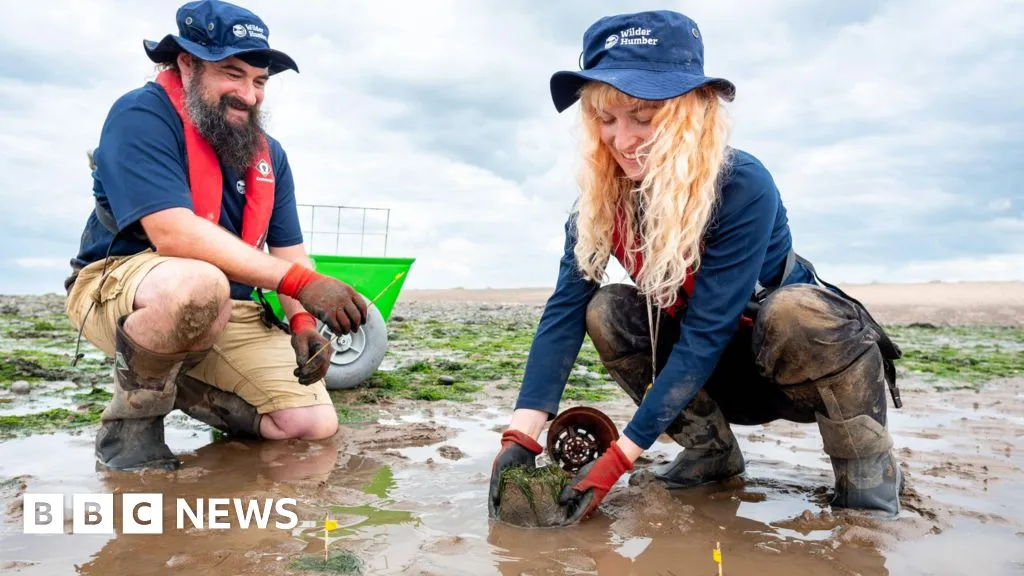
The Wilder Humber project, run by Yorkshire and Lincolnshire wildlife trusts with support from energy company Orsted, spent a full growing season testing three different planting methods. Two emerged as winners: direct injection of seeds into the seabed, and transplanting small intact patches of existing seagrass. Both worked. Both proved reliable enough to scale up.
"They show that, even in a dynamic estuary like this, we can successfully restore seagrass at scale when we use the right methods," said Dr. Andy van der Schatte Olivier of the Yorkshire Wildlife Trust.
What matters here isn't just the technique — it's the permission it gives. For years, seagrass restoration was theoretical, something that worked in controlled lagoons but felt impossible in the real world. Now there's proof that it works where it matters most: in messy, tidal, working estuaries that actual people depend on.
The team is now moving toward large-scale recovery across the Humber. That means hundreds of acres, not dozens. It means a coastline that can actually push back against storms. It means nurseries for fish returning. It means carbon being pulled from the atmosphere by something as simple as underwater grass.
The timeline is still being finalized, but the hard part — figuring out how — is done.