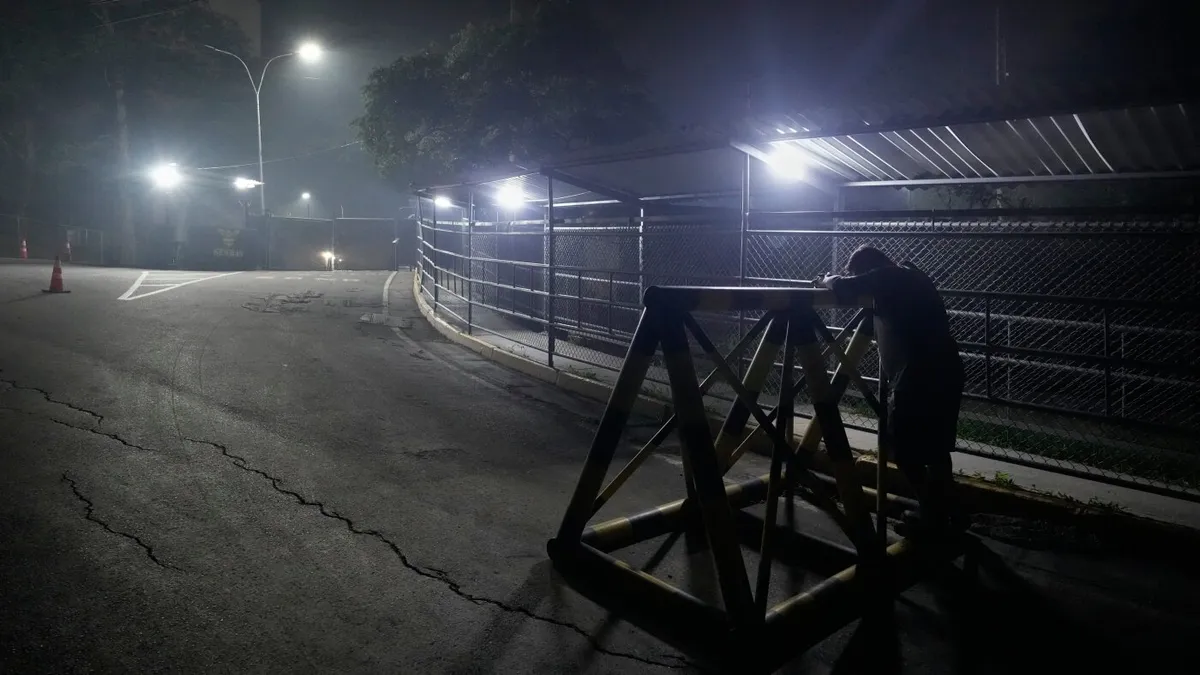
Venezuela released a group of high-profile opposition figures, activists, and journalists this week—a move that marks a rare opening in one of the hemisphere's most tightly controlled political systems.
Among those freed were opposition leader Biagio Pilieri, former electoral authority Enrique Márquez, and five Spanish citizens including human rights activist Rocío San Miguel. The releases came less than a week after former President Nicolás Maduro's capture by U.S. forces, and the Venezuelan government framed them as a gesture toward "seeking peace."
The timing matters. Venezuela has a documented pattern of releasing political prisoners during moments of acute pressure—a tactical move rather than a principled shift. But what's significant here is that the releases happened at all, and that they're visible. For years, the Venezuelan government has operated a system of arbitrary detention where people simply disappear into the system. Families would camp outside prisons for weeks without answers. The fact that relatives are now able to locate and retrieve their loved ones, that names are being announced publicly—this is a measurable change in how the system operates.
We're a new kind of news feed.
Regular news is designed to drain you. We're a non-profit built to restore you. Every story we publish is scored for impact, progress, and hope.
Start Your News DetoxHuman rights groups are cautiously watching. Amnesty International and other monitors have documented thousands of cases of prisoners of conscience in Venezuela over the past decade. Some observers see the releases as a genuine signal that the government is willing to dismantle parts of its repressive apparatus. Others warn this could be performative—a way to ease international pressure while the underlying system remains intact.
U.S. President Trump said the releases came at American request and praised the Venezuelan government's cooperation. He also suggested opposition leader María Corina Machado may visit Washington next week, signaling a potential diplomatic thaw between the two countries.
What happens next will reveal whether this is the beginning of a real political opening or a temporary reprieve. The Venezuelan government still controls the security forces, the media landscape, and the electoral machinery. But the fact that prisoners are being released, that opposition figures are being considered for international dialogue—these are breaks in a pattern that had seemed immovable.