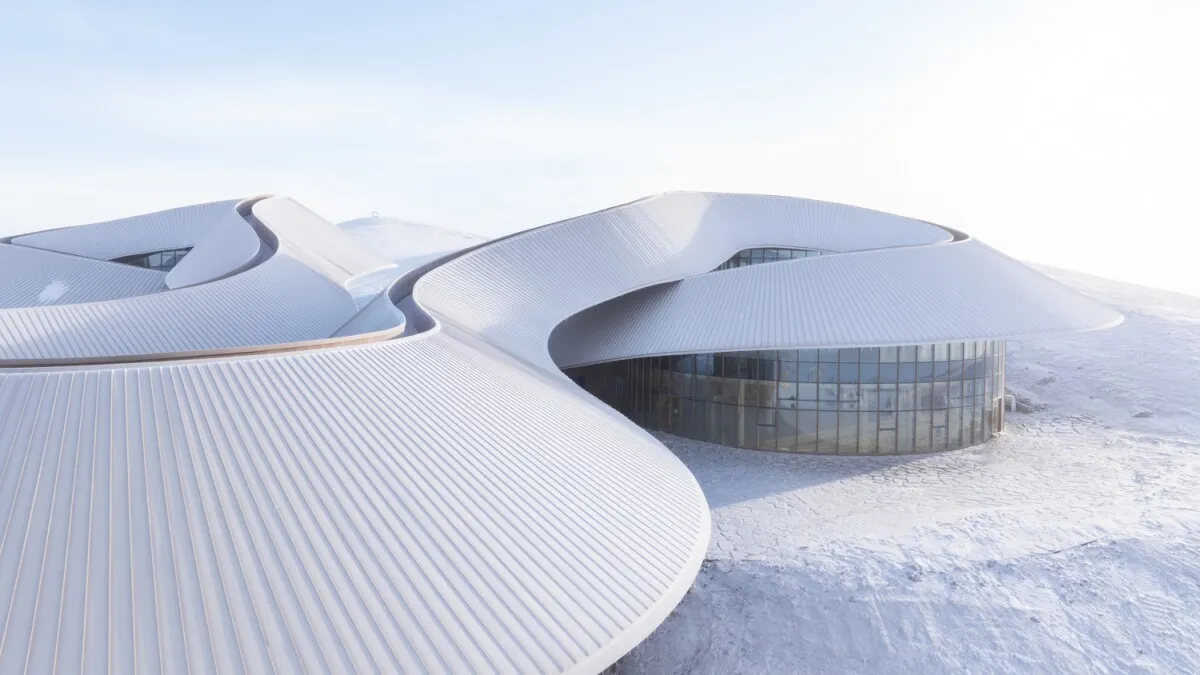
An architectural firm in China has completed a 3,532-square-meter visitor center embedded within an extinct volcanic formation in Inner Mongolia's Baiyinkulun Steppe. The building sits amid a 150,000-year-old eroded landscape dotted with 100 ancient volcanic craters—one of Earth's most fragile geological sites. The challenge wasn't just how to welcome visitors, but how to do it without destroying the very thing people came to see.
The architects made a counterintuitive choice: they positioned the center within an existing excavation site rather than avoiding it. This prevented further soil loss and kept foot traffic away from more sensitive areas. The building itself is raised slightly above ground on a steel foundation, minimizing its footprint and allowing the soil beneath to recover over time.
Design That Listens to the Landscape
Three rounded, uneven volumes loop low to the ground in a silhouette that seems to dissolve into the steppe itself. The soft arc of the roof deflects the relentless winds that define this region, while heavy-duty metal cladding and high-performance glazing protect against winter temperatures that plunge to minus 40 degrees Celsius.
We're a new kind of news feed.
Regular news is designed to drain you. We're a non-profit built to restore you. Every story we publish is scored for impact, progress, and hope.
Start Your News Detox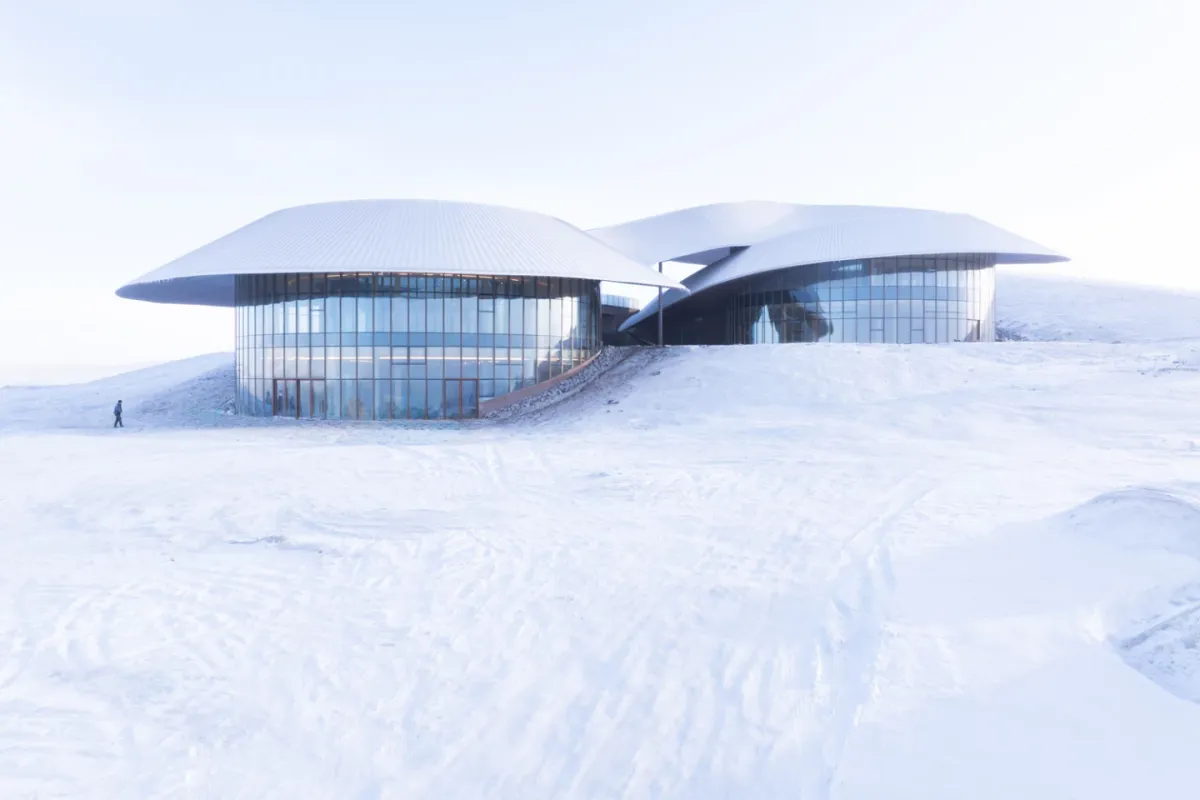
Inside, a main passageway guides visitors along an interior circuit featuring a central courtyard and floor-to-ceiling glass windows that frame panoramic views of the crater-dotted landscape. The architects integrated local materials throughout to connect visitors with the geological surroundings. Exhibition galleries, a café, bookstore, administrative offices, and a restaurant occupy the interior spaces, while an open courtyard provides room for temporary events and tiered seating carved into a slope offers informal gathering space.
What makes this project different from typical visitor infrastructure is what it refuses to do. There are no grand gestures, no building designed to compete with the view. The center exists to step aside—to be a threshold, not a destination.
The real test comes next. Whether the center ultimately protects the steppe as intended will become clearer only after years of weather, visitors, and shifting environmental conditions. The long-term impact of increased tourism on this fragile ecosystem remains uncertain. But the project's careful design—from its elevated foundation to its landscape-hugging form—demonstrates a commitment to letting the ancient volcanic terrain remain the true centerpiece of the visitor experience. The building is simply the gateway.