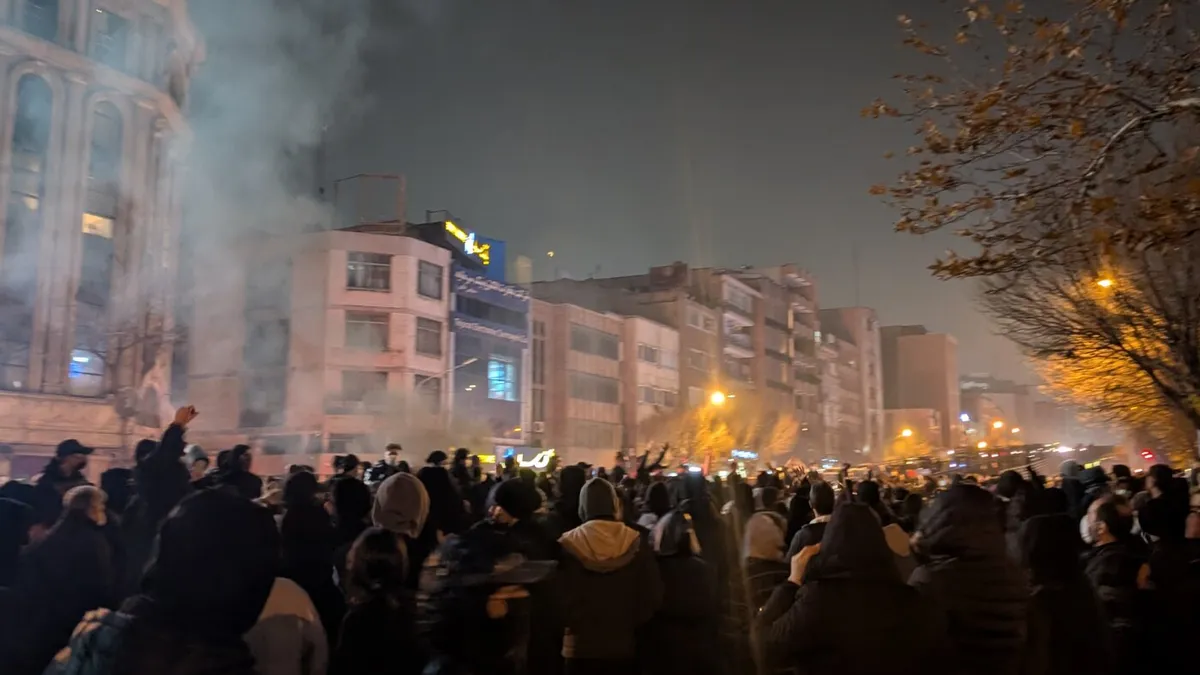
The death toll from protests in Iran has surpassed 6,000, according to the U.S.-based Human Rights Activists News Agency. As internet restrictions ease, videos of violence are emerging alongside something quieter but equally defiant: women deciding to speak, despite the cost.
Three women agreed to share their stories with NPR on the condition their identities remain protected. Their accounts reveal not just the scale of government brutality, but the impossible choices ordinary people face when silence feels like complicity.
The Cost of Showing Up
A content creator from Karaj, a suburb of Tehran, went to a protest in early January after hearing calls to join demonstrations sweeping the country. She describes the initial moment with clarity: "We saw so many people. People were there with their young kids, old parents, a man in a wheelchair. The groups kept getting bigger and more confident."
We're a new kind of news feed.
Regular news is designed to drain you. We're a non-profit built to restore you. Every story we publish is scored for impact, progress, and hope.
Start Your News DetoxThen security forces opened fire. Her 18-year-old neighbor was shot dead. Others followed. "They have always been murderous," she says. "But this time it was way more extensive and more horrifying since they had orders to shoot directly."
A housewife from the same city watched her husband leave to join the protests. He never returned. When she went to the morgue in Tehran, officials demanded more than $6,000 for his body—and a signed statement claiming he was a member of the regime's paramilitary force, which he wasn't. "They said if you contact anyone or tell anyone, we will take your daughters," she recalls.
She and her daughters now stay inside. Yet she hears neighbors chanting at night, risking everything for words.
Fear Becomes Constant
A former publishing worker describes a climate where safety exists nowhere. "They are killing people in their homes. The other day, in my alley, they pushed someone into the trunk of a car and kidnapped him." She witnessed a young protester shot dead in her street. "I saw blood in the street. That was a human being who wanted to live, who wanted to shout his rights. His shout was all he had. Is this the answer to cries, bullets?"
She's skeptical the protests have changed anything. "Nothing. The protests only cause more deaths. They shoot us and kill all the youth. Prices have gone ever higher and we are poorer."
Yet the content creator—the one who lit the flag, who felt that ecstatic surge of collective defiance—believes stepping back is not an option. "I might go out and get killed. But whatever happens, there is one thing I know for sure, we have nowhere else to go. This is our home. And even if it can't happen for me, I want the generations after me to experience freedom."
She knows the cost. She speaks anyway.