One cellist's master class became a half-century institution. In 1975, a Harvard student named Jerold Kayden invited János Starker to perform with the university orchestra and lead a workshop. The experience was so generative that Kayden decided to systematize it — and the Learning from Performers program was born.
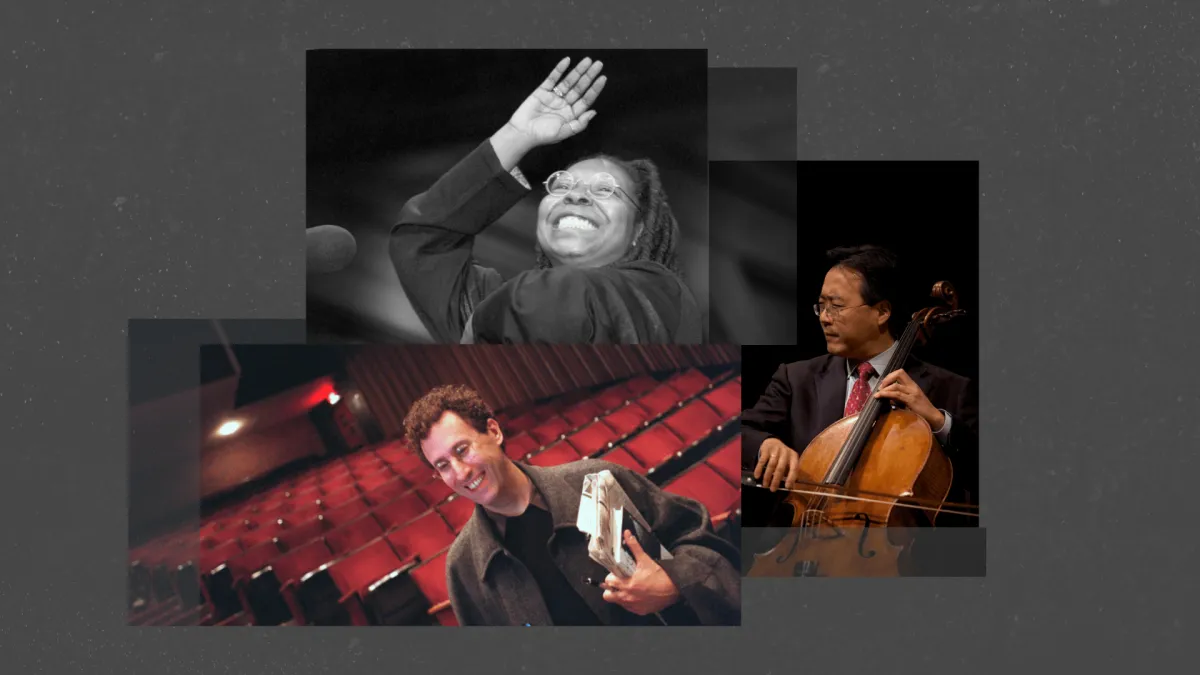
Fifty years later, the program has hosted Whoopi Goldberg, Tony Kushner, Yo-Yo Ma, Maurice Sendak, Quincy Jones, and dozens of other artists across theater, music, visual art, and comedy. These weren't one-off lectures. They came to campus for lunchtime conversations, intensive master classes, semester-long residencies, and direct coaching with students in studios and classrooms.
What makes the program distinctive is its scale of intimacy. "Learning From Performers gives students the opportunity to interact with world-class artists from across disciplines," says Fiona Coffey, director of Harvard's Office for the Arts. The implicit promise: watch how these people actually work, and understand that the skills you're building here — in seminars and studios — can become a real career.
We're a new kind of news feed.
Regular news is designed to drain you. We're a non-profit built to restore you. Every story we publish is scored for impact, progress, and hope.
Start Your News DetoxThat promise has held. Among the program's early participants were comedy writers Robert Carlock and Tina Fey, who went on to create "30 Rock" and shape the voice of "Saturday Night Live." Others have become performers, directors, playwrights, and designers. Some stayed in the arts; others took the creative problem-solving they learned and applied it elsewhere.
The program works because it sidesteps the usual hierarchy of artist-as-distant-genius. Instead, students see the work up close: how Yo-Yo Ma approaches a difficult passage, how a playwright revises dialogue, how a comedy writer lands a joke. They see that mastery is built through repetition, feedback, and willingness to fail.
As Kayden, now a professor at the Graduate School of Design, reflects on what made the program work: "Taking advantage of what Harvard offers to all of us is a great gift, and the combination of an idea and the convening power of Harvard made this work." He's also clear-eyed about what students should do next: take similar risks with their own creative projects. Don't wait for permission.
The 50th anniversary kicks off January 30th with Carlock and Fey returning to discuss their collaborative work. But the real milestone isn't the celebration — it's that a student's simple question fifty years ago became a blueprint that's still shaping how emerging artists learn their craft.