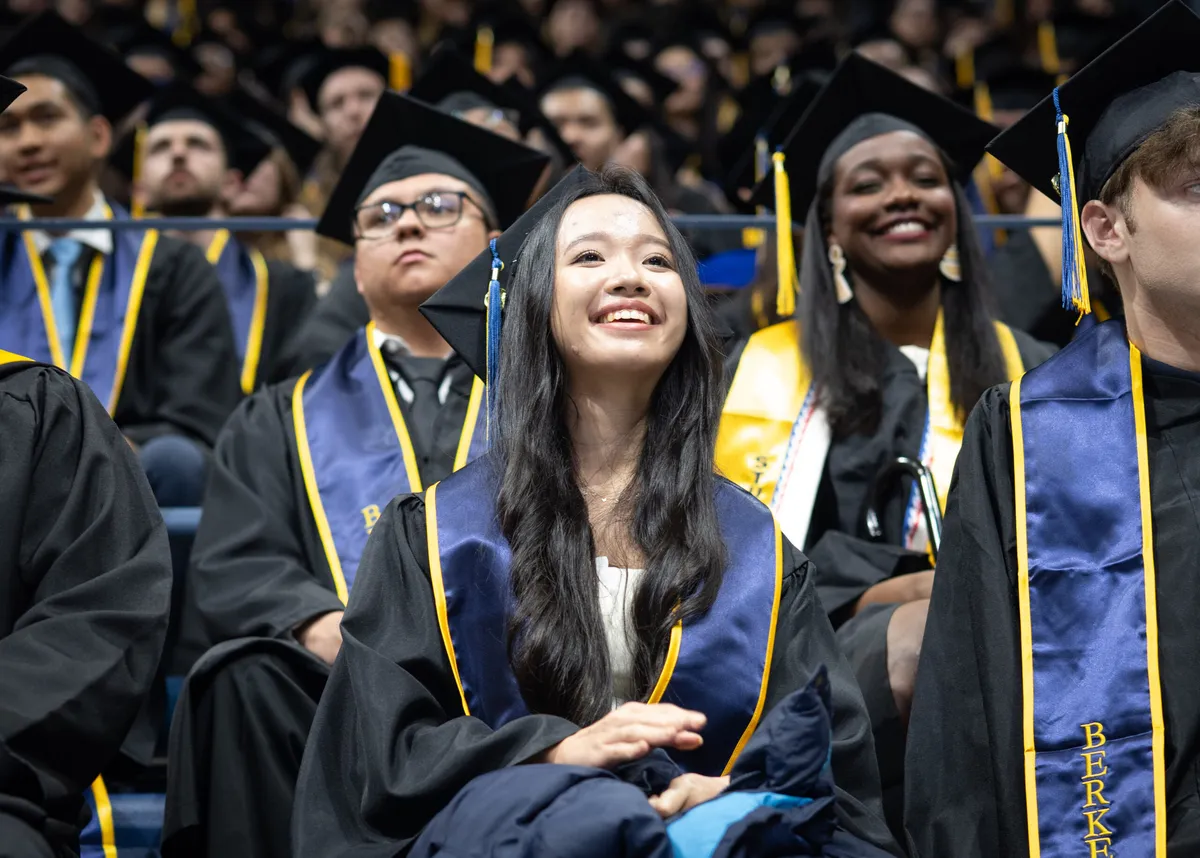
James McCloy swept floors beside his mother, a janitor, and pulled weeds beside his father, a landscaper. Then he became the student speaker at UC Berkeley's Winter Commencement.
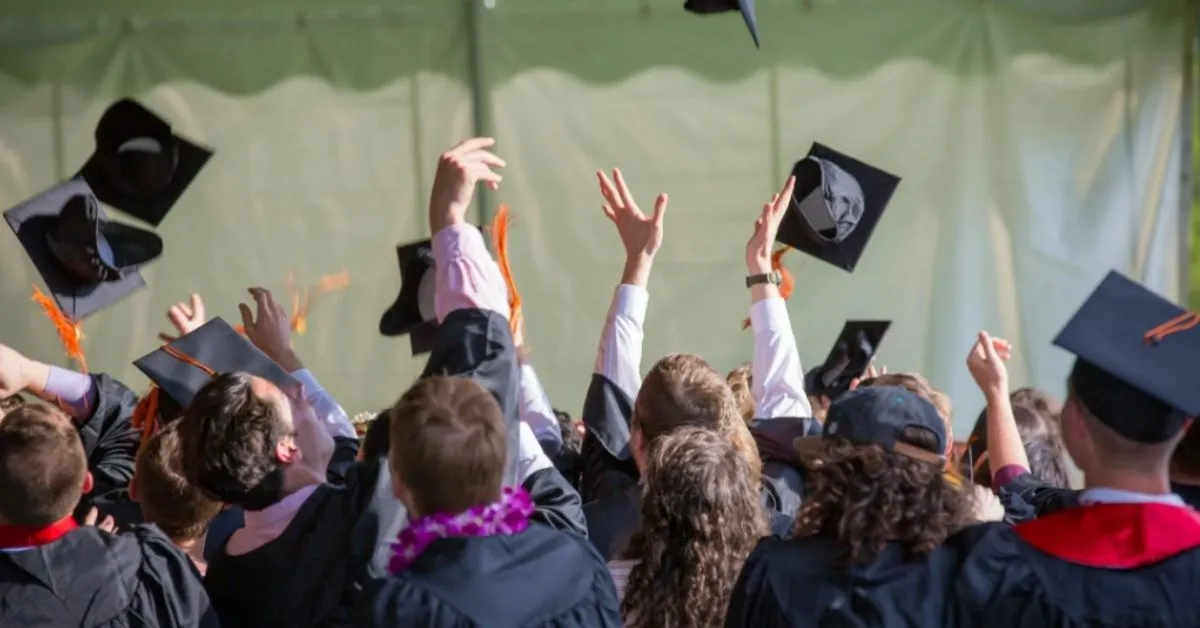
As a first-generation transfer student majoring in history, McCloy stood in Haas Pavilion on December 20 and addressed nearly 5,000 guests and over 1,000 graduates. His opening line carried the weight of his family's sacrifice: "I am here because my parents pushed a dream they themselves were not offered."
He didn't offer graduates a comfortable path. Instead, drawing on the Civil Rights Movement, he posed a question that hung in the air: "What will we write? A chapter of comfort or of courage? A chapter of complicit silence or of impassioned solidarity?"
We're a new kind of news feed.
Regular news is designed to drain you. We're a non-profit built to restore you. Every story we publish is scored for impact, progress, and hope.
Start Your News DetoxThe ceremony reflected a particular moment — one where three speakers, all Berkeley alumni, offered the Class of 2025 a shared conviction: the world needs them to think differently.
The case for relentless questions
Aravind Srinivas, who earned his Ph.D. in computer science from Berkeley in 2021, now runs Perplexity AI, an answer engine combining real-time search with artificial intelligence. He told graduates something counterintuitive: forget what school taught you about right answers.
"Your ability to have the best questions will be the single most defining skill of your life," Srinivas said. The people who lead, who change things, share one trait — they're relentlessly curious. They ask questions about everything.
It's a shift from the credential-chasing years they've just completed. The graduates now entering a world of AI, climate pressure, and political fracture will need something different than optimization for exams.
Learning to see across difference
Chancellor Rich Lyons, who graduated from Berkeley in 1982, introduced the concept of "empathy walls" — the obstacles that keep us from understanding people whose lives or beliefs differ from ours. He urged the Class of 2025 to break them down, to be skeptical of anyone offering a world divided into simple categories of good and evil.
"Unsettled times have the potential to facilitate learning, growth, and transformation," Lyons said. "While these times may be perilous, so, too, are they times of creative ferment and possibility."
The ceremony also honored San Ling, who received his Ph.D. in mathematics from Berkeley in 1990 and is now a leader at Nanyang Technological University in Singapore. Ling credited his growth to a moment of uncertainty — when his advisor took a sabbatical in Paris and Ling chose to follow rather than wait. That unplanned semester opened decades of collaboration with French colleagues and institutions.
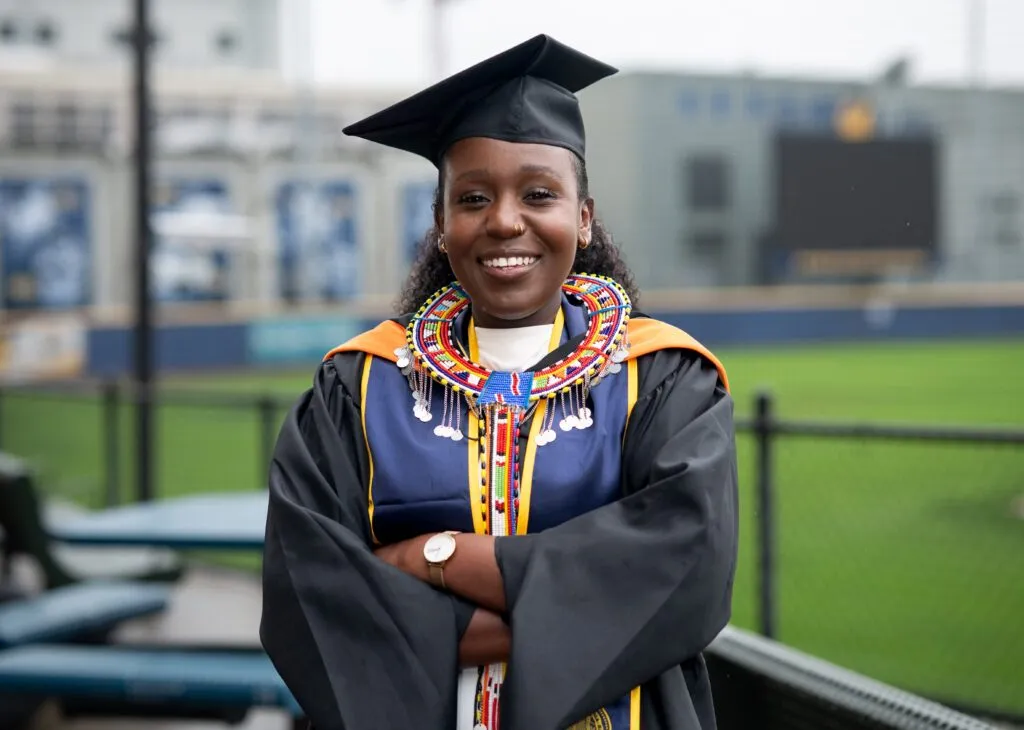
Gloria Tanui, development engineering with a background in architecture: I learned the difference between teaching people how to fish versus giving them fish. I'm interested in how you work with citizens from marginalized communities to build a project or program, how we work together in a more innovative, creative, and engaging way. I hope being No. 1 translates into the real world and gives me an edge.
What connected all three speakers — McCloy, Srinivas, and Ling — was a refusal to accept the world as given. McCloy called graduates to be "zealous advocates for justice." Srinivas reminded them that curiosity, not credentials, drives change. Ling showed that embracing uncertainty, rather than resisting it, opens doors.
The Class of 2025 leaves Berkeley at a moment when the world is watching what the next generation will do. They're not being asked to inherit history. They're being asked to write it.