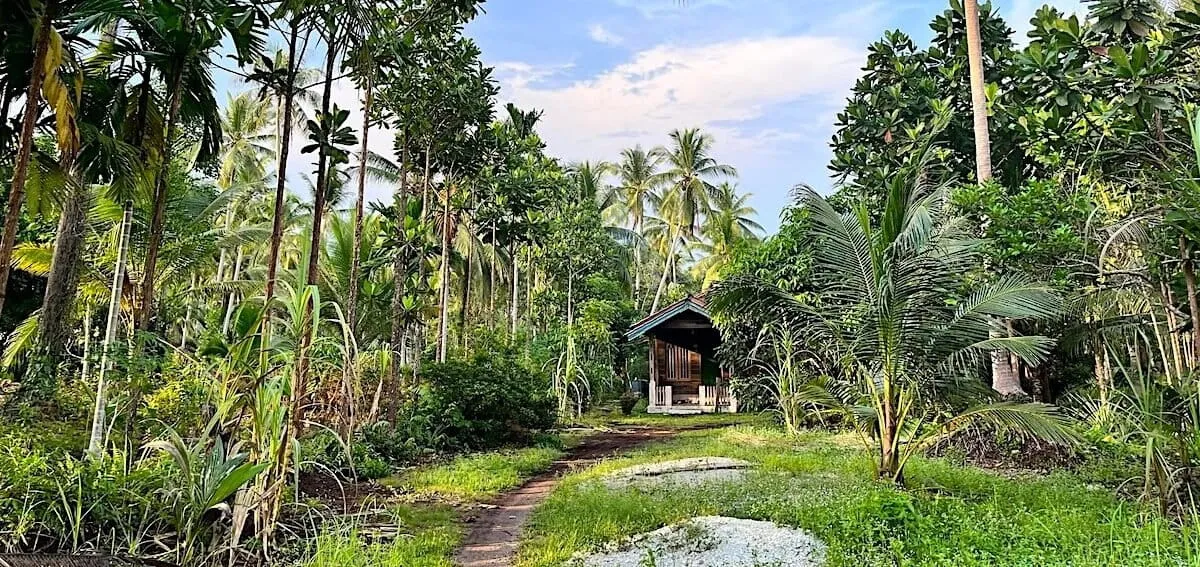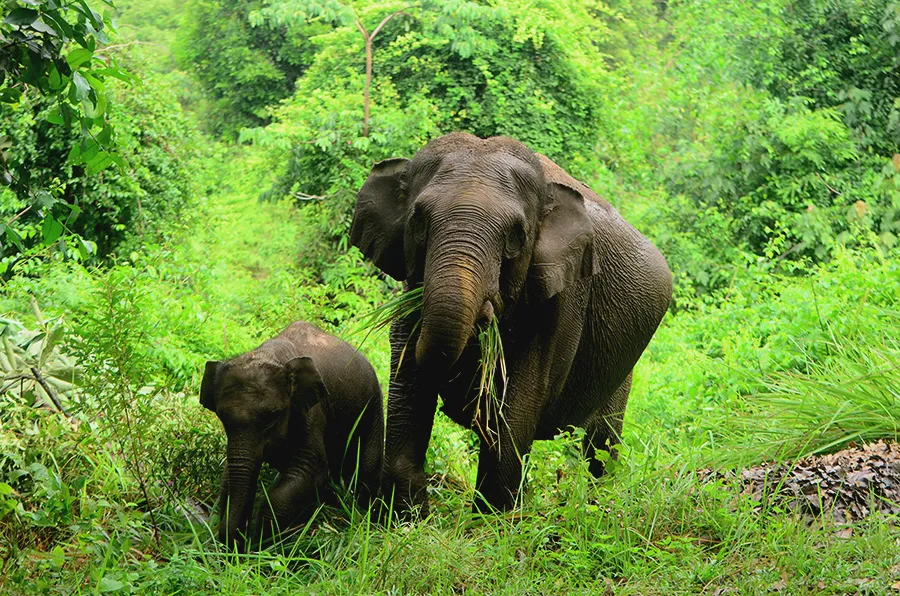
In Sumatra, Indonesia, where deforestation has made personal space a luxury, about 150 Sumatran elephants often find themselves in a bit of a pickle – a pickle that tastes suspiciously like a farmer's crops. See, their ancient forests, specifically around Tesso Nilo National Park, have shrunk by more than 75% thanks to palm oil plantations. This means more elephants are crashing into human neighborhoods, and historically, it hasn't ended well for anyone.
Traditionally, some villagers resort to rather... unfriendly methods, like poison or electric fences, to protect their livelihoods. Which, if you think about it, is both understandable and heartbreaking.

But in Lubuk Kembang Bunga village, a group of women farmers called Perbani (the Batang Nilo Women’s Forest Farmer Group) decided to try something a little more fragrant. Their secret weapon? Citrus trees. Elephants, it turns out, are not fans of a good lime or lemon. Plant enough of them in a dense fence, and suddenly, the buffet is closed.
We're a new kind of news feed.
Regular news is designed to drain you. We're a non-profit built to restore you. Every story we publish is scored for impact, progress, and hope.
Start Your News DetoxErnita, a 33-year-old farmer and Perbani member, confirmed the genius of the plan. Before the citrus barricade, elephants were happily munching on their oil palm fruits. Now? "The elephants have not touched our crops," she said. Let that satisfying number sink in.
A Kinder, Gentler Elephant Deterrent
But they're not stopping at just making elephants wrinkle their trunks in disgust. Perbani also plants trees that elephants do enjoy – jackfruit, cempedak, and even stink beans (petai). It's like setting up a delicious, elephant-friendly detour. This thoughtful approach aims to create a peaceful coexistence, where everyone gets to eat without anyone getting hurt.
Yuliantony, who heads the Tesso Nilo National Park Foundation, points out the obvious but often overlooked truth: women, despite being frequently sidelined in conservation efforts, often hold a treasure trove of local environmental knowledge. Their understanding of the land, and perhaps, an elephant's discerning palate, is proving to be invaluable.
Because apparently, sometimes all it takes to solve a massive human-wildlife conflict is a few well-placed citrus trees and a willingness to listen to the people who know the land best.