When an adventurer gets stuck in a flooded cave, a mind-controlled cockroach in a diving suit might come to the rescue. These cyborg insects are already used in search-and-rescue and pipeline inspections on land. Now, they can work underwater too.
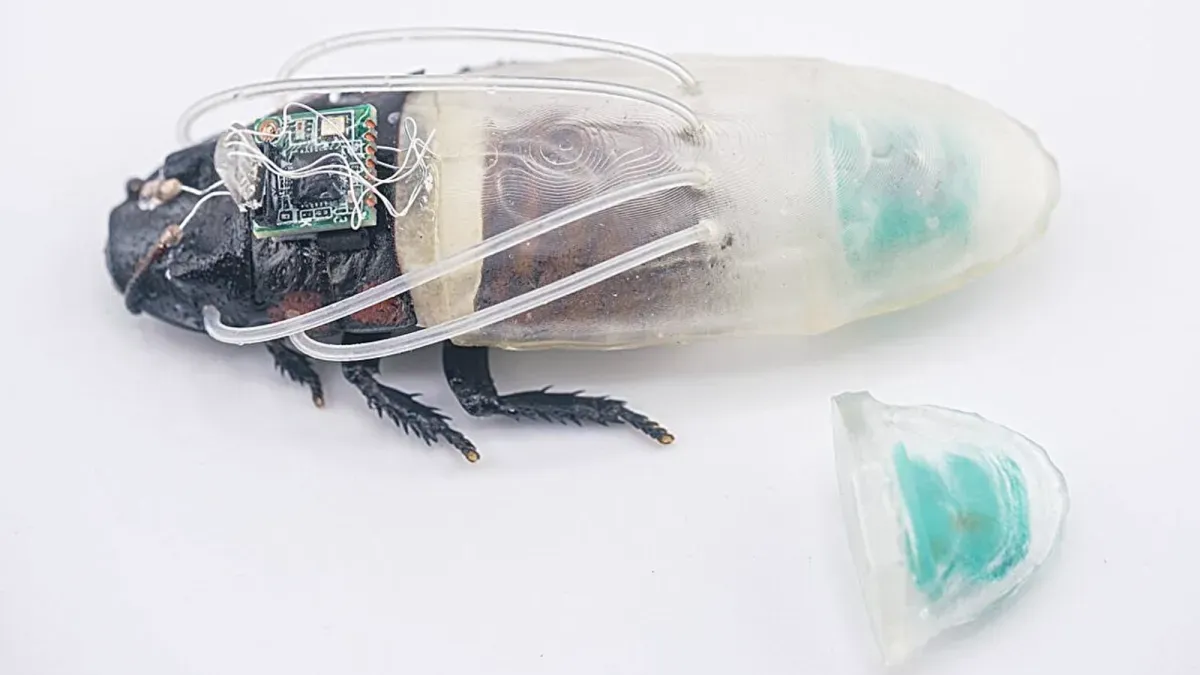
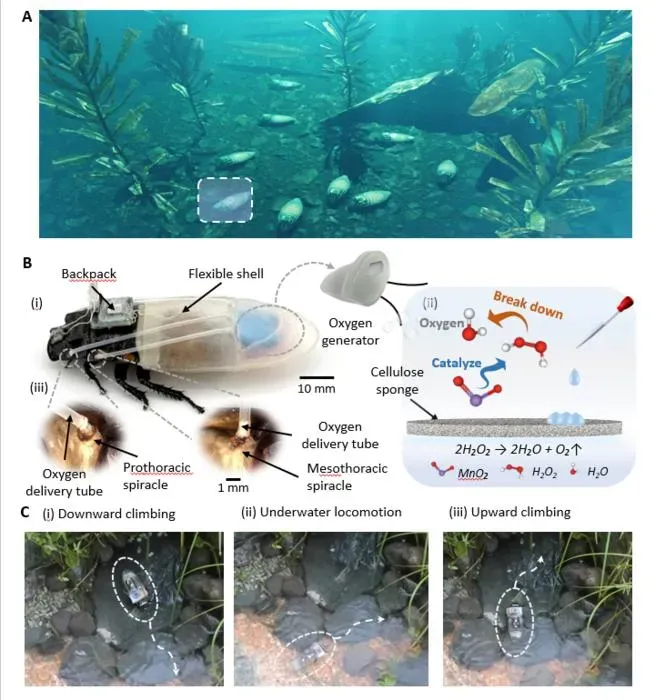
Researchers at Nanyang Technological University in Singapore 3D-printed a flexible diving suit for roaches. It's like a backpack. Inside, a chemical oxygen generator makes oxygen when the bug swims. This oxygen goes through tubes to the roach's breathing holes, called spiracles.
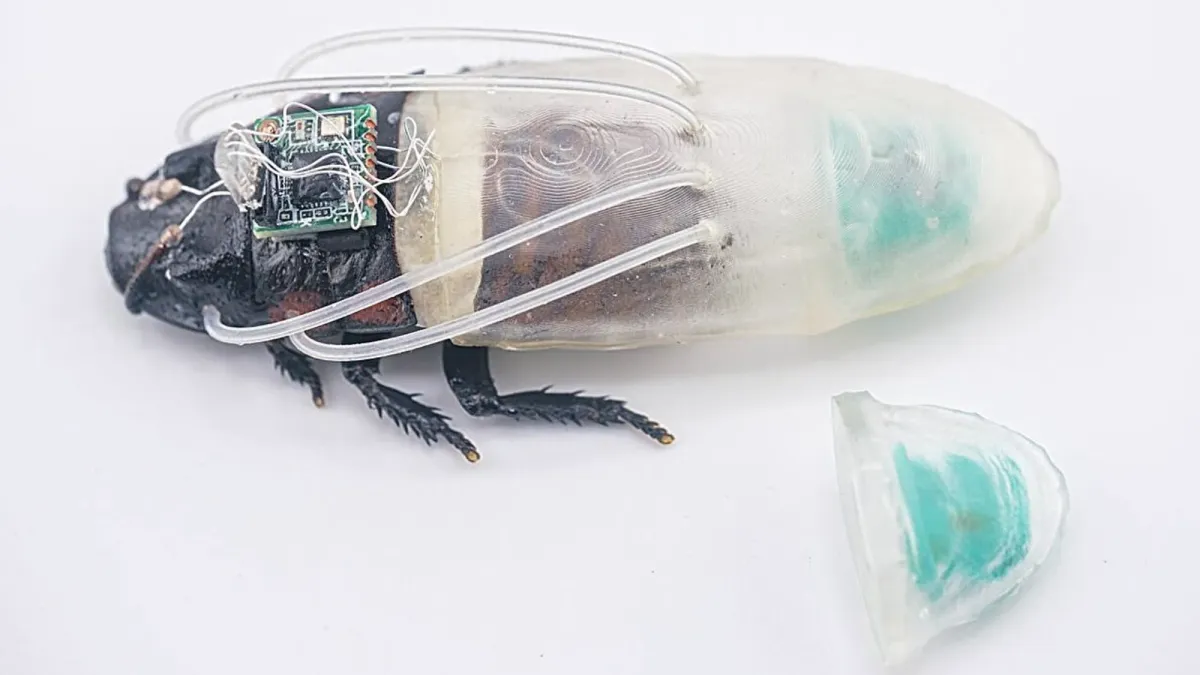
Tests showed the cyborg roach could move and breathe underwater for up to three hours. This new ability makes them much more useful for longer rescue missions. This idea could even work in other low-oxygen places, like space.
We're a new kind of news feed.
Regular news is designed to drain you. We're a non-profit built to restore you. Every story we publish is scored for impact, progress, and hope.
Start Your News Detox"By fitting a cockroach, which is a terrestrial species, into this diving suit, we allowed it to survive and operate in oxygen-deprived environments," the researchers wrote. They turned it into an "amphibious cyborg robot capable of operation across land and water."
The study was published in Nature Communications.
Cyborg Insects for Rescue Missions
Scientists have worked on remote-controlled insects for over 10 years. They first put the insect to sleep. Then, they attach electrodes to its brain and sensory organs. A human can then press a button to send a signal, guiding the insect where needed.
This bug mind control has a big purpose. By using the animal's natural biology, the cyborg bug needs less computing power. It doesn't need to power motors or actuators like a robot. A cyborg also doesn't need a large battery, which could get in the way during a rescue.
The cyborg approach doesn't turn the roach into a mindless zombie. It's important that the roach keeps some control. This helps it naturally get around obstacles and avoid dangers. The human operator mainly keeps it on track.
"For example, in a rescue scenario, we only need to stimulate the cockroach to turn its direction when it’s walking the wrong way or move when it stops unexpectedly," said Keisuke Morishima, an Osaka University roboticist not involved with the diving suit.
However, cyborgs have downsides compared to robots. Animals need to breathe oxygen. This limits where they can go. In rescue operations, areas might be flooded or have toxic air. This is a big problem.
"This is important because real disaster sites can be challenging after heavy rain or flooding, blocking access routes in the rubble, drains and narrow gaps," said Hirotaka Sato, an Aerospace Engineering Professor at NTU Singapore and the study lead. "By expanding the operating parameters of our cyborg insects to include underwater travel, we believe they can enhance search-and-rescue efforts."
How the Diving Suit Works
The new bug diving suit solves the oxygen problem. The engineering team wanted a lightweight system without complex parts that could slow the roach. For the oxygen tank, they used a sponge coated with manganese dioxide. This chemical slowly breaks down hydrogen peroxide to create oxygen.
The oxygen then flows through four silicone tubes. These tubes attach to the roach’s spiracles before the mission. The researchers say the roach doesn't seem to mind its backpack.
The backpack holding the oxygen tank is made of 3D-printed plastic. It measures only 10 by 10 millimeters, about the size of a small piece of gum. It connects wirelessly to a simple controller. A human uses this controller to guide the roach.
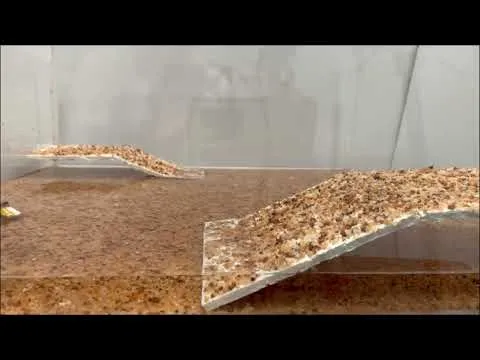
To test the suit, the team created tube-shaped obstacle courses. These were also 3D-printed and mimicked underwater rescue scenarios.
The cyborg performed very well. It successfully went through every dangerous zone. Its speed was only slightly slower than on land. With the diving suit, the roach's survival time underwater increased from a few minutes to up to three hours.
The roach was tested in shallow water, only a few inches deep. So, don't expect to see roaches scuba diving in deep oceans yet.
Deep Dive & References
Amphibious cyborg cockroaches for underwater operation - Nature Communications, 2024