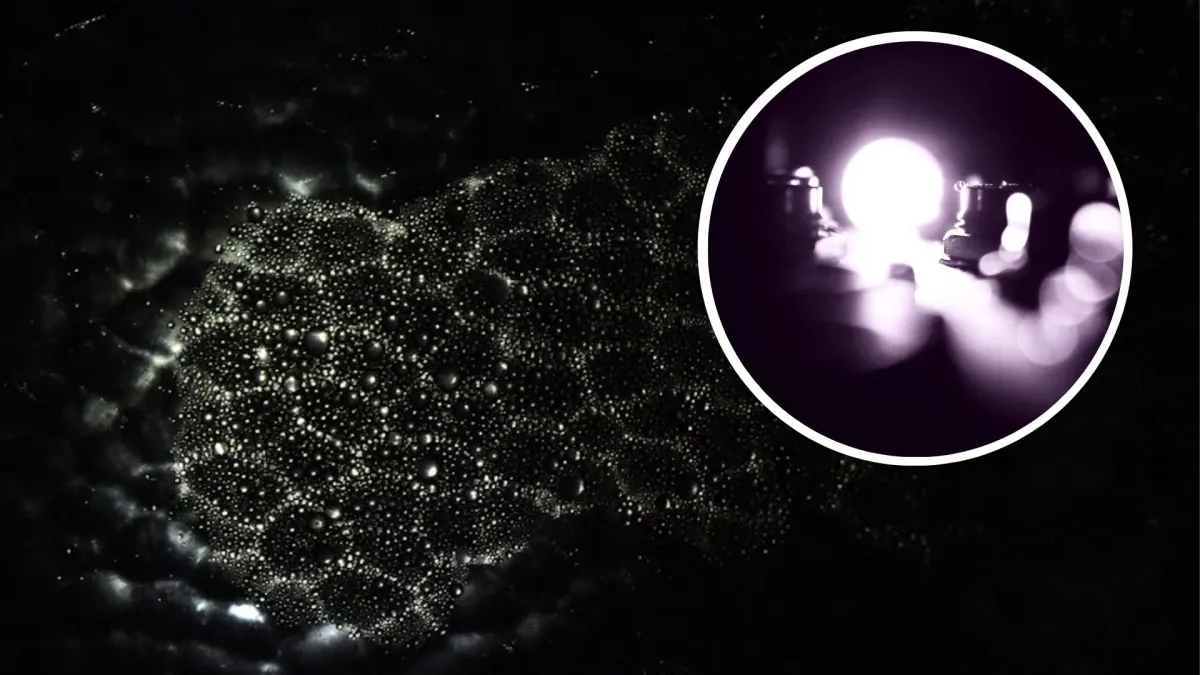
Scientists at the Technion-Israel Institute of Technology have confirmed a 50-year-old prediction about light waves. They found "dark points" within light that can move faster than light itself.
This discovery, published in Nature, provides the first direct proof of these "optical vortices."
Dark Points in Light
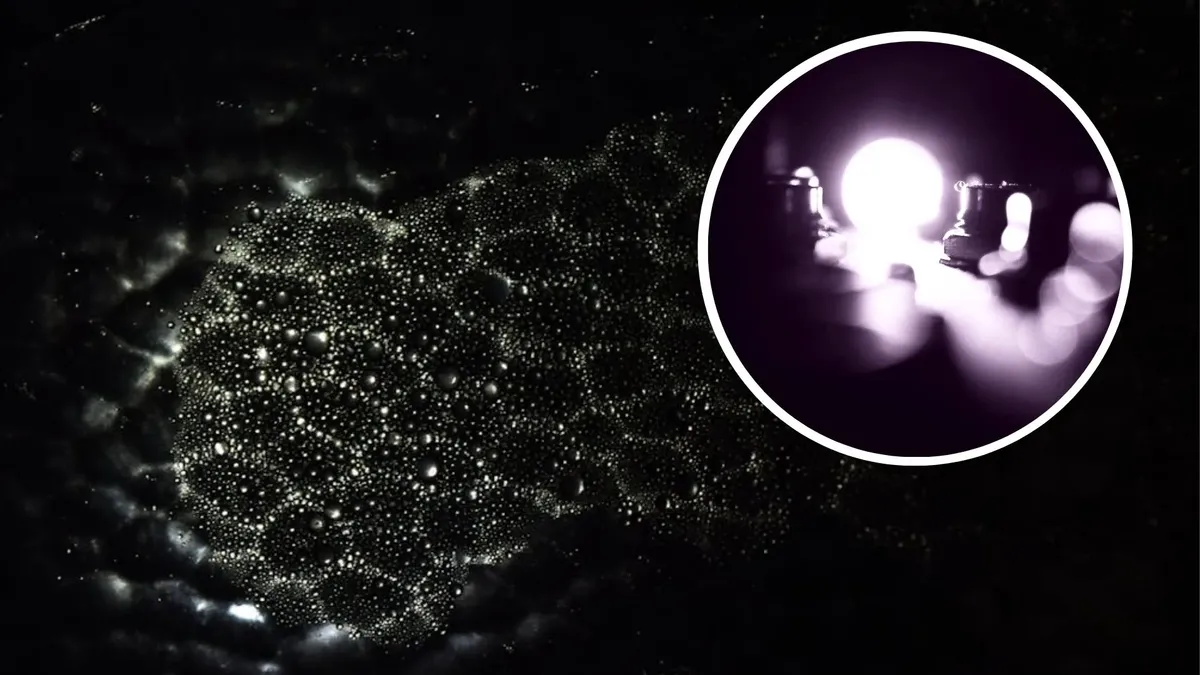
Professor Ido Kaminer led the research team, which included collaborators from MIT, Harvard, and Stanford. They focused on tiny areas in light waves where the light intensity drops to zero. These areas are called vortices or "null points." They act like holes in the wave.
We're a new kind of news feed.
Regular news is designed to drain you. We're a non-profit built to restore you. Every story we publish is scored for impact, progress, and hope.
Start Your News DetoxSimilar swirling patterns can be seen in water or air. But their existence and unusual movement in light waves have puzzled physicists for a long time.
The idea that these vortices could move faster than light was first suggested in the 1970s. This might sound like it breaks Einstein's Theory of Relativity, which says nothing can go faster than light. However, the researchers explain that this rule only applies to objects with mass or signals that carry energy or information. These vortices do neither. They are just points of zero intensity, so their superluminal (faster-than-light) motion doesn't break any fundamental laws.
Advanced Experimentation
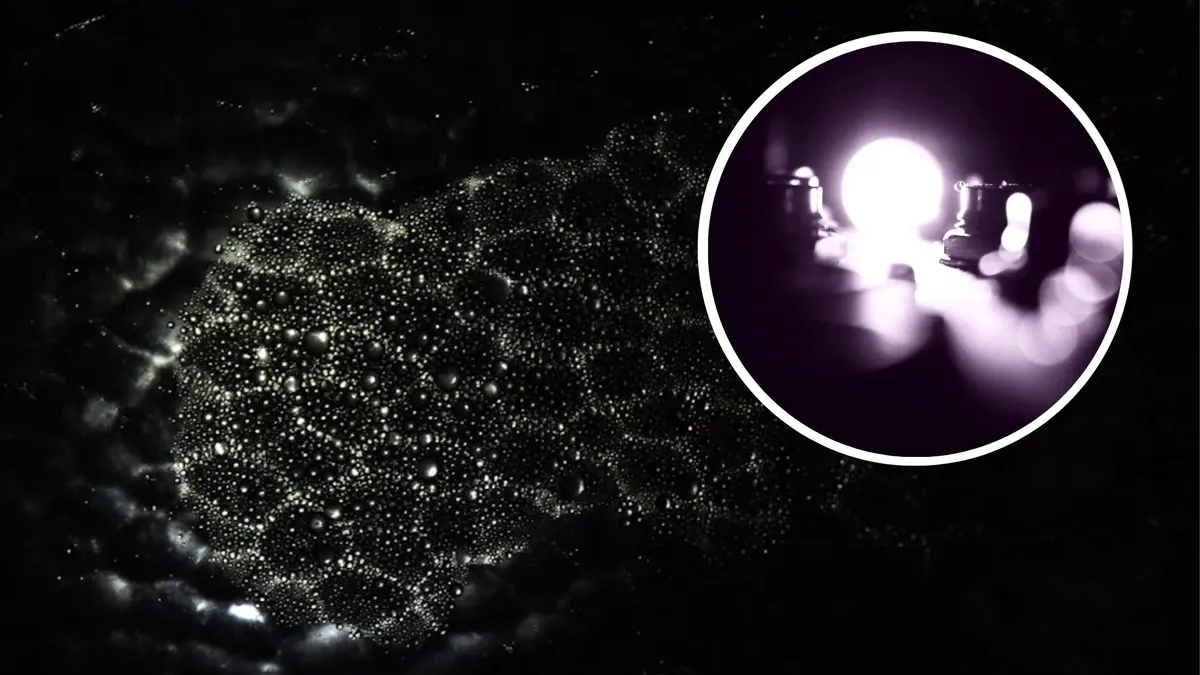
To see this phenomenon, the team built a very advanced experimental setup at Technion's electron microscopy center. They combined a laser system with a special electron microscope. This allowed them to track the fast movement of these dark points with great accuracy.
The experiments used a material called hexagonal boron nitride (hBN). In this material, light behaves unusually, forming "light-sound" waves called polaritons. These polaritons travel much slower than light in a vacuum. This slower travel creates the perfect conditions for the vortices to appear to "jump" across the wave faster than light itself.
Broad Implications
This discovery does more than just confirm an old theory. It reveals basic principles that apply to many types of wave systems, from how fluids move to how quantum materials behave.
More importantly, it offers a new way to study extremely fast and tiny phenomena. By tracking these vortices, scientists can now map processes that were previously too quick or too subtle to observe.
This breakthrough could impact fields like advanced microscopy, nanophotonics, superconductivity, and quantum information science. It allows researchers to see and analyze the quickest interactions in nature. This opens the door to understanding how complex physical systems work at their smallest and fastest scales.