Imagine a world where your phone doesn't just look smart, but actually thinks like a brain, only way faster and without needing a nuclear power plant to cool it down. That just got a tiny bit closer to reality. Engineers at Northwestern University have cooked up artificial neurons that can not only mimic brain signals but also successfully activate actual living brain tissue.
Yes, you read that right. In lab tests, these tiny, flexible devices — made from a semiconducting ink printed onto a polymer — zapped slices of a mouse brain, and the real neurons responded. It's like teaching a robot to speak fluent biological brain-ese, and the brain actually understood.
Why Your Brain is Cooler Than a Supercomputer
Our current computers are basically a bazillion identical transistors crammed onto a stiff silicon chip, doing the same thing over and over. They're powerful, sure, but also incredibly power-hungry. Your brain, on the other hand, is a soft, squishy, 3D network of diverse neurons, constantly rewiring itself as you learn. It's the most energy-efficient supercomputer known to science, and it runs on a banana and a good night's sleep.
We're a new kind of news feed.
Regular news is designed to drain you. We're a non-profit built to restore you. Every story we publish is scored for impact, progress, and hope.
Start Your News DetoxMark C. Hersam, who led this brain-bending study, puts it dryly: "AI desperately needs more efficient hardware." He points out that current AI demands are pushing us towards data centers powered by nuclear plants, guzzling water for cooling like it's going out of style. Which, if you think about it, is both impressive and slightly terrifying.
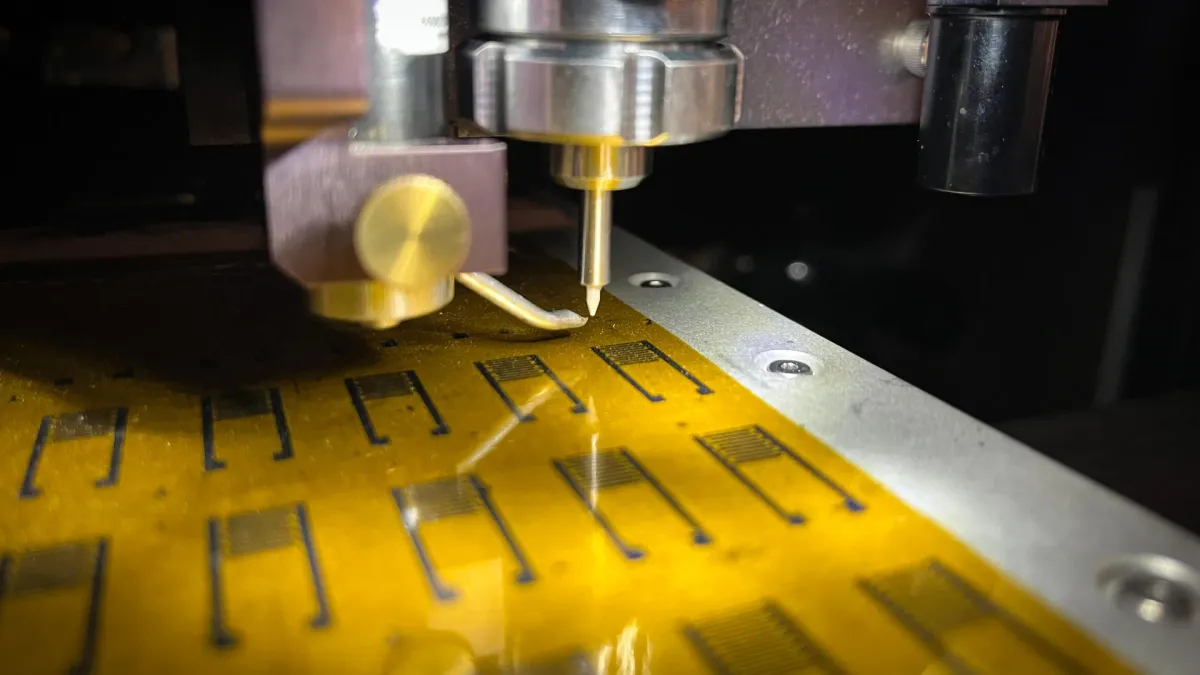
So, Hersam and his team decided to take a page from nature's playbook. Instead of simple, energy-hogging artificial neurons, they created ones that use soft, printable materials — specifically, molybdenum disulfide and graphene inks. The clever bit? They used the polymer in these inks, which previous researchers saw as a problem, to their advantage. When current flows, it carves a super-narrow path, causing the device to 'fire' like a real neuron.
This means these artificial neurons can generate complex signals — spikes, bursts, continuous firing — all the nuanced chatter of actual brain cells. Fewer parts, more sophisticated communication, vastly more efficient computing. It's like upgrading from a walkie-talkie to a symphony orchestra.
The Mouse Brain Test
To prove these artificial brain bits weren't just making noise, the team partnered with Indira M. Raman, whose lab applied the signals to mouse cerebellum slices. The results were clear: the artificial spikes perfectly matched the timing and shape of real neural signals, reliably activating the mouse neurons and triggering neural circuits. Hersam notes that other artificial neurons were either too slow or too fast. His team’s, however, "are in the right time range and have the right spike shape to interact directly with living neurons."
Beyond the sci-fi implications (think neuroprosthetics that restore sight or movement, or brain-machine interfaces that actually interface), there's a practical bonus: the manufacturing is simple, cheap, and low-waste. Because if we're going to build brain-inspired AI that doesn't melt the planet, we might as well do it efficiently.
So, while your phone might not be having philosophical debates with your brain just yet, the conversation has officially begun.