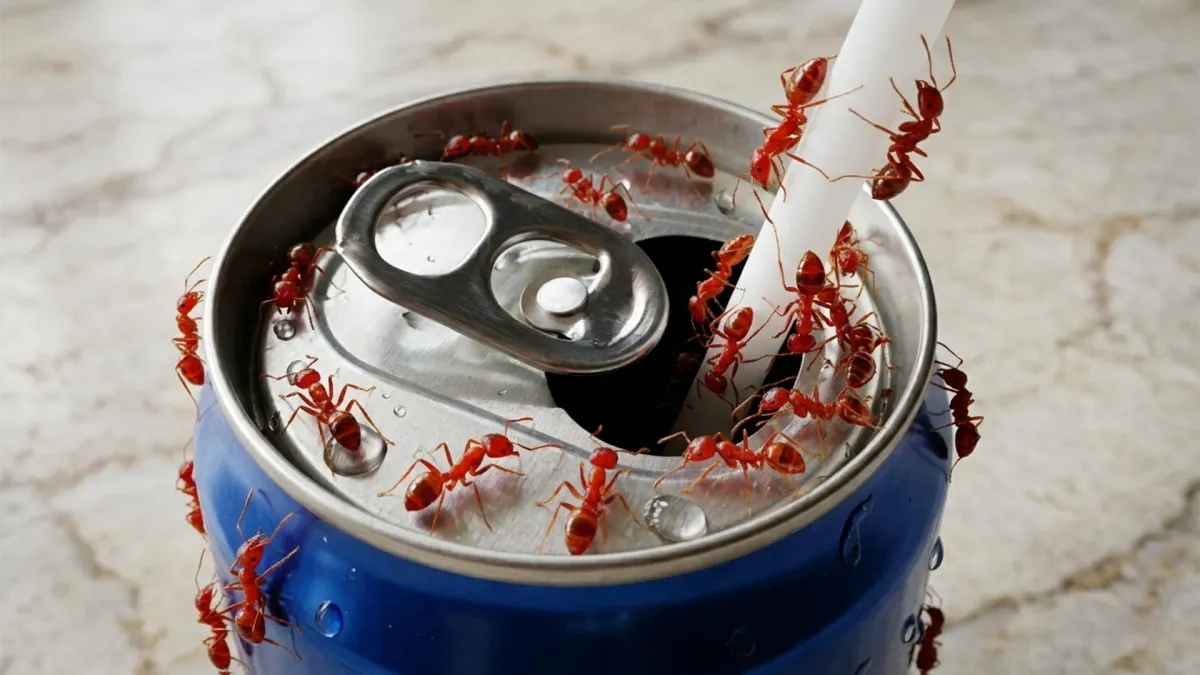
Turns out, a good shot of caffeine doesn't just sharpen human minds; it also turns tiny ants into super-efficient foragers. Yes, the same stuff in your morning brew could be the secret weapon against invasive ant species, making them smarter, faster, and ultimately, more susceptible to pest control.
A new study found that Argentine ants given caffeinated sugar didn't just get a little buzz; they got laser-focused. These ants, notorious for invading just about everywhere, started taking significantly straighter paths to food, cutting their travel time by up to 38%. They weren't moving any quicker; they were just, well, smarter about it. Which, if you think about it, is both impressive and slightly terrifying.
The Smartest Ants in the Room
Published in iScience, the research shows that ants on a caffeine kick became navigation experts, remembering food locations with uncanny precision. The goal? To make them better at finding and bringing back poisoned bait to the colony.
We're a new kind of news feed.
Regular news is designed to drain you. We're a non-profit built to restore you. Every story we publish is scored for impact, progress, and hope.
Start Your News DetoxHenrique Galante, a computational biologist and lead author, explained that moderate doses of caffeine boost ant learning, leading to more direct routes and quicker food retrieval. Because apparently, even ants need a little help focusing on the task at hand.
Argentine ants (Linepithema humile) are a global menace, and current pest control methods often fall short. Colonies might ignore the bait or stop using it before the poison spreads wide enough. The researchers, inspired by caffeine's learning boost in bees, wondered if ants would respond similarly. The idea is simple: the faster ants find and return with bait, the more pheromone trails they lay, and the more nestmates they recruit. This spreads the poison through the colony before anyone realizes it's not just a sweet treat.
How a Little Jolt Changes Everything
Scientists set up a miniature ant obstacle course, complete with a Lego bridge, where ants could find sugar solutions with varying levels of caffeine. Doses ranged from what you'd find naturally in plants to levels similar to energy drinks. They even tested a dose toxic to bees, just to see where the ant's limit was.
Using an automated tracking system, they watched 142 ants over four trials each. Ants on plain sugar didn't show much improvement, proving they weren't exactly spatial geniuses on their own. But the caffeinated ants? A different story entirely.
Ants given 25 parts per million (ppm) of caffeine cut their foraging time by 28% with each visit. At 250 ppm, that improvement shot up to 38%. An ant that initially took five minutes to find food could slash that to under a minute with the intermediate dose by the final trial. The highest dose, however, was a bit too much — no benefits there.
The key takeaway: it wasn't about speed. Their little legs weren't moving any faster. Instead, the caffeinated ants took significantly more direct routes, suggesting enhanced focus and spatial memory. They knew exactly where they were going, which is more than most of us can say before our first coffee.
These findings hint at a whole new strategy for pest control, turning the ants' improved intellect against them. While more research is needed (and is currently underway in Spain, testing caffeine-enhanced baits outdoors), the prospect of weaponizing coffee against pests is undeniably… stimulating.