For years, scientists have been sifting through ancient seafloor gunk, trying to figure out just how hot things got on Earth millions of years ago. Their findings informed our climate models, helping us predict what's coming next. The general consensus for the North Atlantic? Scorching. Like, 'boil an egg on a glacier' hot.
Turns out, they might have been a bit off. A new study just dropped a rather chilly bombshell: the North Atlantic has been significantly cooler for the last 16 million years than previously believed. Which, if you think about it, is both impressive and slightly terrifying for all those old assumptions.
The Tiny Algae With Big Answers
To understand future warming, scientists often look to the past, specifically times when carbon dioxide (CO2) levels were similar to what we're pumping out now. The Miocene epoch (5 to 23 million years ago) is a prime example. For years, the North Atlantic during this period was considered a veritable hot tub.
We're a new kind of news feed.
Regular news is designed to drain you. We're a non-profit built to restore you. Every story we publish is scored for impact, progress, and hope.
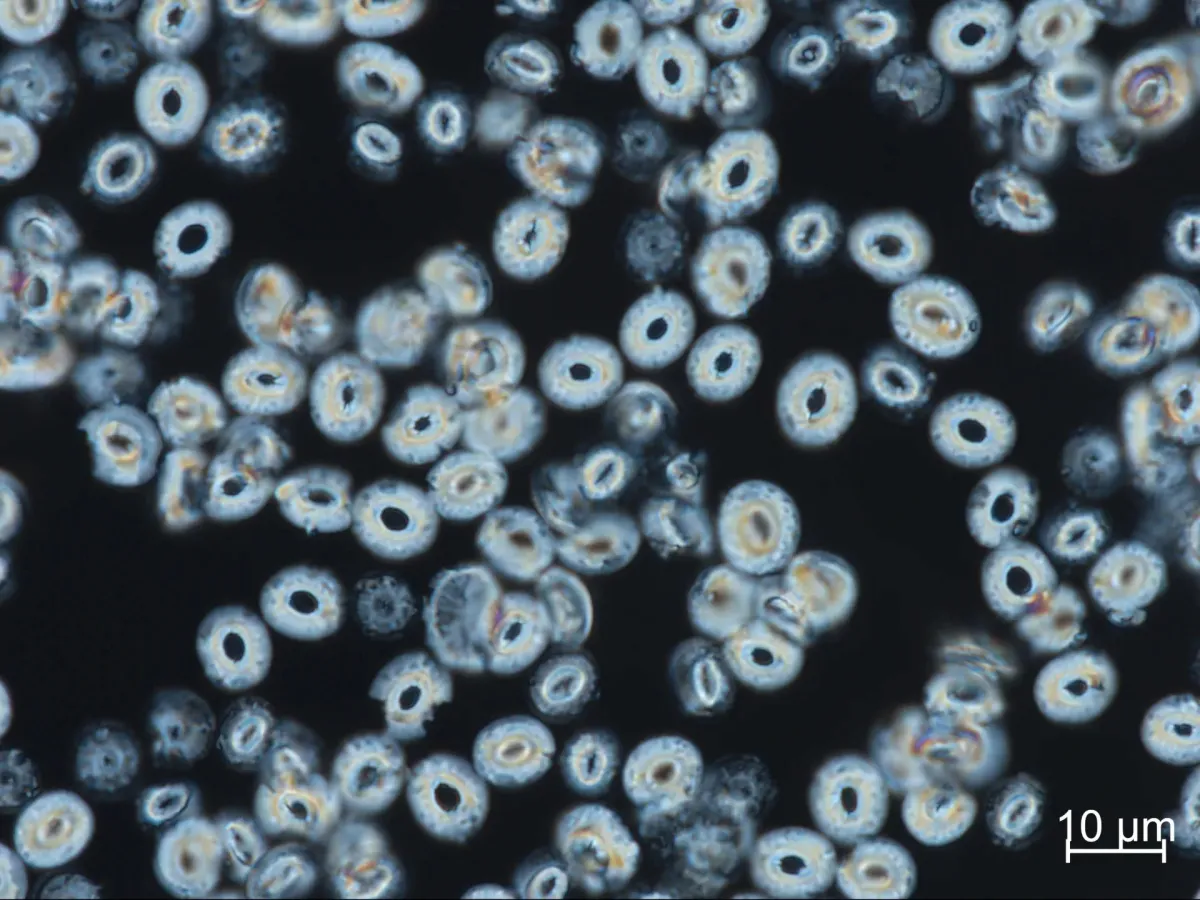
Start Your News DetoxBut Dr. Luz María Mejía and her team at MARUM decided to check the thermostat using a new technique called 'clumped-isotope geochemistry.' Their subjects? Tiny, fossilized algae called coccoliths. These microscopic marine plankton build their shells from calcite, and in doing so, they trap a chemical record of the water temperature around them. When they die, they sink, creating layers of sediment that act like a deep-sea diary.
Mejía developed a meticulous method to purify these ancient algae samples, making sure no contaminants skewed the results. And what those results showed was a North Atlantic that was about 9 degrees Celsius (or 16 degrees Fahrenheit) cooler than previous estimates.
Challenging the Hot Tub Theory
Previous estimates, often based on a method called the alkenone unsaturation index, suggested that high northern latitudes were extremely warm during the Miocene, with a surprisingly small temperature difference between the tropics and the poles. The implication was that higher CO2 meant a uniformly toasty ocean, everywhere.
Mejía, however, found herself wondering: how did anything even survive in those supposed temperatures? Her new data, derived from the actual 'clumps' of oxygen and carbon isotopes within the coccoliths, told a different story. More bonding of these isotopes happens at lower temperatures, and her tiny algae were showing a lot of bonding.
This isn't just an academic squabble over ancient temperatures. It's a fundamental recalibration. The new, cooler data aligns far better with modern climate models, suggesting that northern high latitudes might not have been quite so sensitive to CO2 levels in the past. And if they weren't that warm then, it implies they might not get quite that warm in the future either.
It's a reminder that even our most established scientific proxies need a regular check-up. And for now, the deep past of the North Atlantic just got a lot more refreshing. Mejía's team is already planning to expand their coccolith detective work to other regions, because apparently, the ocean still has plenty of secrets to spill.