Imagine a summer night, a full moon, and thousands of worms rising from the seafloor. They're not looking for love letters; they're looking to reproduce. And then, quite dramatically, they explode. Not in a violent, Michael Bay kind of way, but in a "release eggs and sperm then peace out" kind of way. This, apparently, is a buffet for fish. And now, thanks to some sharp-eyed biologists from the University of Southern Denmark (SDU), we know jellyfish are also crashing the party.
Turns out, no one had ever seen jellyfish go for this particular, self-destructing delicacy before. Hannah Yeo, a biologist and postdoc at SDU, confirmed it's a first. Jellyfish are known for their eclectic palates, but this specific menu item was a surprise. And now we know.
The team, which included Laura Ferreira, Erik Kristensen, Anders Garm, and Jamileh Javidpour, published their findings in the journal Hydrobiologia.
We're a new kind of news feed.
Regular news is designed to drain you. We're a non-profit built to restore you. Every story we publish is scored for impact, progress, and hope.
Start Your News DetoxThe Worm Buffet
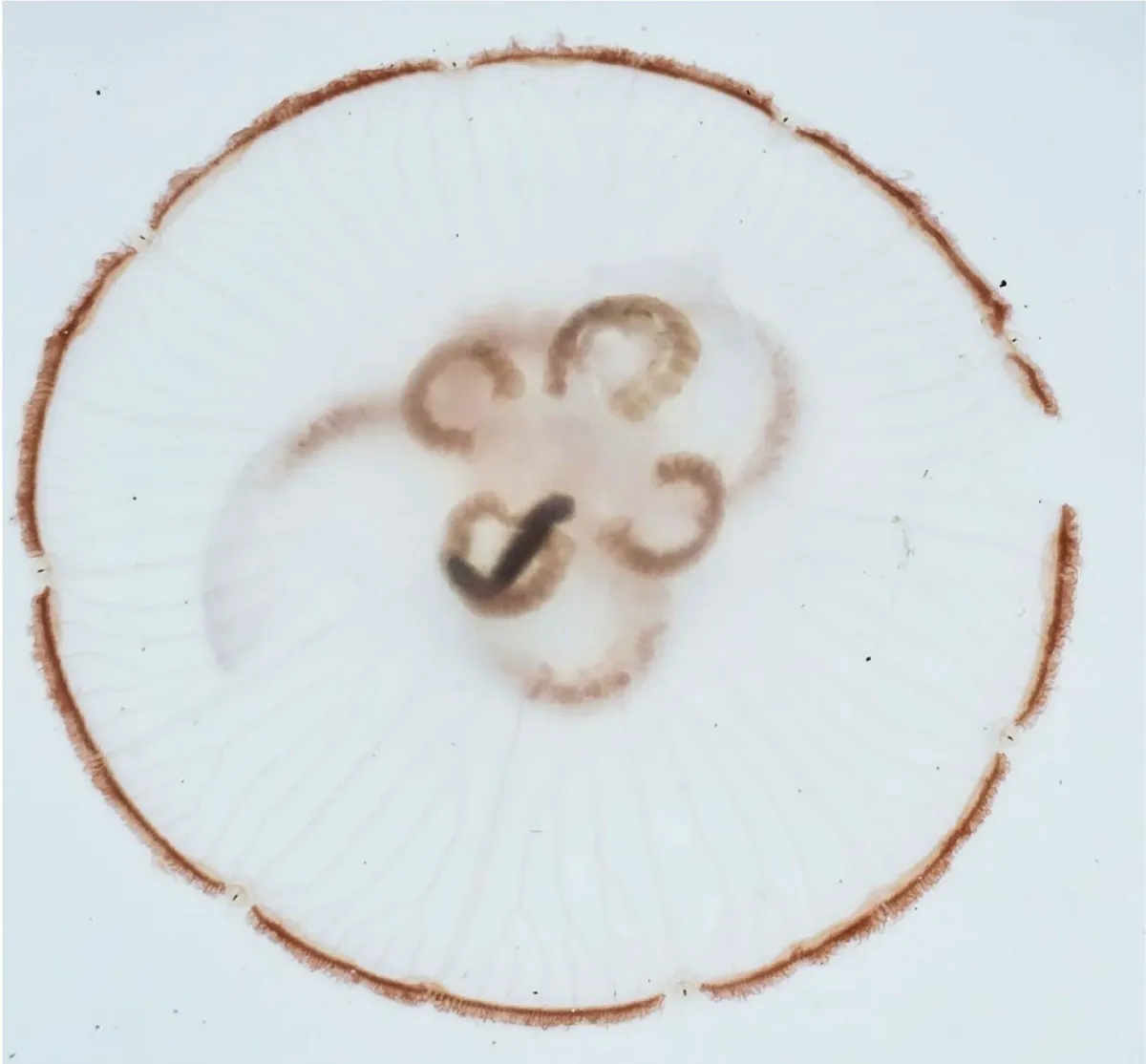
Over a year, the scientists documented 56 instances of jellyfish with at least one polychaete worm in their guts. These weren't just any jellyfish; we're talking about the common moon jelly (Aurelia aurita) and the rather unwelcome invasive comb jelly (Mnemiopsis leidyi). The preferred worm, it seems, was Platynereis dumerilii.
These culinary observations took place in the serene-sounding Kerteminde Fjord and Kertinge Nor in Denmark. Out of 166 Aurelia aurita examined, 45 had indulged. For the 71 Mnemiopsis leidyi, three were caught red-tentacled.
Professor Erik Kristensen from SDU suspects the actual numbers are far higher. Jellyfish, it turns out, are rather efficient diners, digesting these worms in just a few hours. So, many could have eaten and run before being sampled. To confirm these worms weren't just passing through for sightseeing, the team checked isotopes in the jellyfish tissue. The results confirmed it: jellyfish were indeed absorbing nutrients from their explosive snacks.
While these self-sacrificing worms aren't likely a daily staple, their mass spawning events offer a short-term, high-energy boost during the summer. Think of it as a seasonal, all-you-can-eat special for growing jellyfish. Which, if you think about it, is both impressive and slightly terrifying.
Invasive Species and Upward Mobility
The findings also shine a spotlight on the invasive Mnemiopsis leidyi. This species is notorious for outcompeting native animals, and now it has another trick up its sleeve. Associate Professor Jamileh Javidpour from SDU believes Mnemiopsis likely ate even more worms than observed, given their nocturnal hunting habits. By the time samples were taken in daylight, the evidence would have been, well, digested.
These comb jellies are not exactly welcome guests in Danish waters. Their opportunistic feeding habits are a problem, and this newly discovered food source just adds another arrow to their competitive quiver. This study also flips a common ecological concept on its head. Usually, energy flows downward in marine ecosystems – dead organic matter sinks, feeding bottom-dwellers. But here, we have a clear case of upward mobility. Bottom-dwelling animals rise, meet their dramatic end, and become a meal for creatures higher up in the water column. While other predators were known to feast on these spawning events, jellyfish and Mnemiopsis had never been implicated. This means jellyfish are tapping into a seafloor food source that was largely overlooked.
Javidpour concluded that this upward energy transfer is a crucial piece of the puzzle for modeling coastal ecosystems. Even occasional access to these seafloor resources could significantly impact how native and invasive jellyfish compete and, ultimately, survive. Because apparently, even jellyfish appreciate a good, if slightly messy, dinner party.