A new fossil discovery has shed light on how Lystrosaurus, an ancient relative of mammals, survived the most severe extinction event in Earth's history. This plant-eating creature thrived after the End-Permian Mass Extinction about 252 million years ago. This event wiped out many species, but Lystrosaurus endured extreme heat, unstable environments, and long droughts.
New research in PLOS ONE reveals a Lystrosaurus embryo inside an egg, dating back about 250 million years. This is the first confirmed egg from a mammal ancestor, proving that these early relatives laid eggs.
Uncovering Ancient Eggs
Researchers believe these eggs had soft shells, which is why they are rarely preserved. Unlike the hard, mineralized eggs of dinosaurs, soft-shelled eggs are much less likely to become fossils. This makes the discovery incredibly rare and important.
We're a new kind of news feed.
Regular news is designed to drain you. We're a non-profit built to restore you. Every story we publish is scored for impact, progress, and hope.
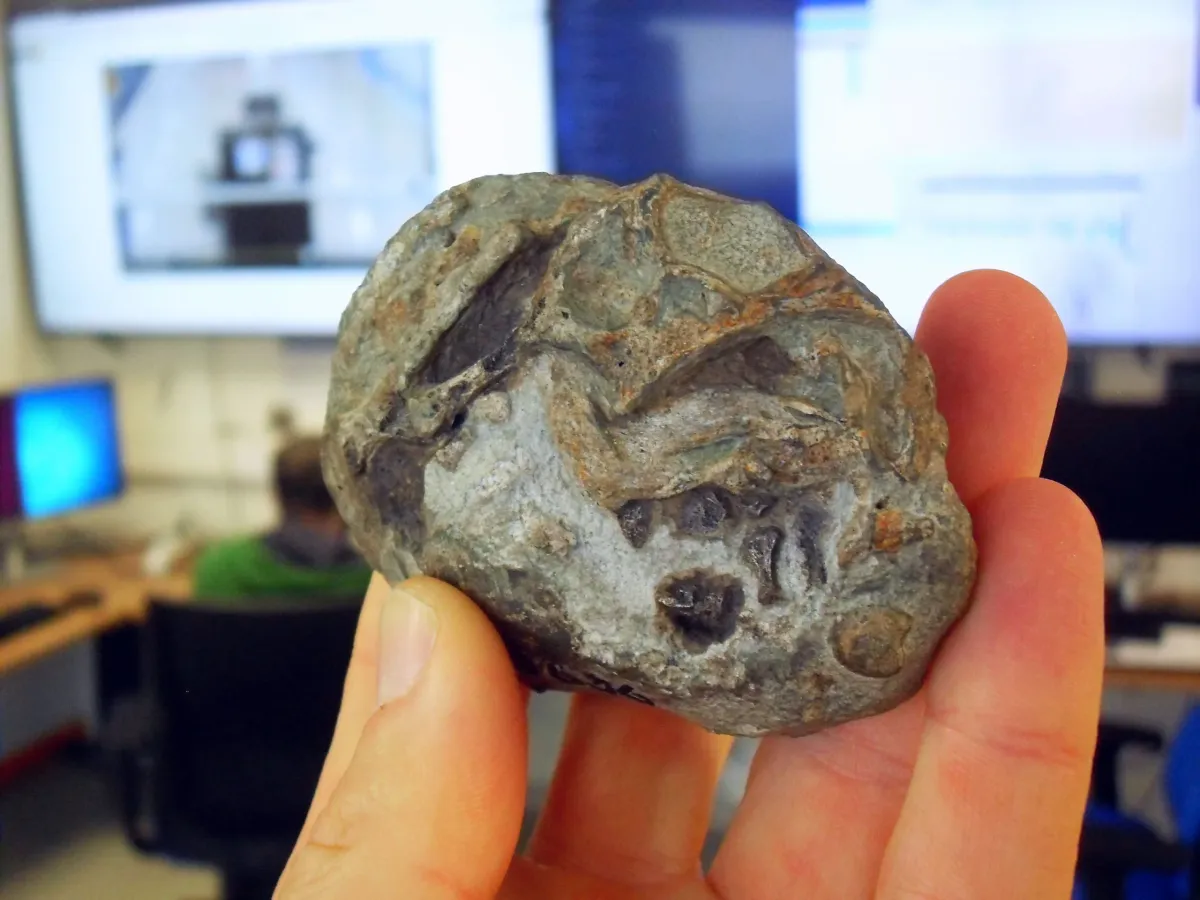
Start Your News DetoxProfessor Jennifer Botha found the fossil in 2008. Her fossil finder, John Nyaphuli, identified a small nodule with tiny bone flecks. As he carefully prepared it, a perfectly curled-up Lystrosaurus hatchling appeared. Professor Botha suspected it had died inside an egg, but the technology to confirm this wasn't available then.
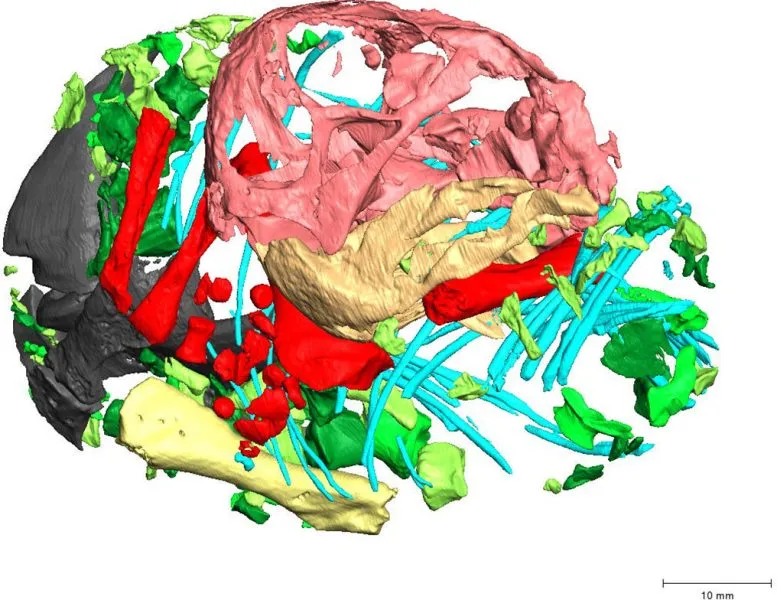
Advanced synchrotron X-ray CT scanning at the ESRF (The European Synchrotron) allowed researchers to examine the fossil in detail. Dr. Vincent Fernandez described the process as exciting, noting the challenge of scanning delicate bones.
The scans showed a key developmental feature: an incomplete lower jaw. Professor Julien Benoit explained that the lower jaw is made of two halves that must fuse before an animal can feed. Since this fusion hadn't happened, the Lystrosaurus would not have been able to feed itself. This confirmed it was still an embryo.
Survival Through Rapid Development
The study suggests Lystrosaurus laid relatively large eggs for its body size. In modern animals, larger eggs contain more yolk, providing enough nutrition for embryos to develop without needing care after hatching. This means Lystrosaurus likely did not feed its young with milk, unlike modern mammals. Larger eggs also resist drying, which was crucial in the dry conditions after the extinction.
These traits likely boosted survival in the harsh environment. Lystrosaurus hatchlings were precocial, meaning they were born at an advanced stage. They could move, feed, and avoid predators soon after hatching. They also likely reached reproductive maturity quickly.
In short, Lystrosaurus succeeded by growing fast and reproducing early. This strategy was very effective in a struggling ecosystem. The discovery not only shows the first direct evidence of egg-laying in mammal ancestors but also helps explain why Lystrosaurus became so dominant after the extinction. It highlights how resilience, adaptability, and reproductive strategy were key to survival during one of Earth’s toughest periods.
Insights for Modern Climate Challenges
Julien Benoit noted that this research offers a deep historical view of resilience and adaptability during rapid climate change and ecological crises. Understanding how past organisms survived global upheaval helps scientists predict how today's species might respond to ongoing environmental stress. This makes the discovery relevant to current biodiversity and climate challenges.
Jennifer Botha added that using modern imaging techniques allowed them to solve a puzzle from nearly two decades ago. For over 150 years of South African paleontology, no fossil had been definitively identified as a therapsid egg. This discovery is a true milestone, confirming that mammal ancestors like Lystrosaurus laid eggs.
Deep Dive & References:
The first non-mammalian synapsid embryo from the Triassic of South Africa - PLOS ONE, 2026