Parasitic wasps in the Trichogramma genus are some of the world's smallest insects. They are important for natural ecosystems and farming because they fight off pests. Now, research teams from the Universities of Regensburg, Wageningen, and Groningen have found the sex pheromone of a Trichogramma wasp.
The study shows that tiny amounts of the female pheromone can attract males and make them start courtship. These findings were published in Scientific Reports.
Finding a Tiny Attractant
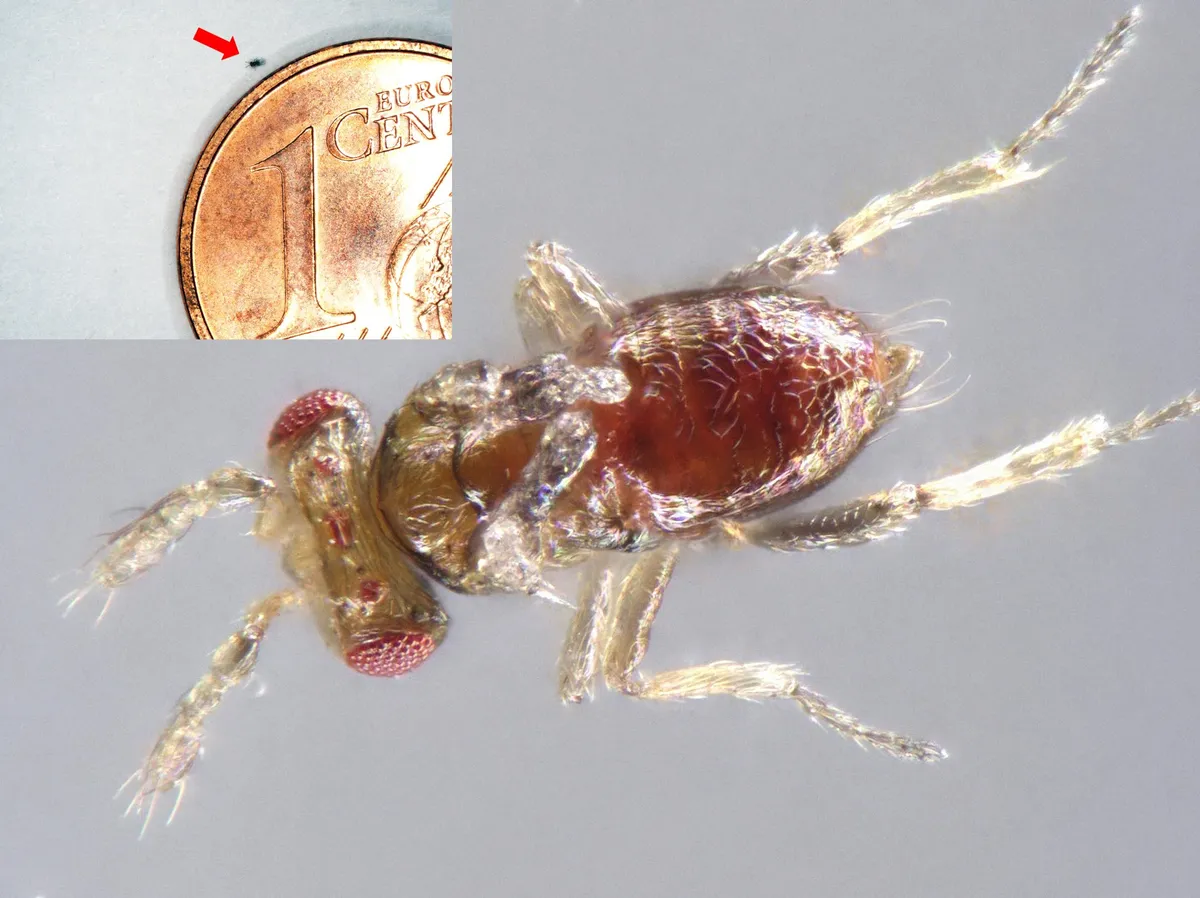
Trichogramma turkestanica females are only about 0.4 millimeters long. They lay their eggs inside the eggs of different moth species. The wasp larvae then grow inside these host eggs, eventually killing them. Because of this, these wasps are raised in large numbers globally. They are used to control insect pests naturally.
We're a new kind of news feed.
Regular news is designed to drain you. We're a non-profit built to restore you. Every story we publish is scored for impact, progress, and hope.
Start Your News DetoxScientists have known for a long time that Trichogramma wasps use sex pheromones to find partners. But identifying these chemical signals has been very hard. This is because the insects make only extremely small amounts of them. Despite this, the Wageningen team from the Laboratories of Organic Chemistry and Entomology successfully isolated two compounds made only by females.
Teris van Beek, who leads the Wageningen research team, explained that only a few nanograms of each compound were available. Their complex structure also made them hard to study.
After many years, Adriaan Minnaard's team in Groningen finally created the two molecules in the lab. It was not clear if they were biologically active until the Regensburg researchers did behavioral experiments.
Joachim Ruther, head of the Regensburg research team, described a special moment. He saw males, the size of a sandgrain, move directly toward the pheromone. They then performed a "courtship dance."
Powerful Pheromone
The attractant is incredibly powerful. About 600 attograms (6 × 10⁻¹⁶ grams) were enough to make the males respond. This is an almost unbelievably small amount.
To understand how small this is, imagine dissolving a single sugar cube in all the water of Lake Geneva. The amount of sugar in about one tablespoon of that water would be roughly the same as the pheromone dose that Trichogramma males still react to.
In the future, this sex pheromone could help with biological pest control. It could be used to track these helpful insects in farm areas. First, researchers need to show that the pheromone reliably attracts males in natural outdoor settings.
Deep Dive & References
Absolute configuration, improved synthesis and femtogram-level behavioral activity of the sex pheromone of the minute parasitoid wasp Trichogramma turkestanica - Scientific Reports, 2026