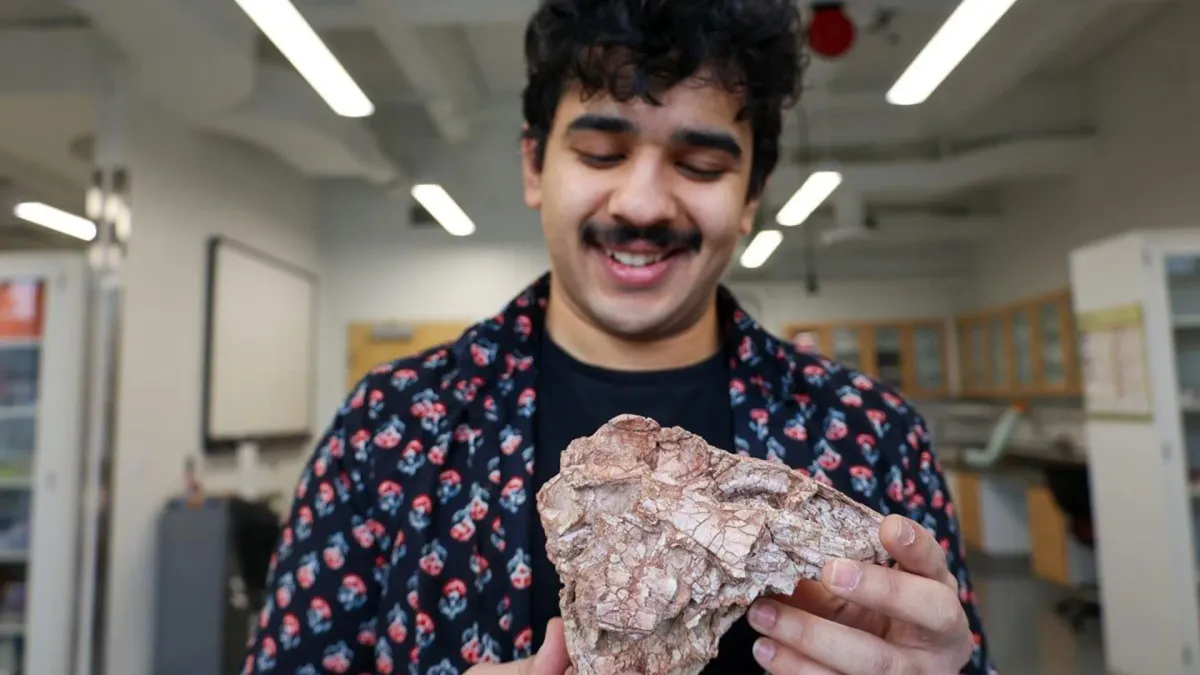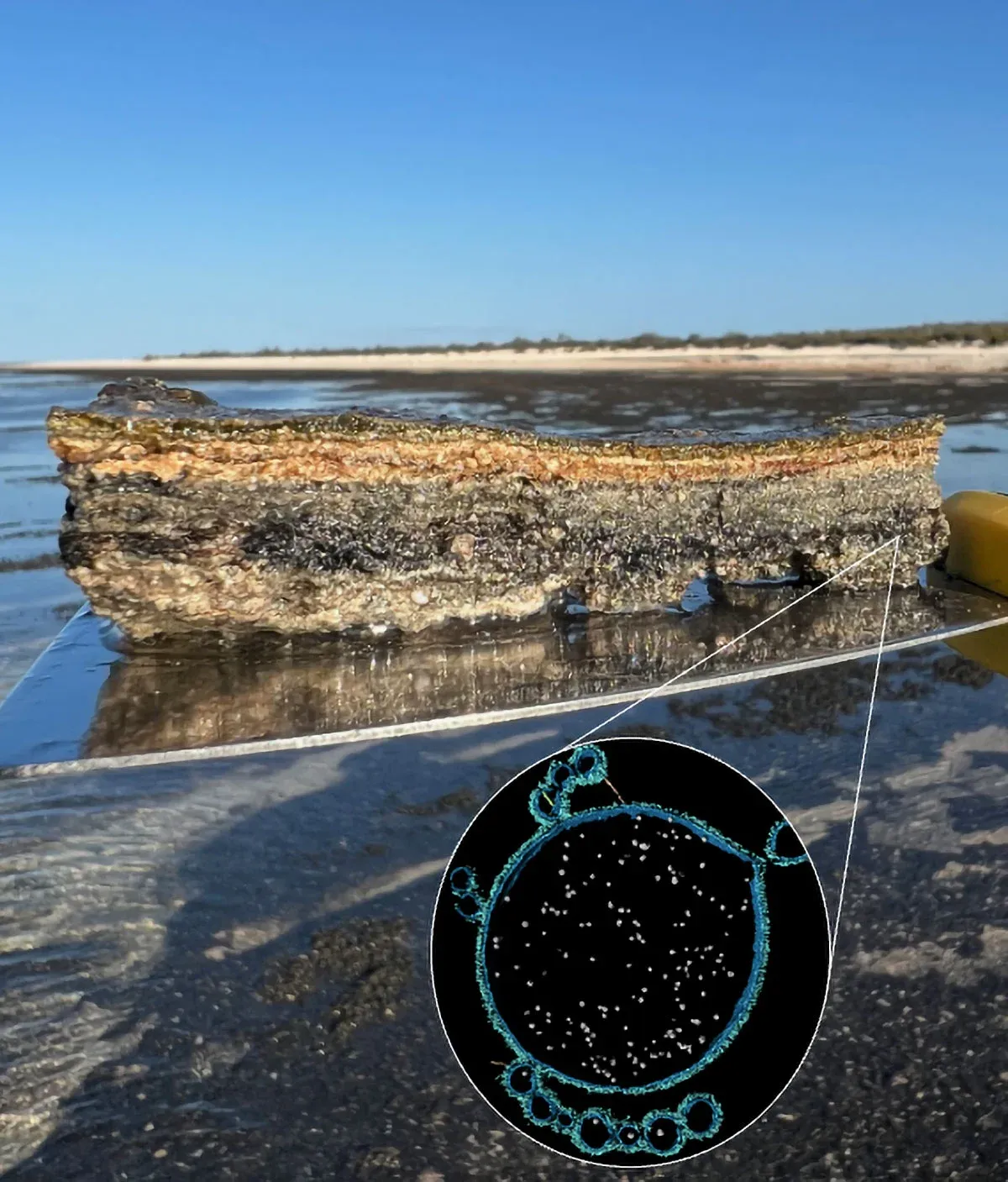
They look like lumpy, unassuming rocks, but stromatolites are actually bustling microbial cities. These layered structures, built by tiny organisms over billions of years, literally oxygenated our planet long before forests or animals even thought about existing. They set the stage for all the complex life we see today — including us. And now, new research suggests these "living fossils" aren't just a relic; they might be a real-time instruction manual for how complex life first began.
The Ultimate Roommates
Microbiologist Brendan Burns from UNSW Sydney, working with teams from UTS and the University of Melbourne, made a discovery inside these ancient structures that could answer one of biology's biggest questions: How did simple cells ever get together to form the intricate cells that make up every plant, animal, and human? He found a new microbe, an Asgard archaeon, living in incredibly close quarters with another organism.
Think of it as the ultimate roommate situation, one that potentially changed the course of evolution. The prevailing theory is that the first eukaryotic cell (the kind we're made of) formed when an ancient archaeon and a bacterium partnered up, perhaps even with one engulfing the other. This led to mitochondria, the energy factories inside our cells. Scientists had theorized this for ages, but seeing it in action? That's new.
We're a new kind of news feed.
Regular news is designed to drain you. We're a non-profit built to restore you. Every story we publish is scored for impact, progress, and hope.
Start Your News DetoxThis study provides the first visual evidence of an Asgard archaeon and a bacterium interacting, connected by tiny, tube-like structures called nanotubes. Burns calls it a "little primordial Asgard soup" — a small-scale model of the grand partnership that birthed eukaryotes.
A Five-Year Quest (and Tiny Tubes)
Finding these organisms was one thing. Growing them in a lab was another. Burns admits it took "four or five years of work." Turns out, Asgard archaea are notoriously finicky, refusing to grow alone. This suggests they might be perpetually co-dependent, a crucial clue for how these ancient partnerships might have started.
The real breakthrough came with electron cryotomography, an advanced 3D imaging technique that can visualize structures a millionth of a millimeter small. The images were clear: the two microbes were connected by nanotubes, with the archaeon also sporting chains of small sacs and complex tube-like extensions. Even better, they were exchanging compounds — vitamins, nutrients, hydrogen — that each needed to survive. It's an ancient, microscopic give-and-take.
Debnath Ghosal from the University of Melbourne called capturing this interaction a "major step," helping us understand how complex cells emerged from simpler microbial life. Kate Mitchie from UNSW added that deep learning helped predict protein structures, revealing ancient versions of cellular machinery now vital for us. It's like finding the original blueprints for all life.
A Name, a History, and a Future
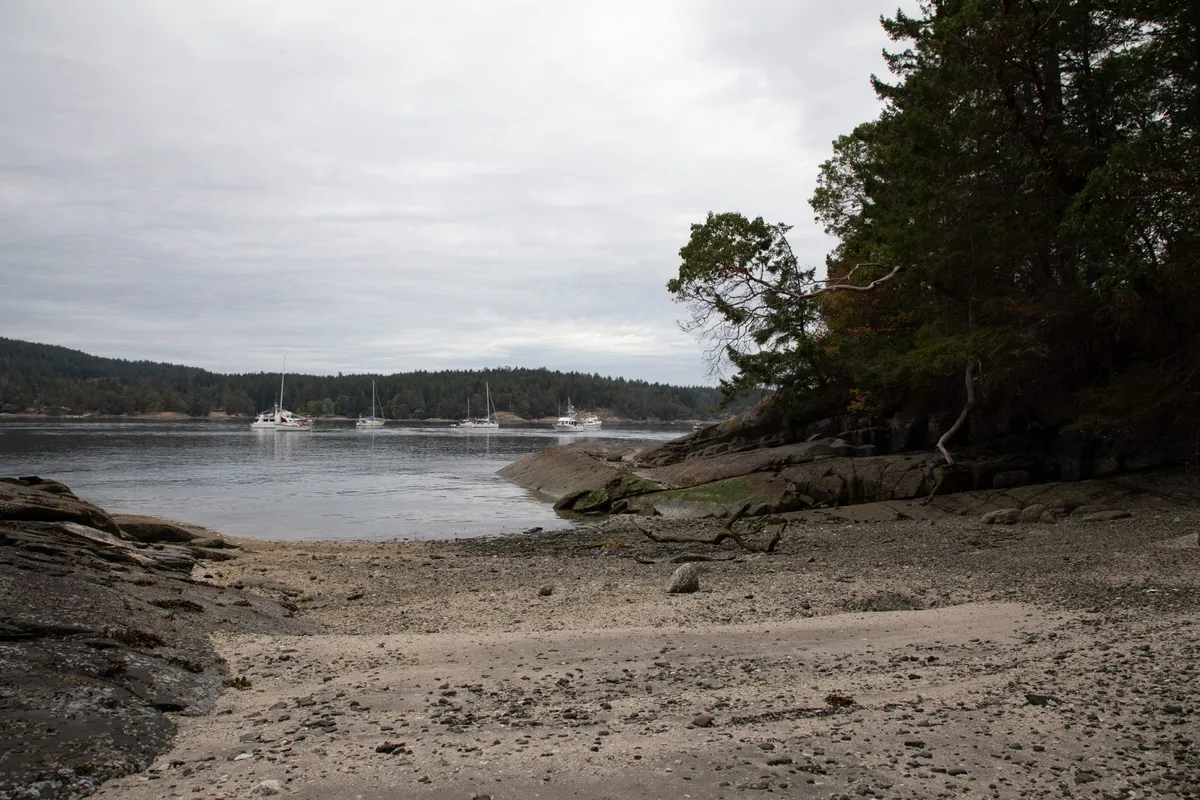
The new archaeon was named Nerearchaeum marumarumayae. Nereus, an ancient Greek sea god; Marumarumayae, a Malgana word meaning "ancient home." This name honors the Malgana people of central Shark Bay, Western Australia, where these stromatolites still form today. Their elders and rangers protect this region, recognizing its deep Indigenous history stretching back 30,000 years. It’s a powerful reminder that these systems are not just scientific curiosities, but living cultural heritage.
Iain Duggin from UTS finds it "amazing" that these microbial partnerships, forged millions of years ago, eventually led to complex life, even us. We slowly came from the bottom of the sea, indeed.
Burns hopes to find more of these partnerships, expanding his "primordial Asgard soup" to reconstruct the earliest stages of complex life. It's a story of discovery, connection, and the enduring power of cooperation, especially as these fragile ecosystems face threats from climate change. Because, as Burns notes, even the smallest partners can leave the deepest mark on history. Let that sink in.