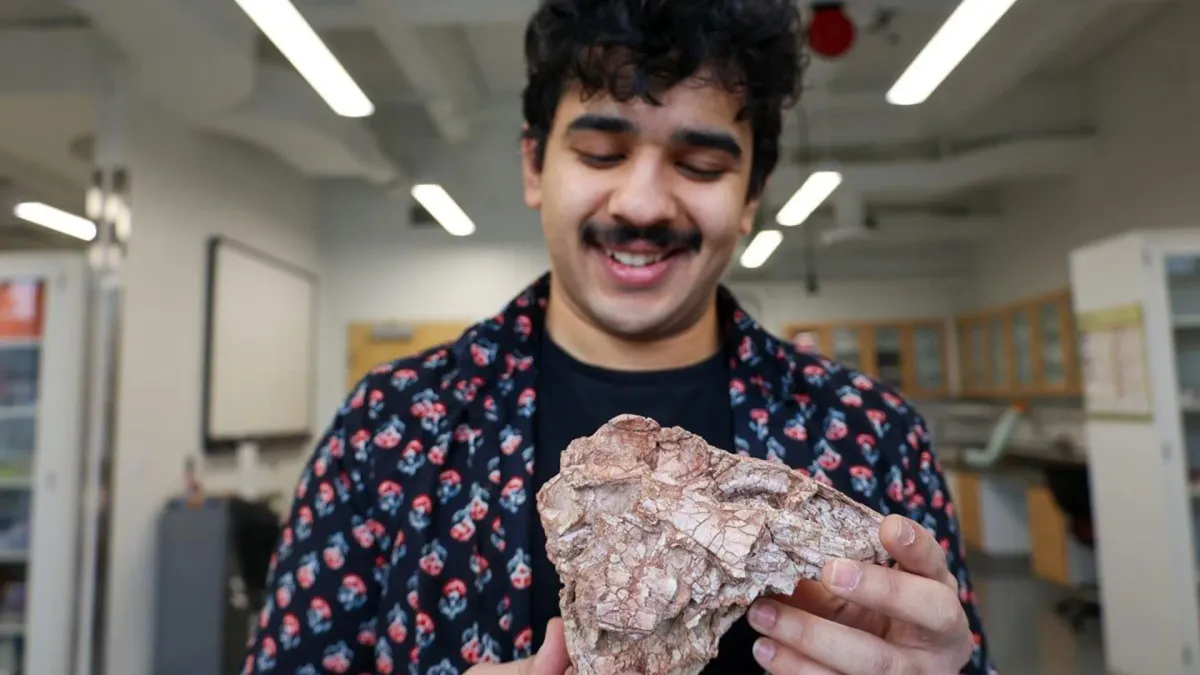
Imagine staring at a dinosaur skull so mangled, so utterly bad, that a student paleontologist describes it as "uniquely sucky" and adds, "if you saw a human skull in this way, you'd throw up." Charming. But this particular fossil, once forgotten in a drawer, just rewrote a significant chunk of dinosaur history.
Simba Srivastava, a Virginia Tech senior, spent two years wrestling with this crushed specimen. His reward? Uncovering a brand-new species of meat-eating dinosaur. And not just any dinosaur — one that, according to previous theories, shouldn't have even existed when it did.
The Comeback Kid (Dinosaur Edition)
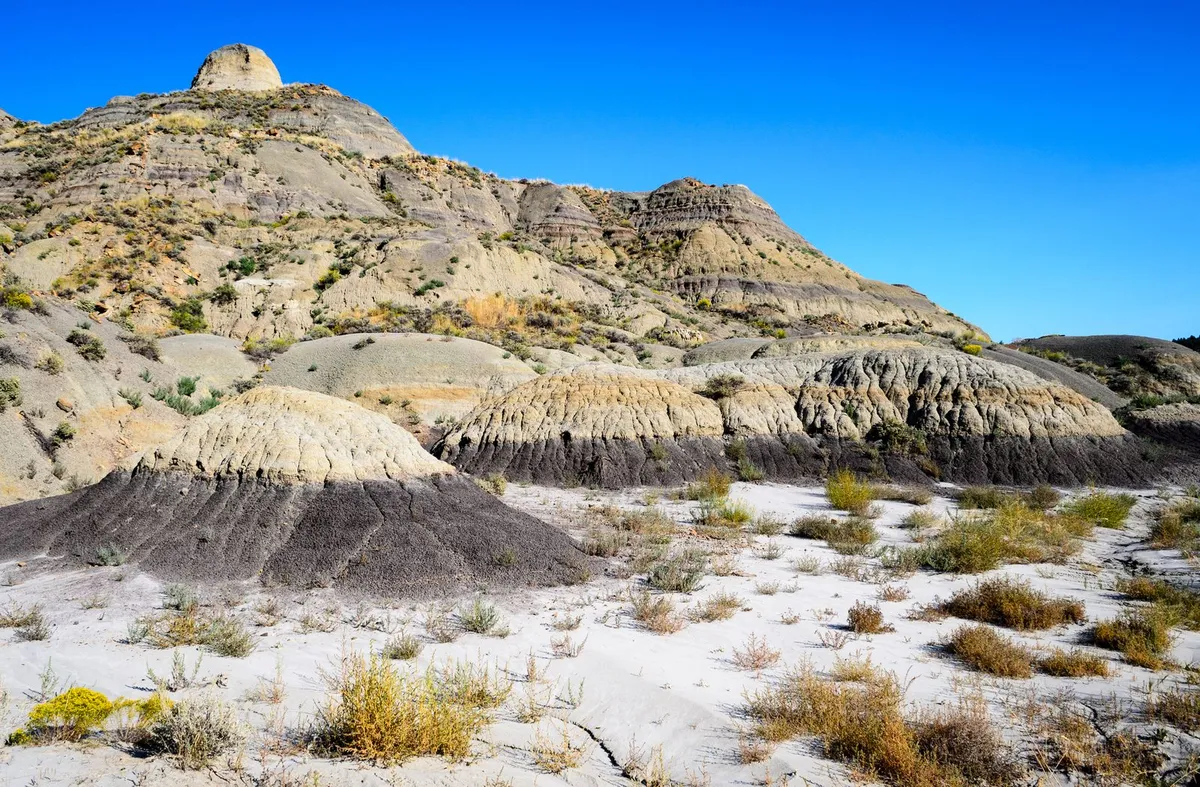
The story begins in 1982, when the skull was first unearthed in New Mexico. Then, it went into a drawer and out of mind for over three decades. Until Sterling Nesbitt, a geobiologist, rediscovered it and brought it to Virginia Tech. That's when Srivastava, a student typically not handed such complex projects, took the reins.
We're a new kind of news feed.
Regular news is designed to drain you. We're a non-profit built to restore you. Every story we publish is scored for impact, progress, and hope.
Start Your News DetoxUsing CT scans, he digitally peeled apart the squashed bones, then 3D-printed a model. What emerged was Ptychotherates bucculentus, which charmingly translates to 'folded hunter with full cheeks.' One paleo-artist, perhaps with a flair for the dramatic, dubbed it a "murder muppet." Which, if you think about it, is both descriptive and slightly terrifying.
This "murder muppet" wasn't just another pretty (or not-so-pretty) face. It was a meat-eater, predating Tyrannosaurus Rex by more than three times its lifespan. It lived near the end of the Triassic period, a time when dinosaurs were still jostling for position with ancient croc relatives and early mammals. They were co-stars, not headliners.
The Extinction That Wasn't So Simple
Enter the End-Triassic extinction event. This global catastrophe wiped out much of the competition, paving the way for dinosaurs to dominate. The prevailing wisdom was that this extinction only cleared the field for dinosaurs, eliminating their rivals.
But Ptychotherates throws a wrench in that narrative. This "folded hunter" belongs to the Herrerasauria, one of the earliest known groups of meat-eating dinosaurs. And it was found in rock layers dating to just before that mass extinction. No other Herrerasaurians have ever been found this late in the Triassic.
This suggests the extinction wasn't just a tidy house-cleaning for dinosaurs. It also took out some of their own, long-standing lineages. The American Southwest, where Ptychotherates was found, might have been the last refuge for this ancient dinosaur family before they, too, were wiped from the planet.
As Srivastava notes, this single, mangled specimen — small enough to fit in his hands — is the only proof that these dinosaurs lived so long, in these latitudes, and evolved such an unusual skull shape. Billions of individuals, all spoken for by one very "sucky" fossil.