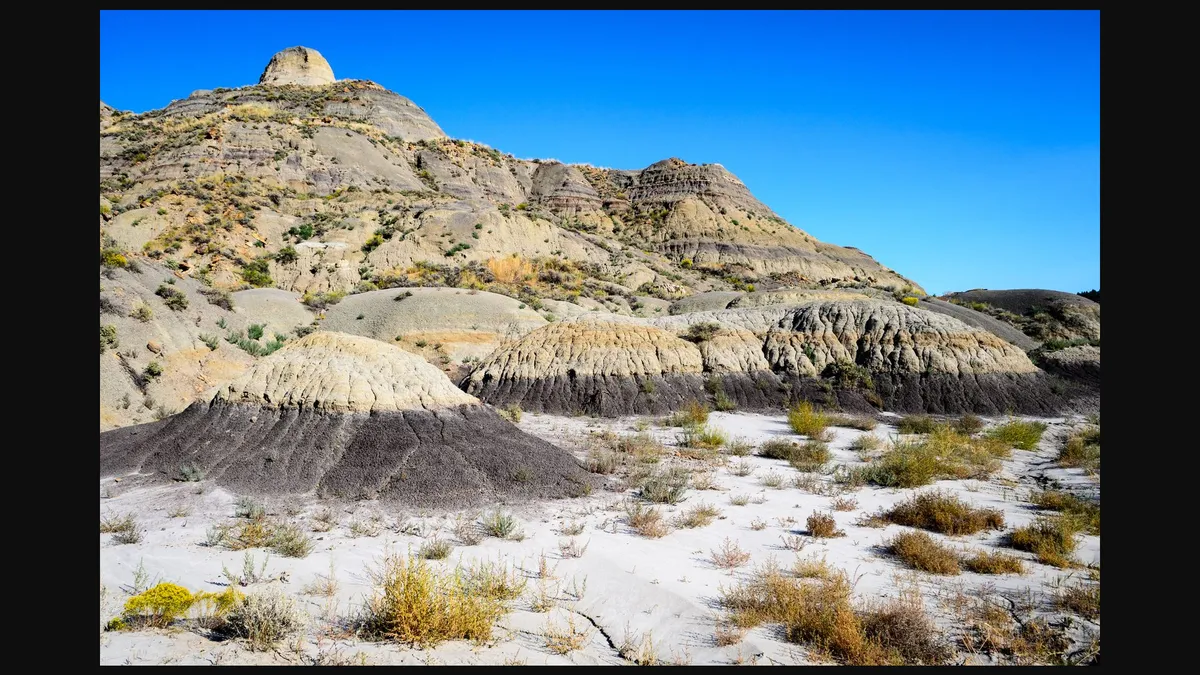
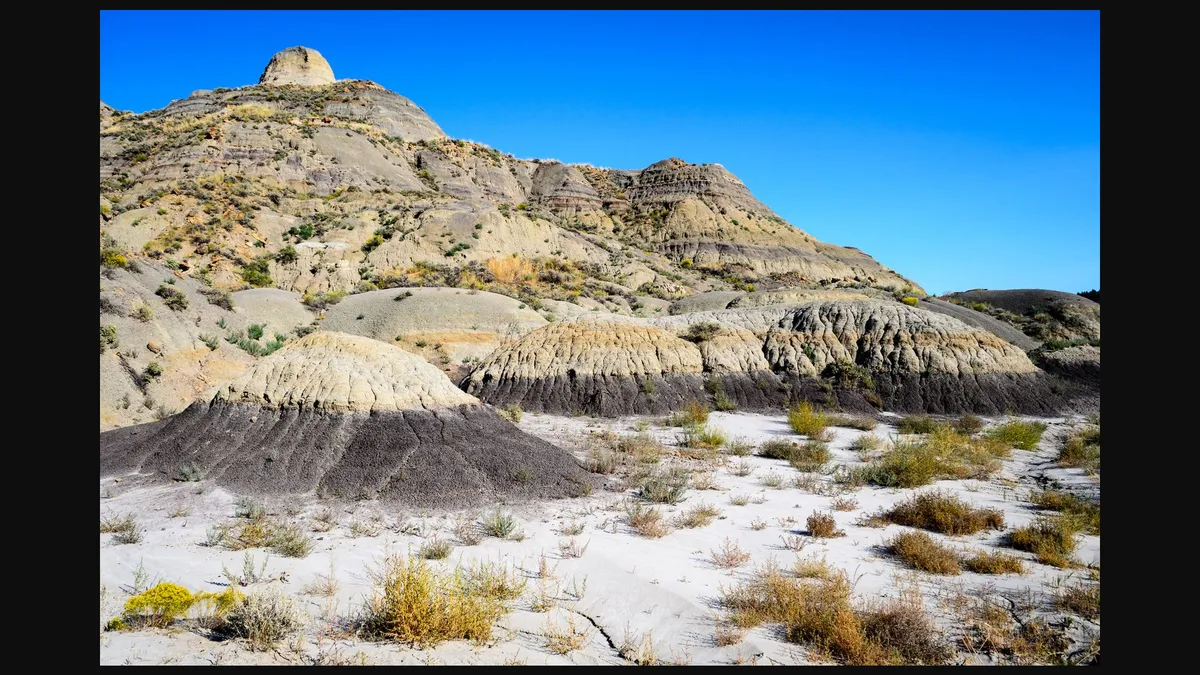
The Hell Creek Formation in North America is a legendary site for fossil discoveries. It holds countless clues about life during the Late Cretaceous period. From preserved plants to the mighty T. rex, this area has led to many breakthroughs for paleontologists.
In 1902, fossil hunter Barnum Brown found amazing bones in eastern Montana. These rocks were from the Cretaceous period. The remains were from a huge meat-eater, bigger than any dinosaur seen before. This creature was Tyrannosaurus rex, named by Brown in 1905.
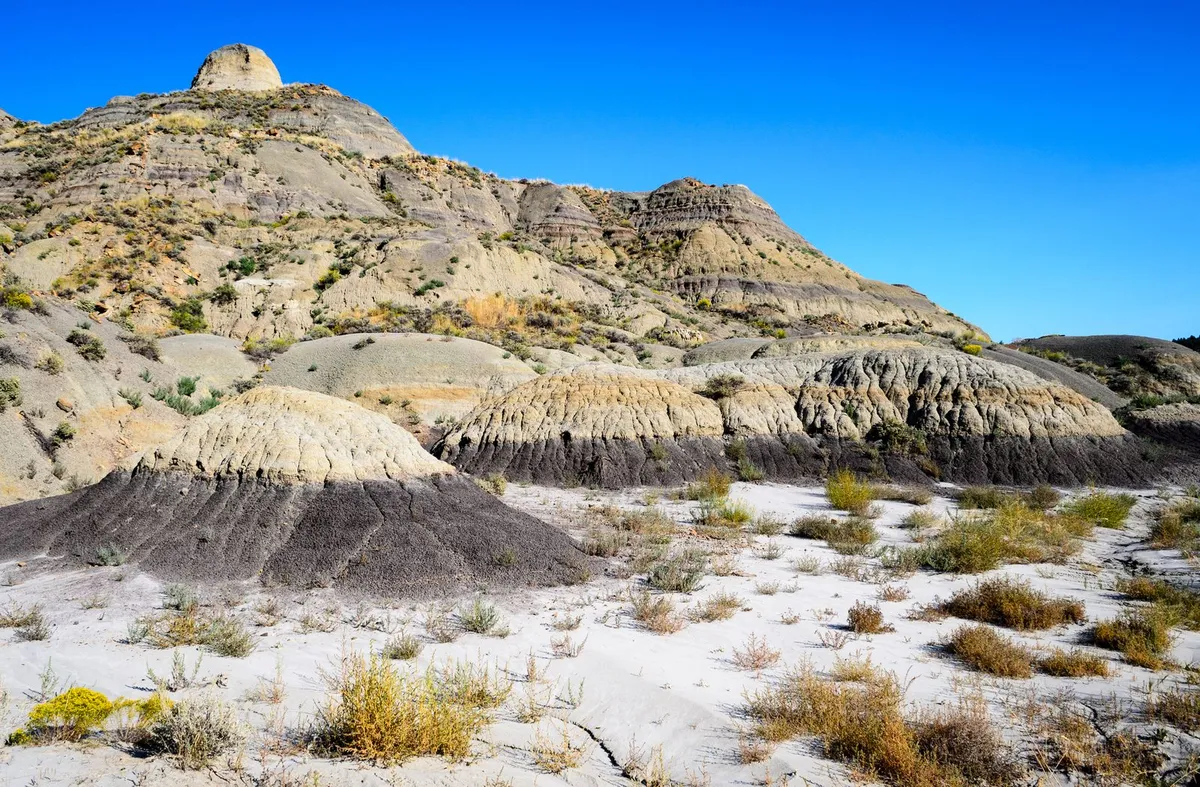
T. rex lived alongside other dinosaurs like Edmontosaurus, Triceratops, and Ankylosaurus. Their bones are found together in rock layers that are 66 to 68 million years old. This area is known as the Hell Creek Formation. It stretches across eastern Montana, the Dakotas, and Wyoming.
We're a new kind of news feed.
Regular news is designed to drain you. We're a non-profit built to restore you. Every story we publish is scored for impact, progress, and hope.
Start Your News DetoxDinosaur fossils are just one part of what makes this formation special. Paleontologists have also found preserved leaves, tiny mammal bones, and other clues. These discoveries offer a rich look into Cretaceous life just before a huge asteroid hit Earth.
More than 95% of T. rex museum specimens come from the Hell Creek Formation. Museums like the Museum of the Rockies and the American Museum of Natural History display many fossils from Hell Creek. These range from tiny pollen to giant dinosaur skeletons.
Here are five key discoveries from the Hell Creek Formation that have changed how we understand the prehistoric past.
Iconic Discoveries from Hell Creek
1. Tyrannosaurus rex
T. rex is almost a symbol of the Hell Creek Formation. While T. rex fossils have been found elsewhere, the Hell Creek bones were the first. They showed that meat-eating dinosaurs could grow much larger than previously thought.
 Caption: This specimen, AMNH 5027, was one of the first T. rex skeletons Barnum Brown found. It inspired the Jurassic Park logo. Evolutionnumber9 via Wikimedia Commons under CC BY-SA 4.0
Adult T. rex could be over 40 feet long and weigh more than nine tons. They were agile hunters, not especially fast, but had powerful bites that could crush bone. The large number of T. rex fossils in Hell Creek suggests a rich ecosystem with plenty of prey to support them. These fossils helped T. rex become the most famous dinosaur ever.
2. The K-Pg Boundary
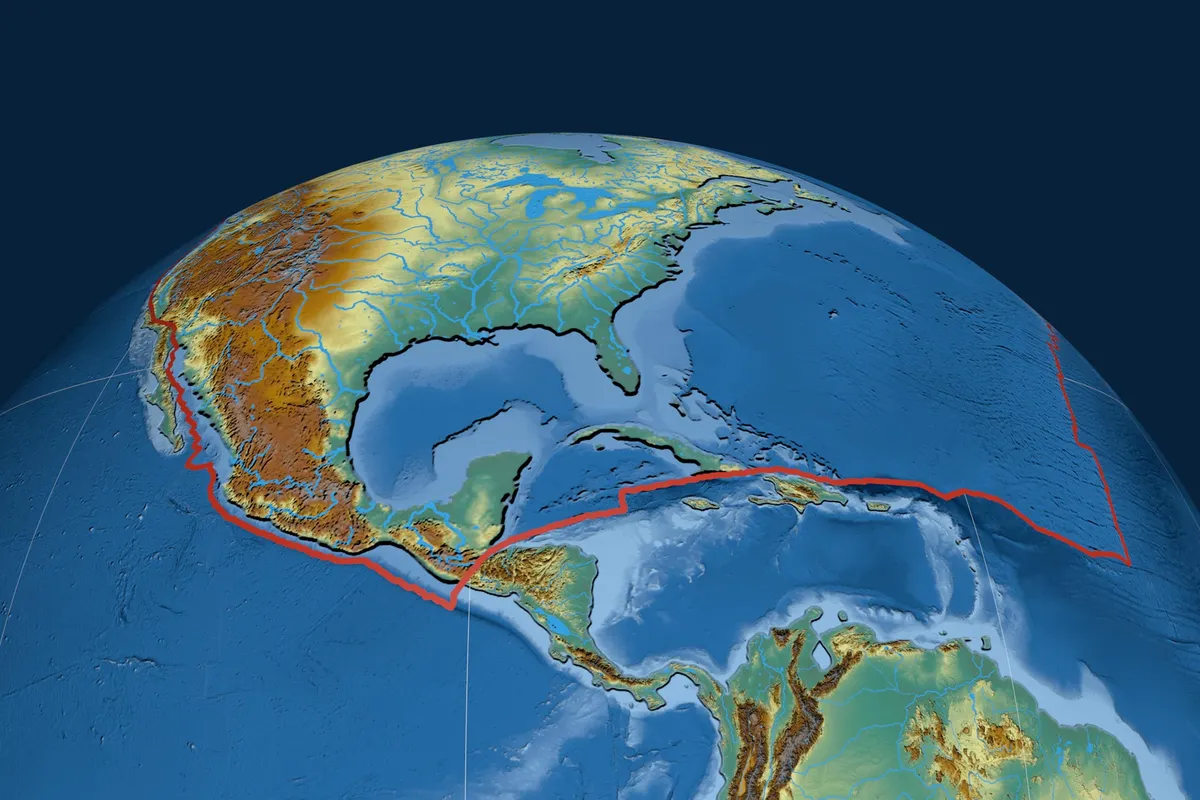
The fossils of Hell Creek are amazing, but their place in Earth's history makes them even more so. About 66 million years ago, an asteroid hit Mexico's Yucatán Peninsula. This caused Earth's fifth mass extinction, known as the Cretaceous-Paleogene (K-Pg) extinction. This event ended the age of dinosaurs and began the "Age of Mammals."

Evidence of this disaster is a thin layer of rock called the K-Pg boundary. It is visible on top of the Hell Creek Formation. Paleontologists know a lot about the fossils both below and above this boundary. Hell Creek fossils show life before the extinction. Fossils in the overlying Fort Union Formation show the survivors, like small mammals, reptiles, and early Paleocene organisms. The K-Pg boundary in Hell Creek helps us understand what life was like before the asteroid impact and how the world changed afterward.
3. Acheroraptor temertyorum
While large dinosaurs get much attention, paleontologists are also looking for smaller species from the Late Cretaceous. Fossils of small animals are rare because their bodies often decayed or were eaten before they could fossilize. Also, early paleontologists often focused on finding big, impressive specimens.
 Caption: A cast of the known remains of Acheroraptor. Its discovery reminds us that many small species are encased in the Hell Creek Formation. Jonathan Chen via Wikimedia Commons under CC BY-SA 4.0
The discovery of Acheroraptor in 2013 showed that many small Hell Creek animals are still waiting to be found. Named by paleontologist David Evans and his team, Acheroraptor was about the size of a turkey. It was a close relative of Velociraptor. It likely hunted small prey like mammals, lizards, and baby dinosaurs. It probably used a special second toe to pin its food. So far, only an upper and lower jaw of Acheroraptor have been found. More fossils are likely out there if experts keep looking for small specimens.
4. Cretaceous Plants
Dinosaur bones tell only part of the story. Plant fossils provide crucial information about the environment. They reveal details about climate, rainfall, forest structure, and food webs. These are essential for understanding how prehistoric ecosystems worked.
 Caption: Fossilized fruits of Spinifructus antiquus, a member of the palm family, emerged from the Hell Creek Formation. Stickpen via Wikimedia Commons under public domain
The Hell Creek Formation is rich in plant fossils, including pollen and well-preserved leaves. Some plants, like palms, magnolias, and dogwoods, would look familiar today. Others, like extinct relatives of cycads and conifers, would seem more unusual. The plant fossils show that Hell Creek forests had open spaces, likely from dinosaurs eating and trampling plants. These forests contained both ancient plants and newer flowering plants called angiosperms. Pollen records also show a "fern spike" after the asteroid strike. This indicates that ferns were among the first plants to recover from the catastrophe.
5. Infernodrakon hastacollis
In 2002, paleontologists found a tyrannosaur skeleton nicknamed "Jane." In the same quarry, they found an unexpected bonus. It was a long, flanged bone, later identified as the fifth neck bone of a pterosaur. Pterosaurs were flying reptiles with leathery wings.
 Caption: Only one bone of Infernodrakon has been identified so far, as pterosaur bones were very fragile. Any reconstruction, such as this one, is highly speculative. Jun-Hyeok Jang via Wikimedia Commons under CC BY-SA 4.0
Initially, experts thought the bone belonged to Quetzalcoatlus, a giant pterosaur. However, a new analysis last year showed it was a new species. Based on its neck bone, this pterosaur would have been about as tall as a person. It was an azhdarchid pterosaur, a toothless flier that walked on the ground to catch small prey, much like some storks do today. Paleontologist Emi Thomas and her team named it Infernodrakon, meaning "hell dragon," after its discovery site.
Deep Dive & References
- Acheroraptor temertyorum - Naturwissenschaften, 2013
- New analysis of Infernodrakon - Journal of Vertebrate Paleontology, 2024