Turns out, young stars — the kind that could one day host life-bearing planets — are far less dramatic than we thought. A new study using NASA's Chandra X-ray Observatory just dropped the cosmic equivalent of "they grow up so fast," revealing that these stellar adolescents dim their powerful X-ray output surprisingly quickly.
This isn't just a fun fact for astronomers; it's a huge sigh of relief for anyone hoping to find life beyond Earth. Think of it this way: those early, intense X-rays from a young star are basically a planet's worst enemy, stripping away atmospheres and preventing the formation of all the delicate molecules needed for life to, well, live.
Astronomers have been trying to figure out how long this intense, life-unfriendly radiation lasts. Now, they have a much clearer picture.
We're a new kind of news feed.
Regular news is designed to drain you. We're a non-profit built to restore you. Every story we publish is scored for impact, progress, and hope.
Start Your News DetoxCosmic Adolescence: Less Fiery Than Predicted
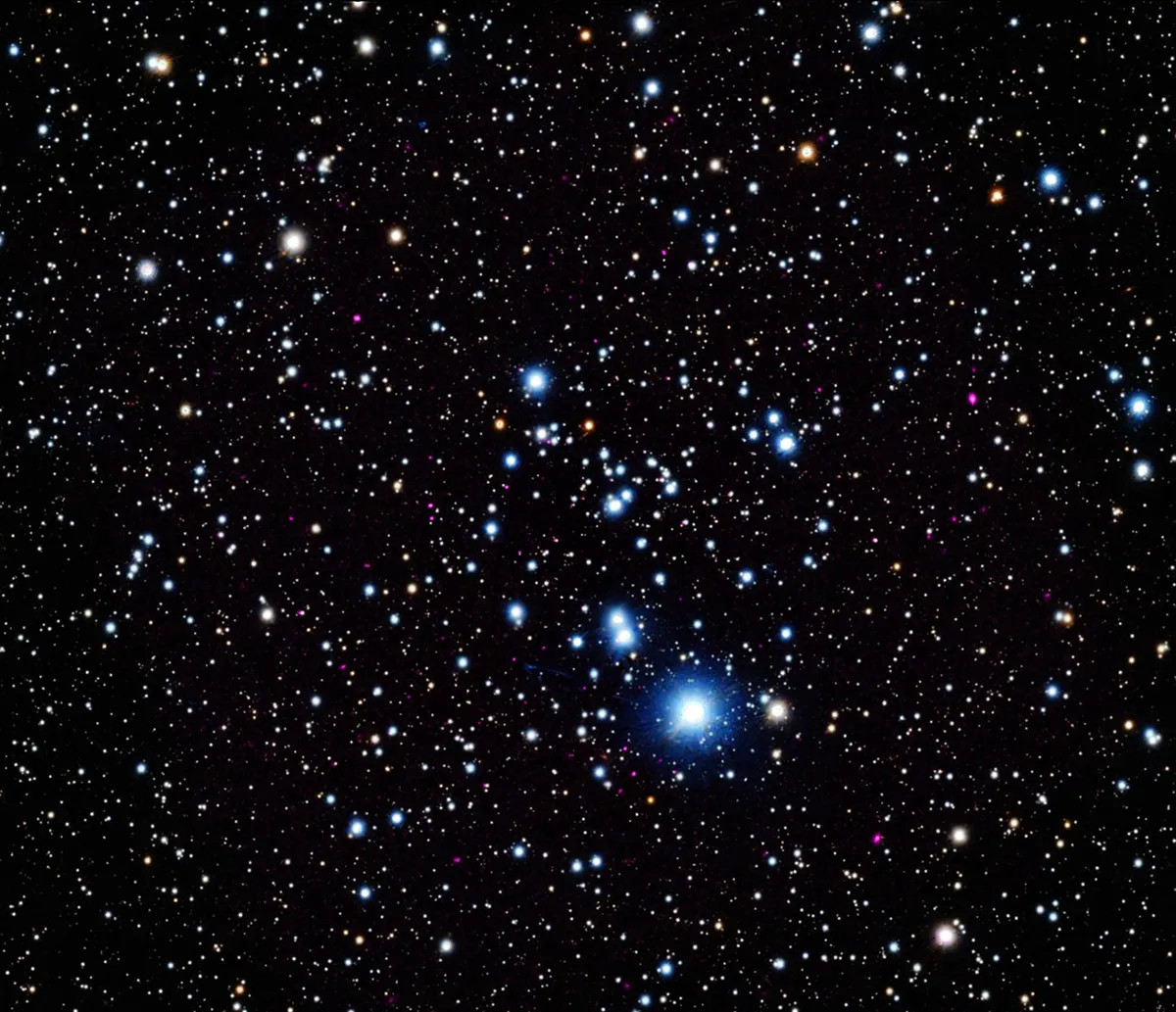
The study peered into eight different star clusters, spanning ages from a sprightly 45 million years to a venerable 750 million years. What they found was a bit of a shocker: Sun-like stars in these clusters were only belting out about a quarter to a third of the X-rays scientists had predicted.
Konstantin Getman, the lead author from Penn State University, explained that this "quieting" is all internal. The stars' magnetic fields, which generate these X-rays, just become less efficient over time. It's not some cosmic vacuum cleaner sucking up their light; they're just… calming down.
Our own Sun, a ripe 4.6 billion years old, likely went through a similar, though previously underestimated, rebellious phase. For context, a three-million-year-old star with our Sun's mass can produce a thousand times more X-rays than our Sun does today. Even at 100 million years old, they're still about 40 times brighter. So, the faster they chill out, the better for any nascent planets.
Good News for Future Civilizations (Maybe)
Crucially, the researchers found that stars with a mass similar to our Sun quiet down quite rapidly, within a few hundred million years. Smaller stars, the cosmic equivalent of perpetual teenagers, keep their high X-ray emissions for much longer. Sorry, tiny star systems.
This rapid dimming, combined with a drop in X-ray energy and the disappearance of other energetic particles, paints a much rosier picture. It suggests that Sun-sized stars are far more accommodating to planets with strong atmospheres and the potential for life than anyone previously thought.
To pull this off, the team blended new observations from Chandra with archived data from Chandra and ROSAT, plus stellar membership data from ESA's Gaia satellite. They filled a major gap in our understanding, as this particular "adolescent" age range for stars hadn't been well-studied before.
Apparently, the old formulas for predicting X-ray output were way off. It turns out X-ray emissions drop about 15 times faster than predicted during this critical phase. Which, if you think about it, is both impressive and slightly terrifying for all those old predictions.
Scientists are still digging into why this magnetic field generation process becomes less efficient so quickly. But for now, let's just appreciate that the universe might be a little more hospitable than we gave it credit for. Pass the cosmic sunscreen, please.