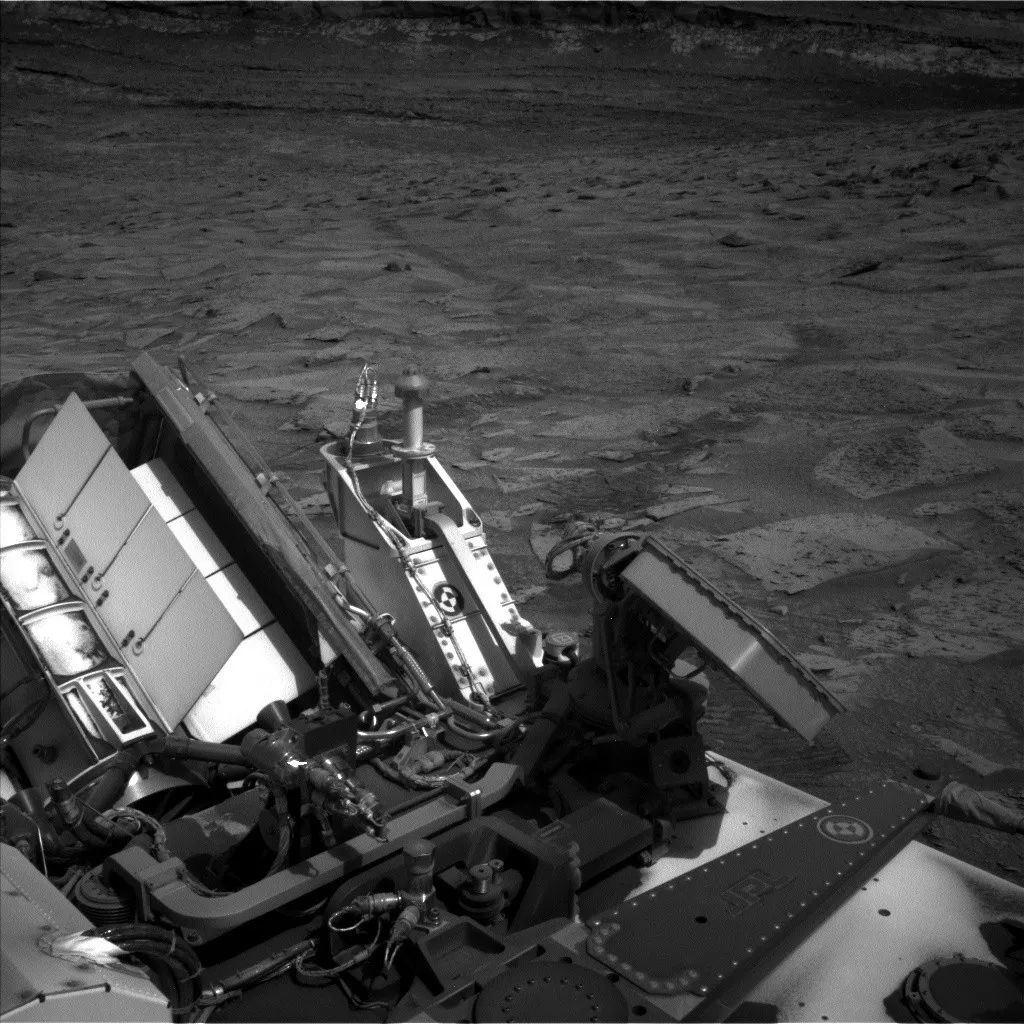
NASA's Curiosity rover just spent a week trundling towards a small, 32-foot-wide crater on Mars. Its name? Antofagasta, after a city in Chile. Because apparently, even Martian craters get named after charming Earth destinations.
This isn't just any old divot in the Red Planet's surface. Craters are basically nature's jackhammers, unearthing material that would otherwise be buried. Antofagasta looks like a youngster, cosmically speaking — perhaps less than 50 million years old, which, for Mars, is practically fresh out of the oven.
Now, why does a young crater matter? Well, Curiosity has already sniffed out hardy organic molecules that have somehow survived billions of years of Martian radiation. So, the thinking goes, if this crater is young and dug deep, what else might be lurking beneath the surface? Scientists are hoping Antofagasta could expose even more complex chemistry, offering a peek into Mars's past that hasn't been blasted by cosmic rays for eons.
We're a new kind of news feed.
Regular news is designed to drain you. We're a non-profit built to restore you. Every story we publish is scored for impact, progress, and hope.
Start Your News DetoxOf course, there are a few cosmic 'ifs' involved. The crater needs to be deep enough, genuinely young, and the team needs to find a rock that clearly got ejected from the depths and is drill-worthy. It's a tall order, but the potential payoff is too exciting to ignore. Next week, Curiosity gets its close-up to decide its next move.
Honeycombs and Dust Devils
The journey to Antofagasta hasn't been without its own visual delights. The rover has been rolling over rocks covered in thousands of mind-bending, honeycomb-shaped polygons. While the team has spotted these before, never in such vast, sprawling quantities, stretching for meters across the Martian landscape. Curiosity's snapping pictures and gathering chemical data to figure out just how these intricate textures formed.
Meanwhile, it's also keeping an eye on Mars's ever-changing atmosphere, scanning for dust devils and capturing horizon shots. All in a day's work for a rover that's part geologist, part meteorologist, and part interstellar tourist. As summer dust season kicks in, understanding the atmosphere is key.
Soon, new data should arrive, and if all goes according to plan, we'll get our first ground-level images of Antofagasta's rim and interior. Which, if you think about it, is both impressive and slightly terrifying for a machine that's been driving around up there since 2012.