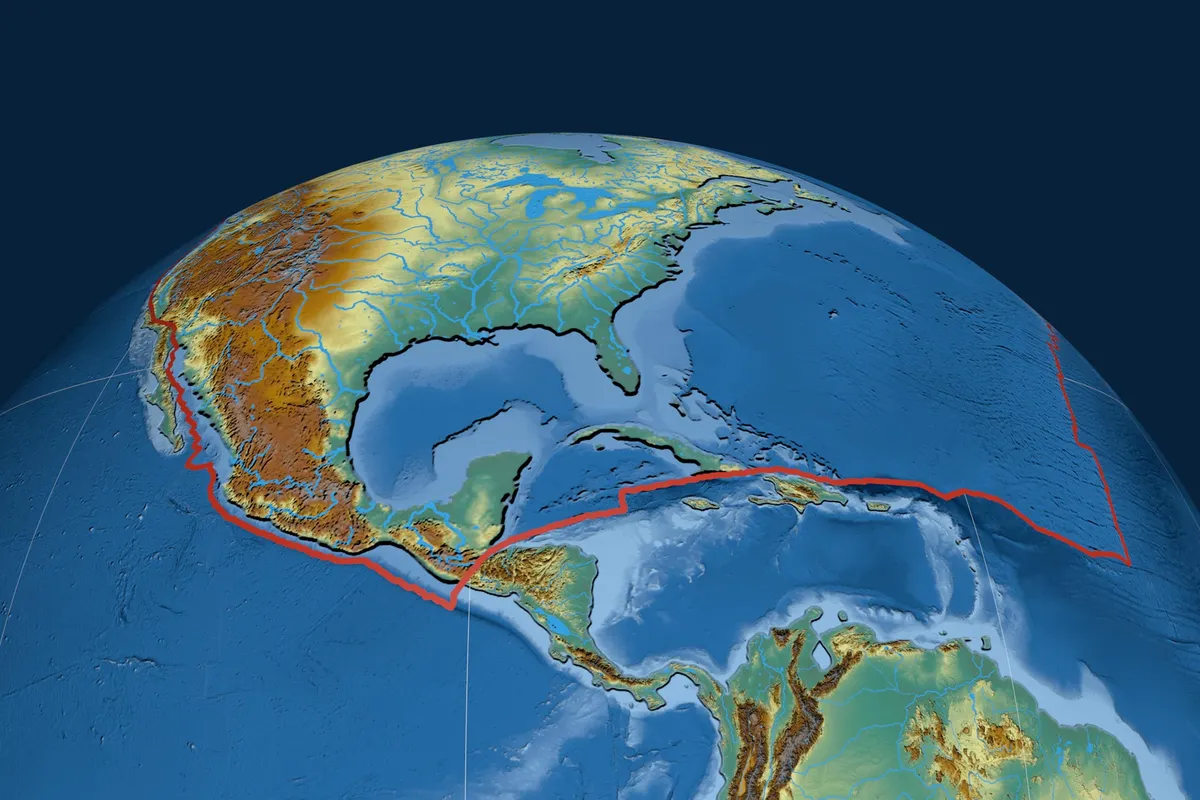
Turns out, the Americas were in a much bigger hurry to get together than scientists previously believed. A new study, using some seriously old volcanic rocks, just rewrote the timeline for when Central and South America finally smooshed into each other, a tectonic event that basically kickstarted the Andes mountains.
For decades, the prevailing wisdom had these two landmasses finishing their continental tango sometime after 10 million years ago. But now, thanks to some clever detective work with magnetic signals, researchers are saying the main event was largely over and done with before that 10-million-year mark. Which, if you think about it, changes quite a bit for how we understand those towering peaks and the entire region's geological facelift.
Earth's Memory, Written in Magnetism
The key to this geographical cold case? Volcanic rocks from the Combia Volcanic Province in central Colombia. These fiery formations, roughly 6 to 12 million years old, are essentially Earth's version of a time capsule. When molten rock cools rapidly, it locks in a snapshot of the planet's magnetic field and the forces at play during its formation. Like a geological selfie, but with more lava and less duck face.
We're a new kind of news feed.
Regular news is designed to drain you. We're a non-profit built to restore you. Every story we publish is scored for impact, progress, and hope.
Start Your News DetoxResearchers, led by Victor Piedrahita and J. Li, employed a technique called magnetic fabric analysis. This isn't just about finding magnets; it’s about examining how tiny magnetic minerals within the rocks are oriented. By studying their alignment, scientists can differentiate between the original flow patterns of the magma and any later deformations caused by tectonic plates grinding against each other.
As Dr. Victor A. Piedrahita put it, these rocks are meticulous record-keepers. Their magnetic patterns can reveal whether geological changes happened before, during, or after the rocks themselves formed. Imagine trying to figure out if a dent in your car happened before or after you bought it, but on a planetary scale and with significantly more heat.
The Early Bird Collision
What the analysis revealed was rather telling: many of these rocks still held onto their original magnetic patterns, indicating they hadn't been significantly mushed or twisted by tectonic forces during the late Miocene period. There were some localized squishes, sure, but nothing on the scale you'd expect from a full-blown continental collision.
The takeaway? The really big, crust-altering changes from the continental hook-up had mostly concluded before the late Miocene. Piedrahita and Li concluded that the heavy-duty collisions between Central and South America likely peaked much earlier, primarily during the Oligocene to middle Miocene epochs. By the time these particular volcanic rocks were forming, the major tectonic drama was already winding down, leaving only weaker, more localized aftershocks.
So, not only do we have a new, earlier timeline for how the Americas got up close and personal, but we also have a fresh appreciation for just how much Earth's ancient magnetic fields can tell us. It’s a good reminder that sometimes, the biggest stories are hidden in the smallest details — or in this case, in the microscopic alignment of minerals that have been chilling for millions of years.