A new research facility in Idaho is exploring deep soils, which are thousands of years old. This work could reveal new ways to store carbon, cycle nutrients, and support beneficial microbes. The Deep Soil Ecotron (DSE) at the University of Idaho is the first facility of its kind. It allows scientists to simulate different climate events, like wet years or droughts. This research may help farmers respond to extreme weather, manage soil better, and improve crop yields.
Unearthing Ancient Soils
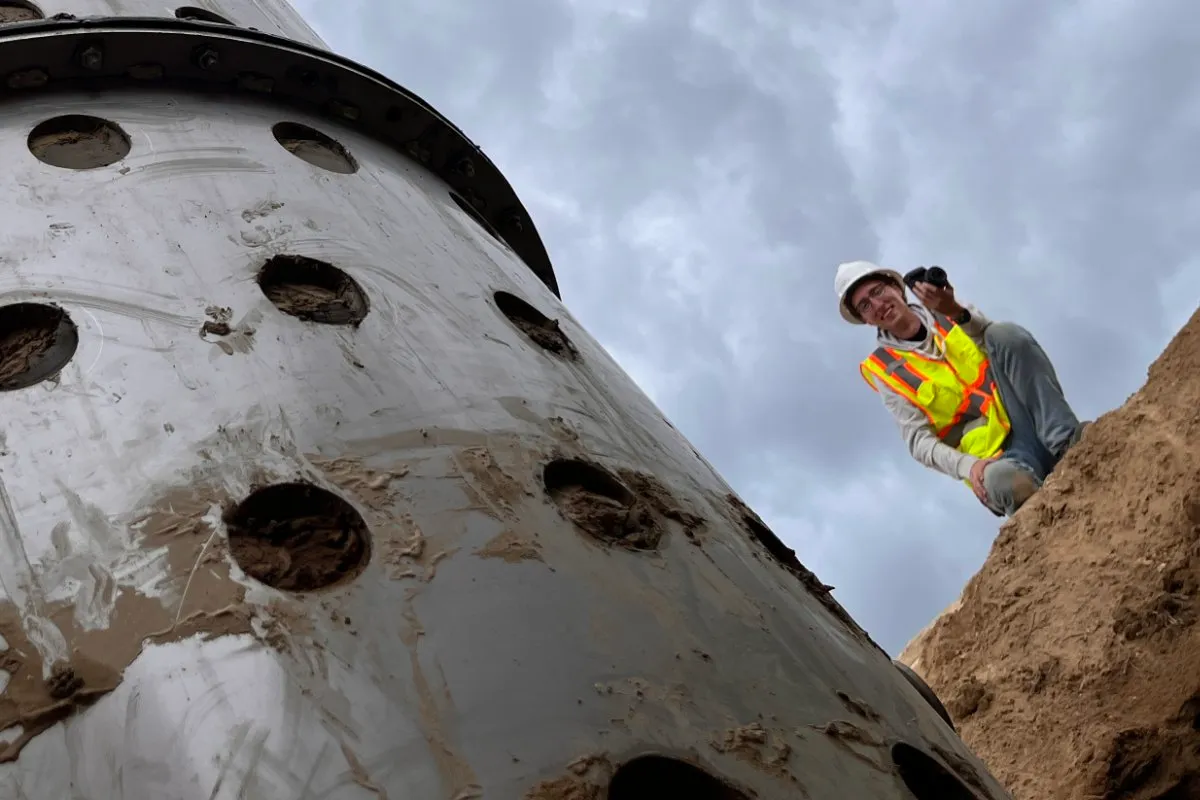
At the Sandpoint Organic Agriculture Center in Northern Idaho, a large hydraulic press pushes a stainless steel cylinder into the ground. This cylinder is 4 feet wide and 10 feet long. An excavation team removes soil as the cylinder slowly descends. It goes down 4 feet, then 6 feet, then 7 feet. It encloses soils that are thousands of years old, from times of volcanic eruptions and melting glaciers.
Michael Strickland, a microbial ecologist, usually collects soil samples about a foot deep. This project goes 10 times deeper. As the press reached 8 feet, the soil, likely 10,000 years old, was heavily packed. The machine stopped. Strickland wondered if they would get the core out. Slowly, the land opened centimeter by centimeter.
We're a new kind of news feed.
Regular news is designed to drain you. We're a non-profit built to restore you. Every story we publish is scored for impact, progress, and hope.
Start Your News DetoxOver three weeks, six soil-filled cylinders were collected. They were then taken to the University of Idaho’s Deep Soil Ecotron, where Strickland is the director. This facility, opened in May 2025, offers a rare chance to study deep soils. These soils are like remnants of the past and potential guides for the future of agriculture and climate science.
Why Deep Soils Matter
Most soil research focuses on topsoils, which are about 10 inches deep. Studying deep soils is difficult and requires special equipment. Scientists also paid less attention to deep soils because they seemed stable. Deep soils start about a foot below the surface. They have less oxygen than topsoil, which limits microbial activity and gas exchange. Topsoils, which change constantly, seemed more dynamic.
However, recent research suggests deep soils are important. They could help fight climate change by storing carbon deep underground. Carbon stored in topsoil is not permanent, but carbon deeper down appears more stable. Deep soils also cycle and store other compounds like nitrogen and water. This could be useful for farmers aiming to increase yields.
Deep soil is often compared to outer space or the deep ocean. It's a "dark forest" that is mysterious and largely unexplored. It also seems to contain unique bacteria not found elsewhere. These soils might be as rich in microbial life as surface soil. The intact soil cores will show Strickland's team what organisms live in these dark, dense, low-oxygen places. They will also learn how these organisms affect the wider ecosystem.
Ashley Keiser, a DSE science advisor and soil ecologist, finds the interaction between roots, minerals, and microbes below topsoil fascinating. She says it can help us understand soil, climate, and how surface changes affect what happens underground. The new Idaho facility offers a look into this unseen world and its possibilities.
A Unique Laboratory
Ecotrons simulate natural ecosystems in a controlled setting. They allow researchers to see how atmosphere, soil, and plants interact as conditions change. The first ecotron opened in London in the early 1990s. About a dozen others have been built, mostly in Europe. Many study how climate change affects different ecosystems.
Idaho’s Deep Soil Ecotron (DSE) is the first in the world focused on deep soils. It received most of its funding from an $18.95 million grant from the U.S. National Science Foundation. The DSE houses 24 large columns. Six are currently filled, and the rest will hold soil from Idaho and other places.

These "ecounits" are special because of their size, depth, and scientific controls. They have heat exchangers to adjust soil temperature and ceramic suction cups to change water content. Scientists can also control light, humidity, and greenhouse gas levels at the surface of each unit. Strickland says they can mimic almost any climate condition, except extreme cold. Each column has a "grow chamber" on top where researchers can interact with the topsoil, grow crops, or add soil amendments.
Sensors throughout each column provide continuous data on how the soil responds to changes above and below the surface. All six filled columns contain soil from the Sandpoint site. Three have intact soil cores, representing natural environments. The other three have "disturbed" soils, filled manually and exposed to oxygen, which likely affects their structure. These samples are currently being studied before the facility opens to the wider scientific community.
Deep Soil's Benefits for Farmers
Robert Blair is a farmer in Kendrick, Idaho, who grows wheat, barley, lentils, chickpeas, and alfalfa. He faces high production costs and unpredictable weather, as he farms without irrigation. After learning about the DSE, he explored how it could help him prepare for droughts and other weather events to protect his yields and profits.

Blair says the facility can simulate different climate events, from wet years to droughts, throughout the entire soil profile. Knowing moisture levels at various depths could help farmers manage crops better. Strickland and DSE co-director Zachary Kayler say the facility could also predict how soils react to heat waves.
The DSE team might even create "digital twins" – hyperrealistic computer models of each soil system. They could run tests on these models before forecasted weather events to predict real-life effects. Data from the DSE could also help farmers manage soil nutrients to maximize yield and reduce fertilizer costs. Strickland notes that nitrate can move into deeper layers. Farmers might one day be able to "mine the deeper nitrogen pools" instead of applying more nitrogen.
The facility could also help with pest detection and management. Since each soil unit is contained, researchers can introduce pests without contamination. This allows for experiments that are difficult in the field. They could identify early signs of pest problems to stop infestations. The units could also test new agricultural products, like GMO crops and microbial inoculants, to ensure they work before field use.
Kayler recently hosted a conference for local growers and industry affiliates. He unveiled the facility and discussed how it could meet their needs. Blair believes the ecotron is a "hidden secret that needs more publicity in agriculture circles."

Unlocking Carbon's Secrets
More organic carbon is stored in our soil than in the atmosphere and plants combined. A large part of this carbon is in deep soils and even bedrock. Globally, 30 to 60 percent of soil organic carbon is found below 30 centimeters (about a foot).
Soil organic carbon comes from decaying plants and animals. It moves deeper underground through rain, root transfer, animal activity, and microbial processes. Deeper soil organic carbon (SOC) is less likely to be released into the environment due to less microbial disruption. However, research shows it can still be released under certain conditions.
Gabrielle Feber, a Ph.D. candidate at the University of Idaho, notes that some deeper soil carbon is more stable, but scientists don't fully understand what could change that. The DSE can help clarify deep soil carbon cycling and storage. Researchers can manipulate environmental conditions like temperature and rain to see how deep soils retain or release carbon as the climate changes. They can also manipulate the surface of each ecotron column. This allows them to study how different land management practices, like planting perennials, affect carbon activity in deeper soils. Findings could inform future strategies to keep stored carbon deep underground and out of the atmosphere.
This information is important for farmers, who rely on soil organic carbon for crop growth. It's also vital for environmental scientists, who say uncertainties about soil carbon storage hinder accurate climate modeling. A 2023 paper in the Annual Review of Ecology, Evolution, and Systematics states that deeper soils can be an "ally or foe" in climate change. This depends on whether they can be managed to store carbon or if global changes increase carbon release.
Now that the DSE facility's main construction is done, funding is needed to keep it running. This will likely come from federal funds, grants, and scientific partners who pay to conduct research there. The goal is to fill the remaining columns with soils from around the country and even the world. This would create a diverse collection for scientific study. Strickland emphasizes that the facility is not just for the University of Idaho. Anyone with ideas can use it.
Deep Dive & References
Deeper soils have the potential to be our ally or foe when it comes to mitigating climate change - Annual Review of Ecology, Evolution, and Systematics, 2023