Hummingbirds and sunbirds both drink nectar, but they do it in very different ways. While hummingbirds sponge up nectar, sunbirds actually use suction with their tongues. This unique method makes sunbirds the only known vertebrates to use their tongues for suction.
This discovery highlights how nature finds different solutions to similar problems. Both bird groups need to get nectar from deep inside flowers, but they evolved distinct feeding techniques.
How Sunbirds Use Suction
Scientists used high-speed cameras and 3D-printed artificial flowers to study sunbirds in Africa and Indonesia. They also used microCT scans of sunbirds from UC Berkeley’s Museum of Vertebrate Zoology.
We're a new kind of news feed.
Regular news is designed to drain you. We're a non-profit built to restore you. Every story we publish is scored for impact, progress, and hope.
Start Your News DetoxDavid Cuban, a former UC Berkeley biologist and lead author of the study, found that sunbirds have a V-shaped groove at the base of their tongue. When a sunbird puts its tongue into nectar, it presses the base of its tongue against its upper beak. This creates an airtight seal. As the bird pulls its tongue back, it creates suction, drawing liquid into the tongue groove. The bird then swallows the nectar when the seal breaks.
Rauri Bowie, a UC Berkeley professor and study author, explained that this interaction between the tongue and beak creates negative pressure.
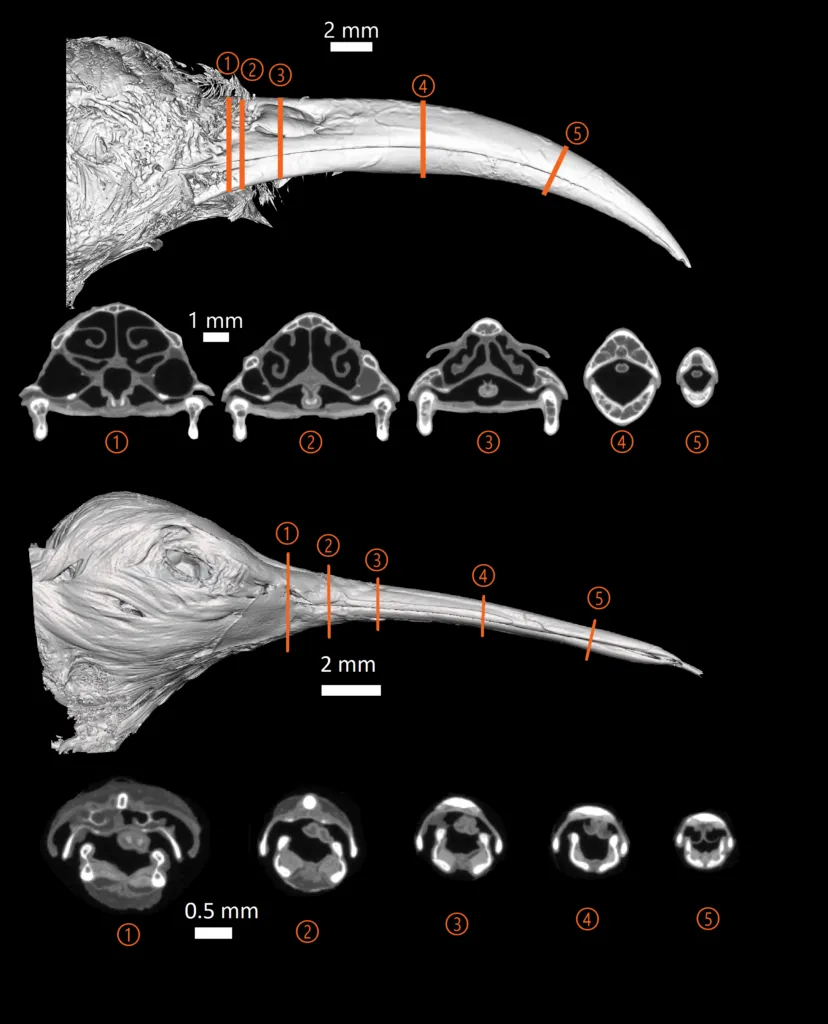
CT scans by Cynthia Wang-Claypool confirmed these anatomical differences. Sunbirds have flexible flaps at the base of their tongue that help create this tight seal.
Hummingbirds Sponge, Not Suck
For a long time, scientists thought nectar-eating birds used capillary action. This is when surface tension pulls liquid into narrow tubes, like a straw. However, this method is too slow for active birds like hummingbirds and sunbirds, who need a lot of energy.
About 10 years ago, Alejandro Rico-Guevara showed that hummingbirds don't use capillary action. Instead, they compress their tongues before dipping them into nectar. As the tongue expands, nectar fills its pores, much like a sponge. When the bird pulls its tongue back, it squeezes the nectar out between its beak. This method is about 10 times faster than capillary action.
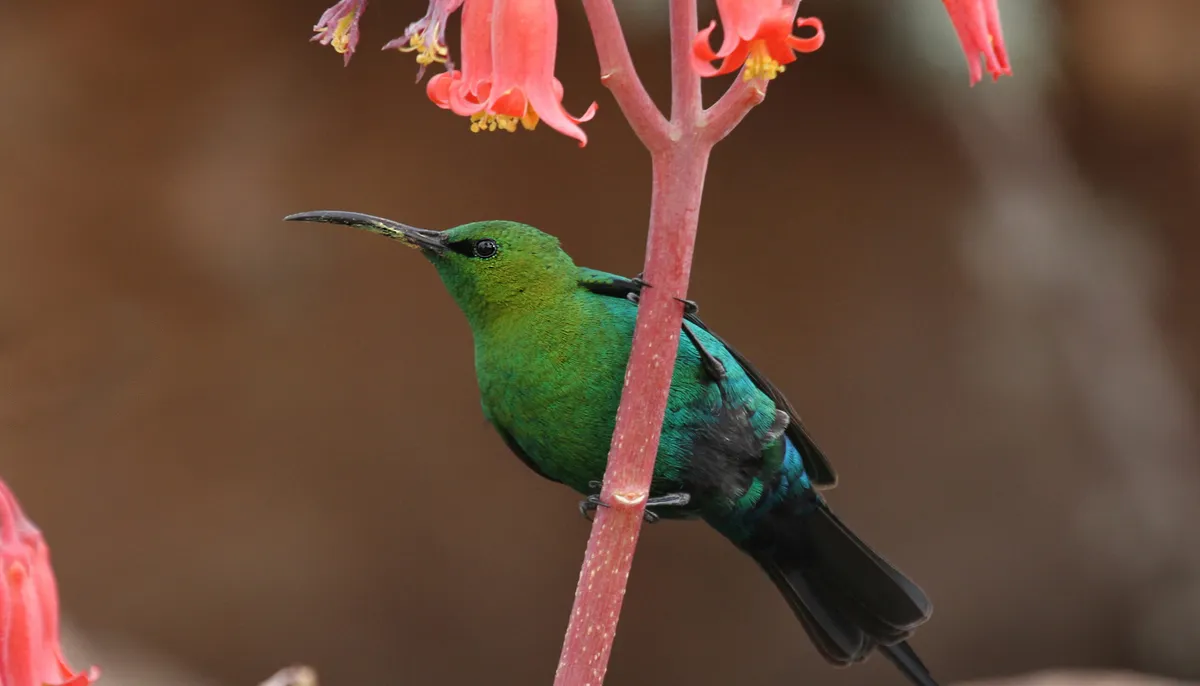
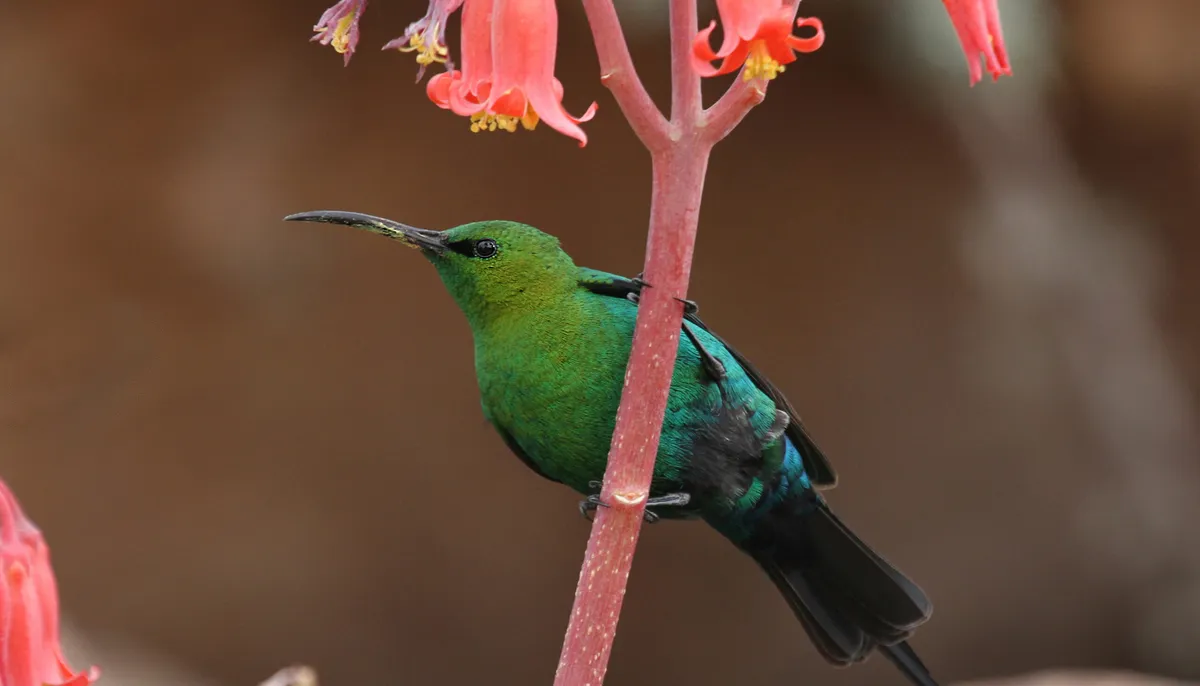 Caption: A malachite sunbird (Nectarinia famosa) was one of the species studied. Sunbirds evolved in Asia and Africa to drink flower nectar, a niche that hummingbirds occupy in the Americas. Image: Keith Barnes
This research, published in Current Biology, highlights convergent evolution. This is when different species evolve similar traits independently to adapt to similar environments or ecological roles. Sunbirds and hummingbirds fill the same role of nectar-feeding, but they developed unique ways to do it.
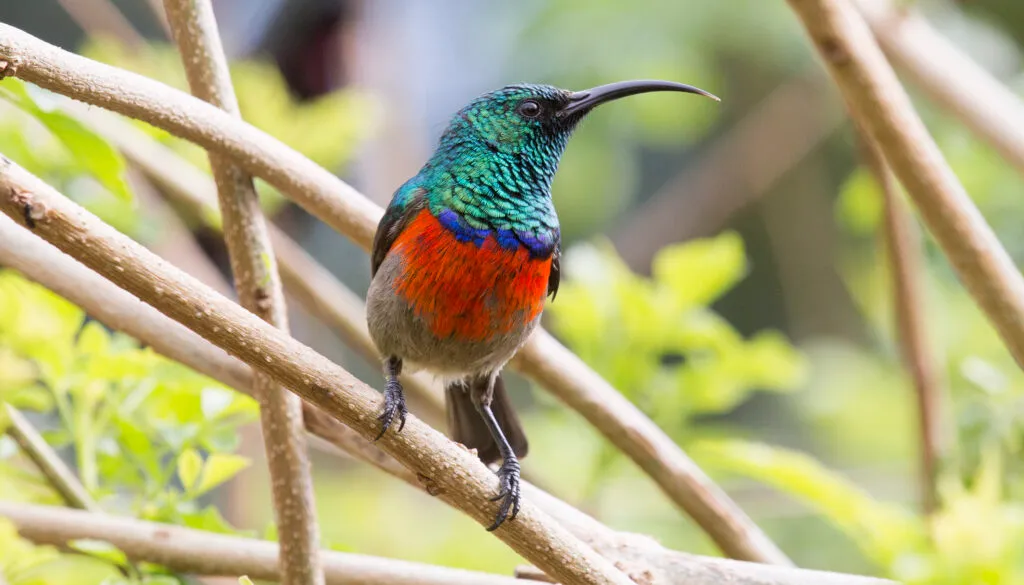 Caption: A greater double-collared sunbird (Cinnyris afer), one of the South African sunbirds studied. Image: Keith Barnes
Researchers continue to study how different animals have adapted to nectar-eating, a lifestyle that has evolved at least 30 times across various species.

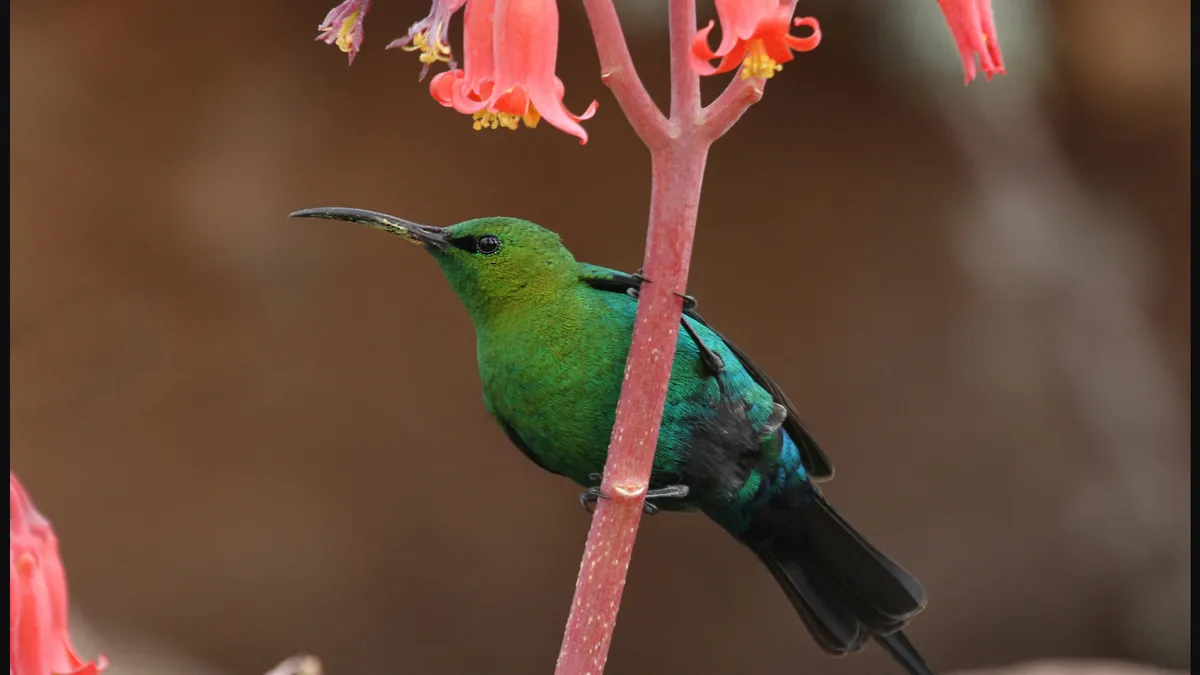 Caption: A male olive-backed sunbird (Cinnyris jugularis), which is native to Asia. Image: Keith Barnes
Deep Dive & References: Divergent nectar-feeding mechanisms evidenced by intralingual suction in sunbirds - Current Biology, 2026