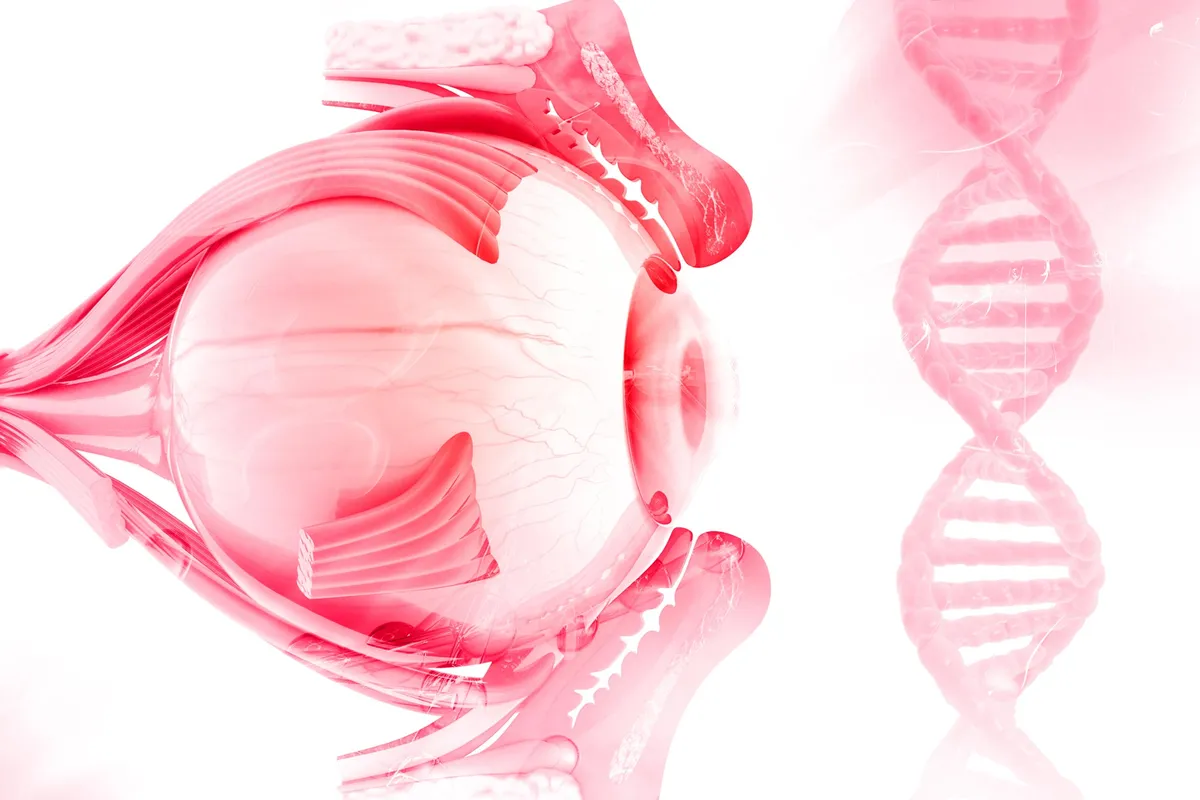
Humans owe their eyes to a tiny, one-eyed ancestor that lived almost 600 million years ago. This discovery changes how we understand the evolution of eyes and brains.
How a Single Ancient Eye Shaped Modern Vision
New research suggests that all vertebrates, including humans, came from an organism with one eye on top of its head. This ancient eye didn't disappear. Instead, it evolved into the pineal gland in the human brain.
Dan-E Nilsson, a professor at Lund University, called these findings a surprise. He said they completely change our understanding of how eyes and brains evolved.
We're a new kind of news feed.
Regular news is designed to drain you. We're a non-profit built to restore you. Every story we publish is scored for impact, progress, and hope.
Start Your News DetoxThis distant ancestor was a small, worm-like creature. It lived about 600 million years ago, filtering plankton from seawater. It was mostly stationary. While it once had two paired eyes, it lost them over time.
Nilsson explained that researchers don't know if these paired eyes were simple light sensors or could form images. They only know the organism later lost them.
As the creature became less active, it didn't need two eyes anymore. These eyes were lost, but a group of light-sensitive cells remained in the center of its head. These cells became a simple median eye. It could detect light and dark cycles and help the organism know its direction.
From One Eye to Paired Vision
Millions of years later, this organism's descendants started swimming and became more active. This meant they needed better vision. Researchers believe new paired eyes grew from parts of that original median eye.
Nilsson noted that this explains why vertebrate eyes are so different from those of other animals like insects and squid. The retina of our eyes developed from the brain. In contrast, the eyes of insects and squid come from the skin on the sides of their heads.
This evolutionary path also helps explain the origin of the neural circuits that process images in our retinas.
The Ancient Eye's Legacy in Humans
Traces of that ancient median eye still exist in humans as the pineal gland. This small brain structure is still sensitive to light. It helps regulate sleep cycles by producing melatonin.
Nilsson finds it amazing that our pineal gland's ability to control sleep based on light comes from a one-eyed ancestor from 600 million years ago.
Deep Dive & References
Evolution of the vertebrate retina by repurposing of a composite ancestral median eye - Current Biology, 2026