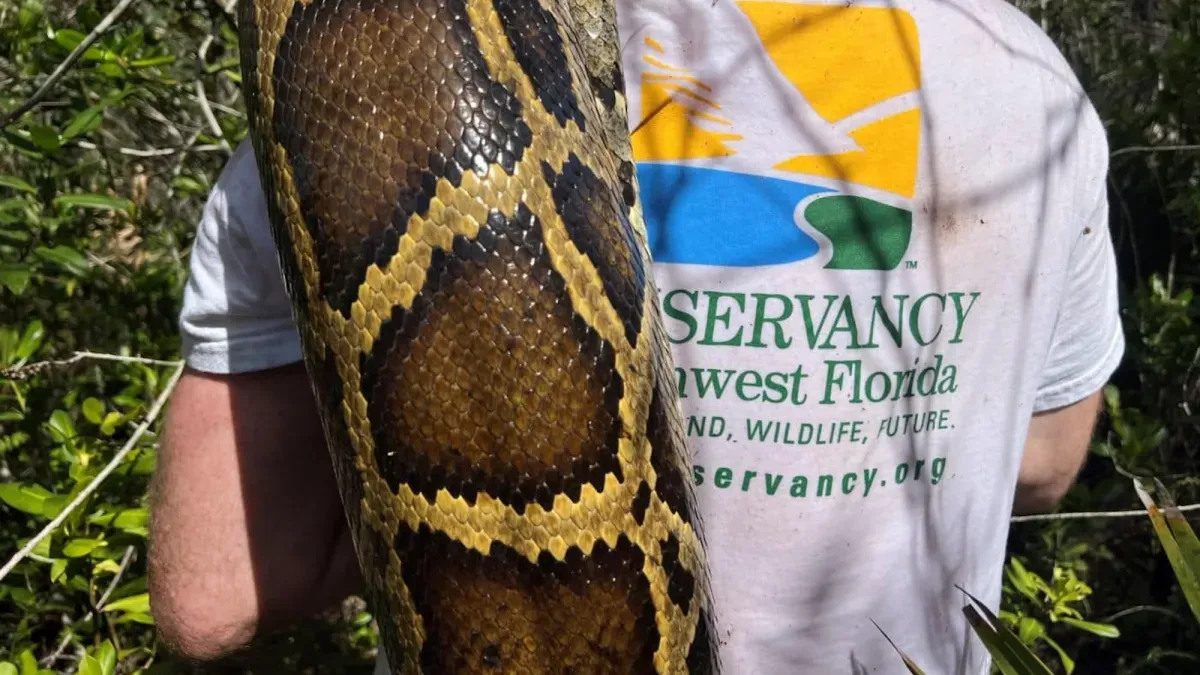
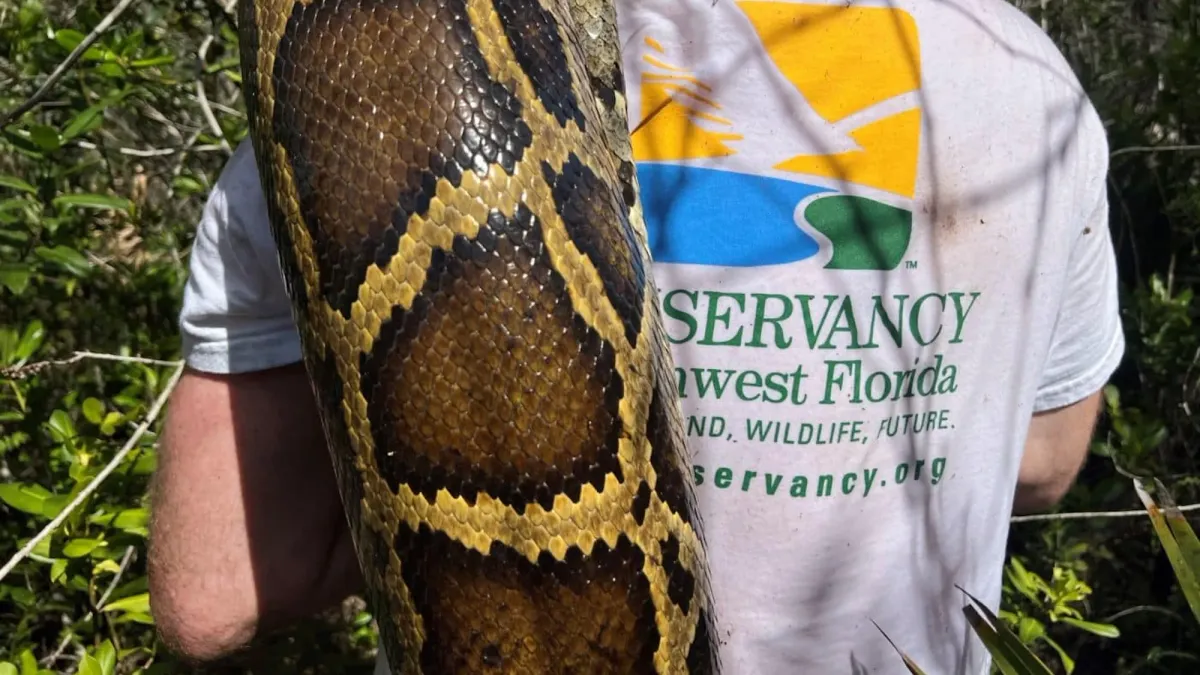
Picture this: a few dedicated souls in Florida, wrangling what amounts to an entire compact car's worth of invasive snakes out of the Everglades. That's right, between November 2025 and April 2026, conservationists hauled out a staggering 8,080 pounds of Burmese pythons. That's over four tons of slithering menace, and a new record for the Conservancy of Southwest Florida.
Let that satisfying number sink in. They managed to nab 177 pythons from just 200 square miles in Collier County. Because apparently, that's where we are now: weighing our invasive species by the ton.
The Scout Snake Strategy
How do you even begin to find that many incredibly well-camouflaged reptiles in a sprawling wetland? You don't. You get the pythons to do the work for you. Wildlife biologist Ian Bartoszek and his team employed a surprisingly clever, almost Machiavellian, strategy: they tracked 40 male pythons, dubbed "scout snakes," with radio tags during mating season. These unwitting Casanovas led the team straight to the real prize: the pregnant females.
We're a new kind of news feed.
Regular news is designed to drain you. We're a non-profit built to restore you. Every story we publish is scored for impact, progress, and hope.
Start Your News DetoxAnd what a prize they were. Each female carried about 70 eggs and weighed roughly 95 pounds. The largest they snagged was a whopping 153 pounds and stretched 17 feet — the kind of snake that makes you reconsider that swamp tour. By focusing on these egg-laden ladies, they estimate they prevented some 4,100 python eggs from ever seeing the light of day. Which, if you think about it, is both impressive and slightly terrifying.
Burmese pythons first showed up in Florida in the 1970s, likely thanks to some truly irresponsible pet owners. The Everglades, with its tropical vibes and distinct lack of natural python predators, became a five-star resort for them. Now, estimates put their population between 100,000 and 300,000, and they've become the apex predator, munching their way through local wildlife. About one in four female pythons caught by the Conservancy, for instance, had recently dined on white-tailed deer. Because apparently, even deer aren't safe anymore.

Bartoszek hopes these efforts mean they'll eventually see removal numbers decline, signifying fewer pythons in the wild. Rob Moher, president of the Conservancy, put it simply: every python removed is a win for the ecosystem. And frankly, a win for anyone who prefers their deer un-swallowed.