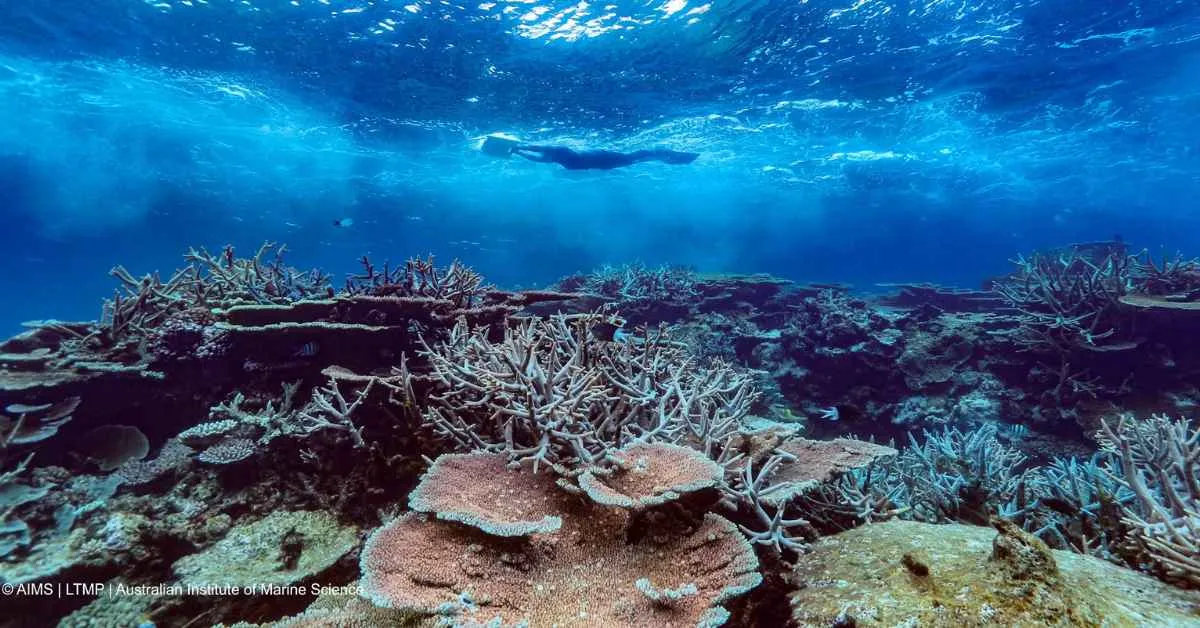
Australia's Great Barrier Reef is a natural wonder. It is a diverse underwater landscape as big as a small country.
However, the reef faces cycles of damage and recovery. These cycles threaten to change its colorful coral gardens into areas dominated by algae, and then back again. These changes are becoming more extreme as the world gets warmer.
The Australian Institute of Marine Science has tracked these changes for 40 years. Their Long-Term Monitoring Program has one of the longest records of continuous coral reef data globally.
We're a new kind of news feed.
Regular news is designed to drain you. We're a non-profit built to restore you. Every story we publish is scored for impact, progress, and hope.
Start Your News DetoxOver the past 15 years, the reef's health has changed dramatically. The 2024 mass coral bleaching was especially damaging. A record-breaking marine heatwave bleached coral reefs from the Caribbean to the Indian and Pacific Oceans.
This event caused the biggest single-year drop in coral ever measured in two regions. Despite this, a recent report shows some hopeful signs of recovery.
Hot Water and Bleaching
In 2025, the Great Barrier Reef experienced its sixth coral bleaching event since 2016. This was one of only two back-to-back bleachings in the reef's history.
However, new survey data shows the 2025 bleaching was smaller and less severe than in 2024. This means fewer corals died. It shows that not all bleaching events have the same impact.
A heatwave's strength and length determine if corals die or survive. If corals get relief from the heat, they can recover their symbiotic algae and live.
On the Great Barrier Reef, sea surface temperatures usually peak between January and March. During these summer months, marine heatwaves can increase the risk of coral bleaching.
Marine heatwaves happen when ocean temperatures stay unusually warm for at least five days. This is based on the location and time of year.
In spring 2025, a marine heatwave hit the reef. Ocean temperatures rose by up to 1.5°C. December 2025 was the reef's hottest December on record since 1900. This is according to the Bureau of Meteorology's climate trends.
If the heatwave had continued through summer, it likely would have caused widespread coral bleaching.
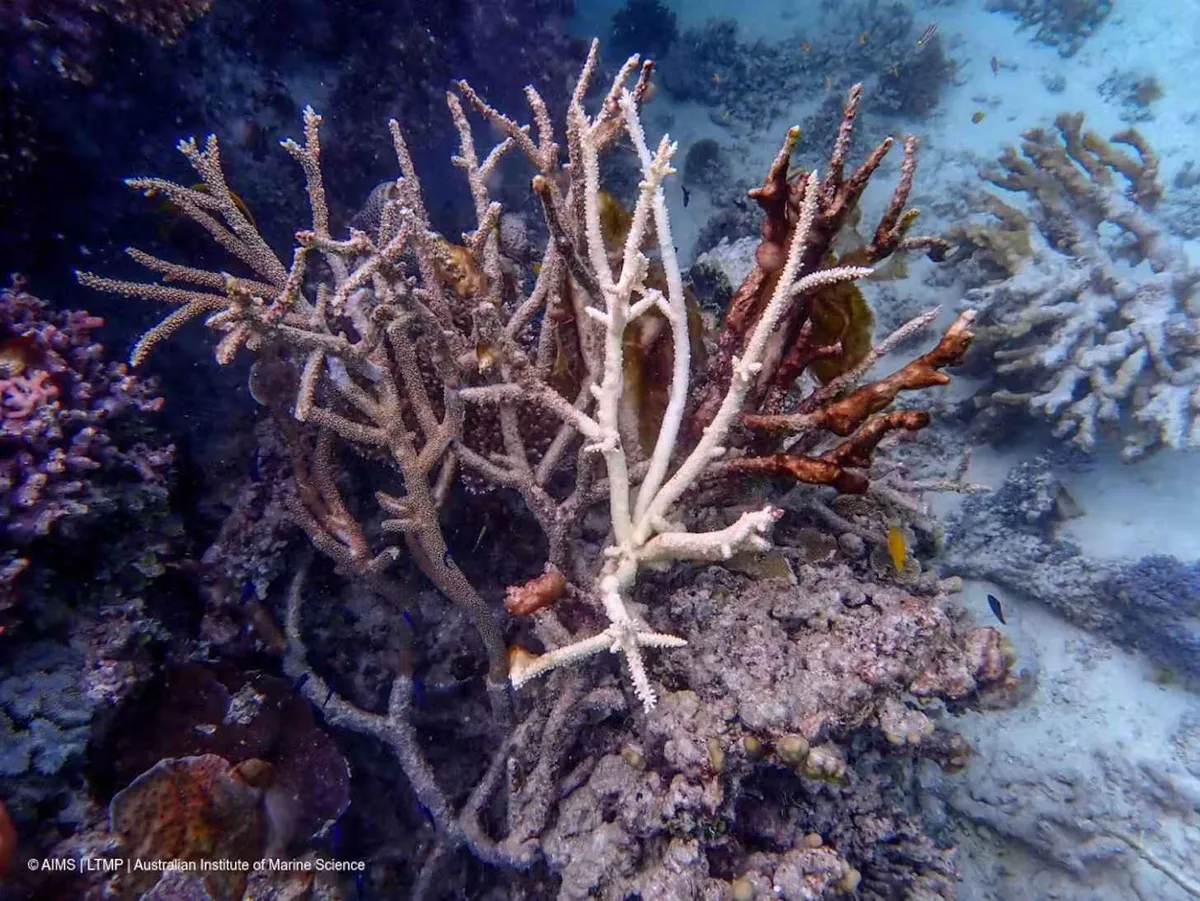 Low-level coral bleaching in the southern Great Barrier Reef. AIMS LTMP/CC BY-NC-ND
Signs of Recovery
Last year, the reef saw the biggest single-year drop in living coral cover in 40 years of monitoring. This followed the severe 2024 mass coral bleaching. Coral cover measures how much of the reef surface is covered in live hard coral. This is compared to algae, sand, and other organisms.
It is a key indicator of reef health.
Good news: the latest report suggests coral cover increased slightly in some reef areas from 2025 to 2026.
In the northern region, coral cover went from 30% to 35.1%. In the central region, it increased from 28.6% to 31.6%. Both regions are now above their long-term average coral cover.
However, coral cover in the southern region stayed below the long-term average. It decreased slightly from 26.9% to 26.4%.
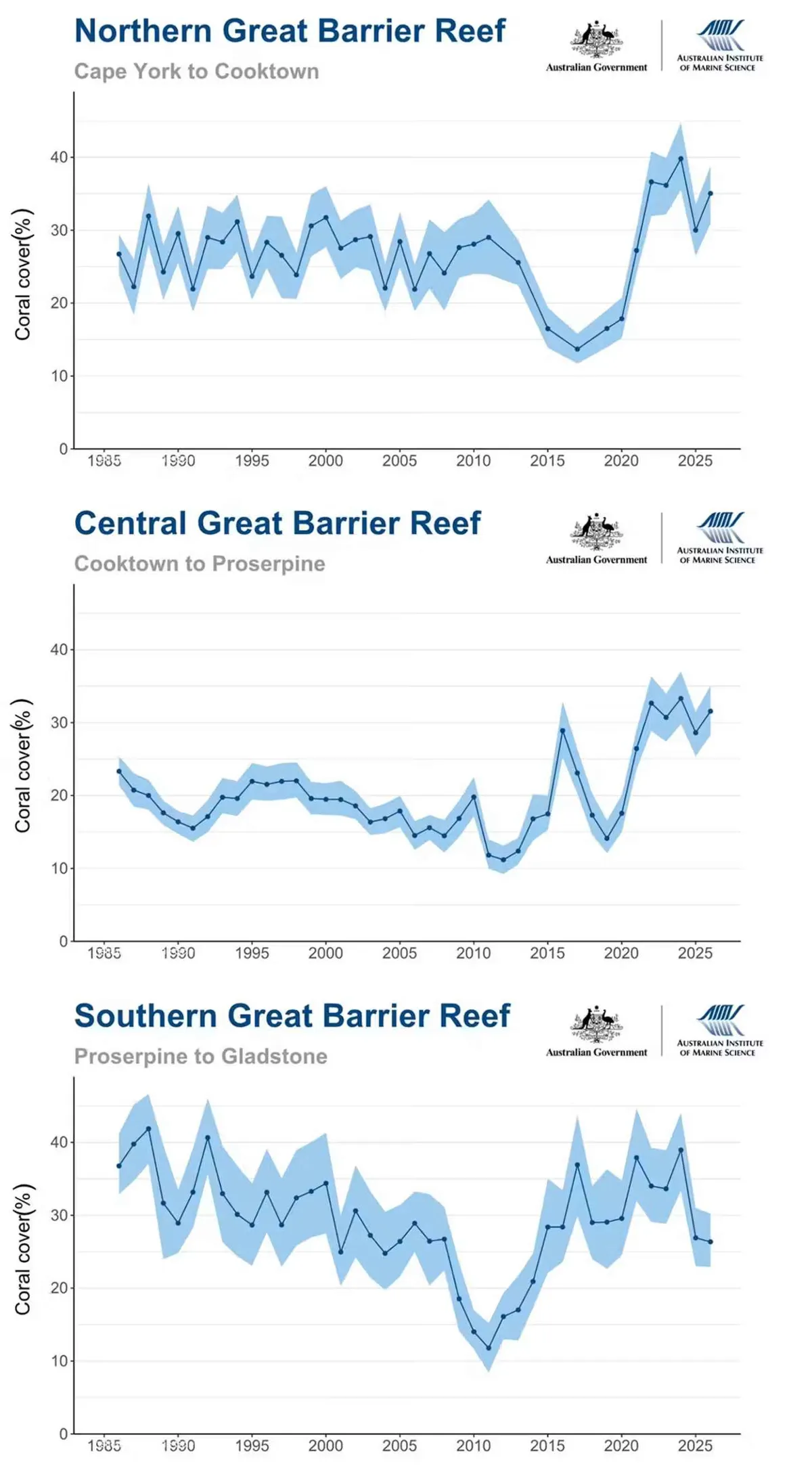 Trends in average coral cover (blue line) for the northern, central, and southern Great Barrier Reef based on manta tow surveys. AIMS LTMP/CC BY-NC-ND
What Caused the Recovery?
In early 2026, scientists saw signs of regional coral bleaching in the northern and central Great Barrier Reef. But then a monsoon arrived. It brought widespread clouds and rain, which helped cool the reef at a critical time.
Australian monsoon activity usually happens during the northern wet season, from October to April. During an active monsoon, clouds, rain, and winds help cool the ocean surface. Breaking waves and turbulence then mix hotter surface waters with deeper, cooler waters. The monsoon season also changes winds over the tropics. Northern Australian winds blow as moist northwesterly winds.
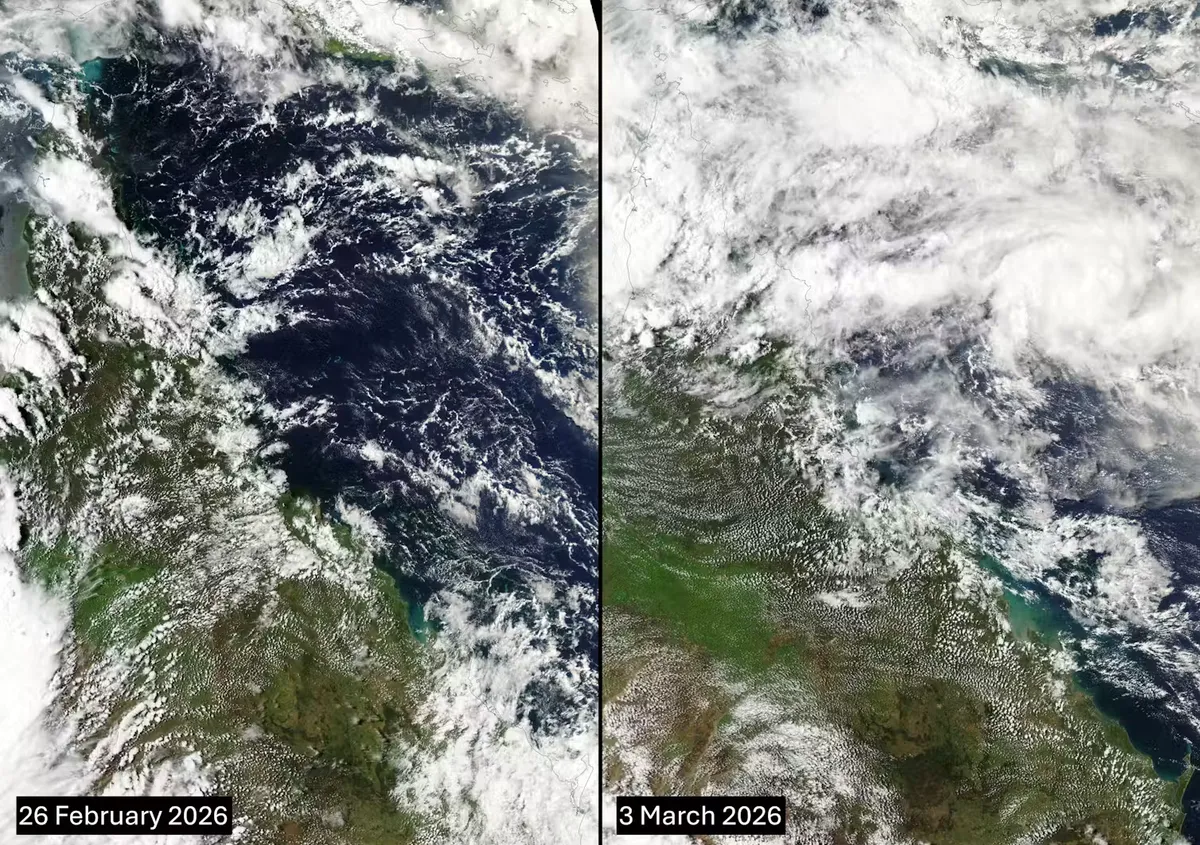 The monsoon returned in early March 2026, bringing clouds and rain to cool the reef. Courtesy of NASA Worldview - Aqua/MODIS (True Color)
Challenges Remain
Our ability to understand threats to the Great Barrier Reef has greatly improved. Global forecast systems can now predict ocean temperatures weeks to months ahead. This gives early warnings of marine heatwaves and coral bleaching risks around Australia.
But the reef still faces many urgent and growing pressures.
Recent bleaching makes corals very vulnerable. This is especially true with record-breaking global ocean temperatures and a predicted strong El Niño.
Crown-of-thorns starfish are a known threat to the reef's corals. Since the 1960s, there have been four outbreaks of these starfish. A fifth outbreak is now happening in the far north.
These coral-eating starfish are expected to move further south in the coming years.
The reef also faced two tropical cyclones, Koji and Narelle, between January and March 2026. Cyclones can have some cooling effect. However, they can also create huge waves that destroy corals in their path.
The Great Barrier Reef has once again shown its amazing ability to recover. But we cannot take this for granted.
We must act quickly to reduce carbon emissions and minimize climate change. Developing scientific solutions can help build the reef's resilience. This will help it survive a warming future.
We must also protect our marine parks. This will ensure the reef not only survives but thrives.
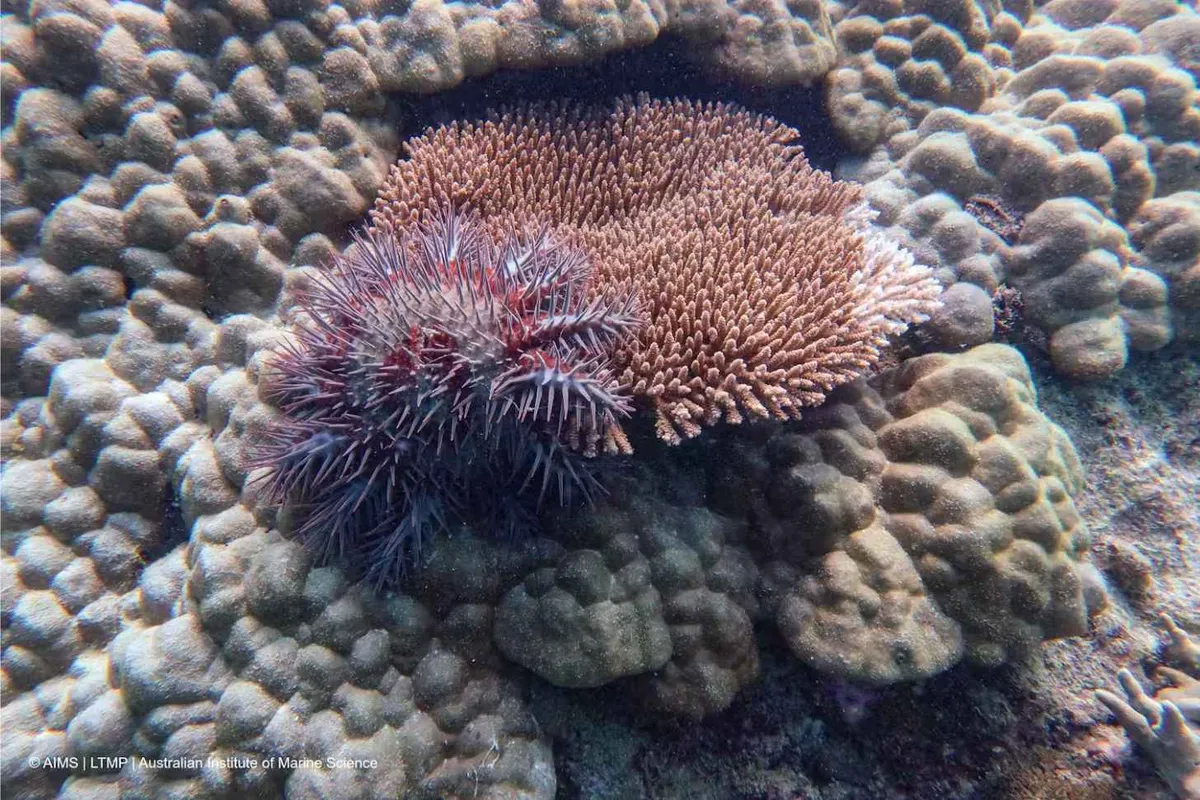 The predatory crown-of-thorns starfish feeds on coral. AIMS/LTMP, CC BY-NC-ND
Deep Dive & References
Reef relief: How a late summer monsoon helped cool the Great Barrier Reef at just the right time - The Conversation