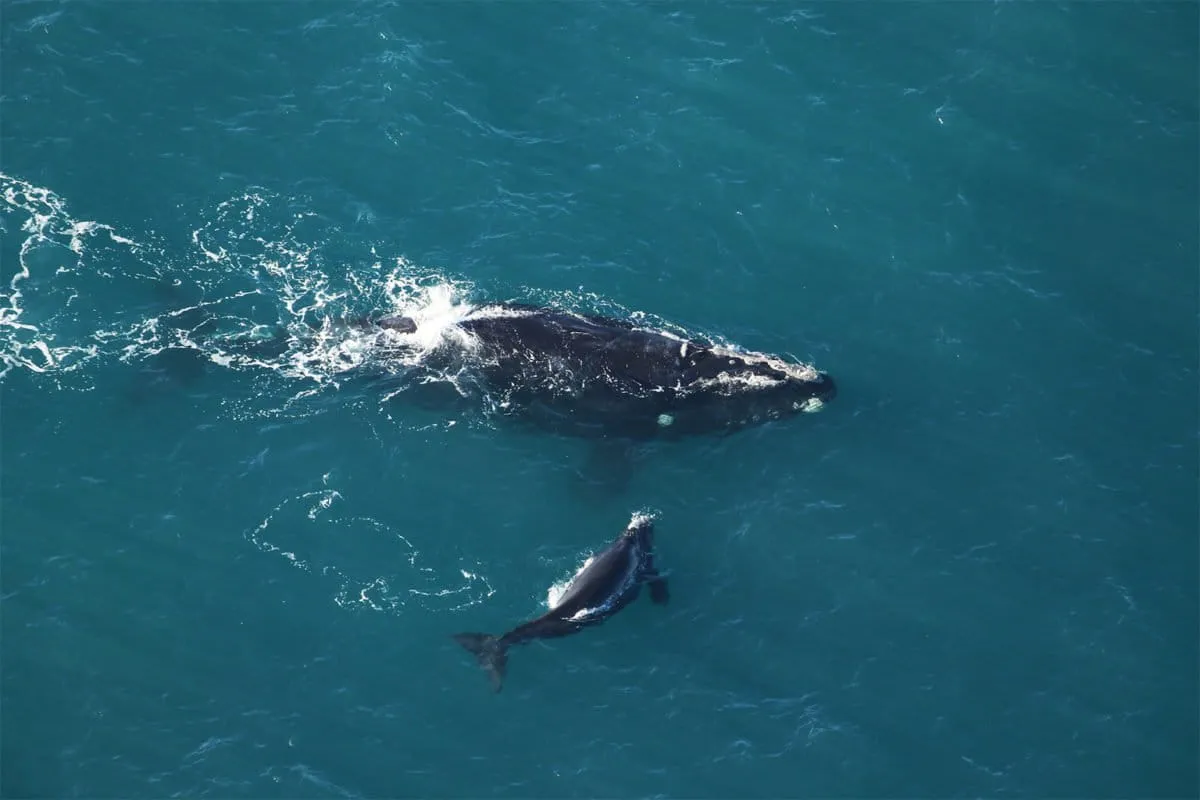
The North Atlantic right whale, a creature so critically endangered it practically has its own red velvet rope, just pulled off its best calving season since 2009. We're talking 23 new calves. A baby boom, if you will, but for whales. Apparently, the ladies are getting back into the swing of things, with 18 of this year's mothers having their last calf within the past six years.
Amy Warren of the New England Aquarium pointed out that a healthy right whale usually pops out a calf every three to four years. But for a while there, some of these moms were clocking nearly a decade between deliveries. Because, apparently, even whales need a break.

The Climate-Copepod Conundrum
Scientists suspect the long gaps between births were due to climate change stress. Imagine being a whale, and your favorite tiny crustacean buffet (copepods, to you and me) suddenly decides to relocate. Over the last decade, these essential snacks have been on the move, forcing the whales to travel farther for dinner.
We're a new kind of news feed.
Regular news is designed to drain you. We're a non-profit built to restore you. Every story we publish is scored for impact, progress, and hope.
Start Your News DetoxNow, with only about 384 North Atlantic right whales left on the planet, every single one matters. They typically cruise along the East Coast of North America, but lately, many have been spotted in Canada’s Gulf of St. Lawrence. That's over 1,000 kilometers (620 miles) from their usual haunts. Which, if you think about it, is both impressive and slightly terrifying.
This detour to the Gulf means their migration from Florida to New England is now roughly 50% longer. More travel, more energy expended, fewer resources left for, you know, raising the next generation of critically endangered whales. As senior research scientist Philip Hamilton put it, it's a tough balance. It’s great news for the babies, but the whales are still putting in some serious mileage just to get by.