
Quantum computers need to stay colder than outer space to work. But as they grow bigger and more powerful, keeping them cold enough while managing the heat they generate has become one of the field's toughest engineering problems. Researchers at Chalmers University of Technology just showed a way around it — by using controlled noise to move heat exactly where it's needed, rather than fighting noise at every turn.
The challenge is this: superconducting quantum computers operate near absolute zero, around -273°C. At that temperature, electrical resistance disappears and qubits can hold quantum information reliably. But qubits are fragile. Even tiny temperature fluctuations or stray electromagnetic signals can destroy the information they're holding. Scaling up to thousands of qubits makes this problem exponentially harder. More qubits mean more heat generation, more places for that heat to spread unpredictably, and more ways for quantum states to collapse.
Flipping the Problem on Its Head
Instead of trying to eliminate noise, the Chalmers team did something counterintuitive: they used it. In a study published in Nature Communications, they created what they call a minimal quantum refrigerator — a superconducting artificial molecule built from tiny circuits in the lab. By injecting controlled microwave noise into the system through a third channel, they could guide heat to flow between different parts of the circuit with extraordinary precision.
We're a new kind of news feed.
Regular news is designed to drain you. We're a non-profit built to restore you. Every story we publish is scored for impact, progress, and hope.
Start Your News Detox
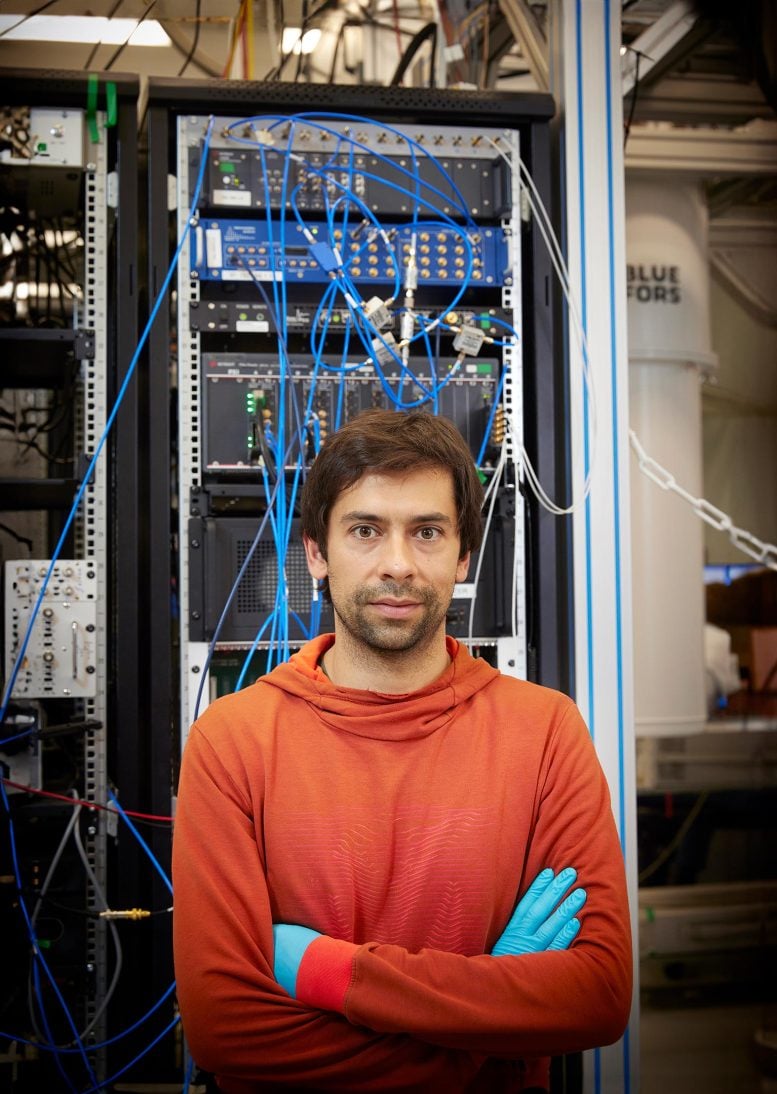
"Many quantum devices are ultimately limited by how energy is transported and dissipated," says Simon Sundelin, the doctoral student who led the work. "Understanding these pathways and being able to measure them allows us to design quantum devices in which heat flows are predictable, controllable, and even useful."
The precision here is almost absurd. The researchers measured heat currents as small as attowatts — that's 10⁻¹⁸ watts. To put that in perspective: if you used that tiny heat flow to warm a single drop of water, it would take longer than the age of the universe to raise its temperature by one degree.
What makes this approach genuinely useful is its flexibility. The same setup can operate as a refrigerator, a heat engine, or a thermal amplifier — you just adjust the microwave noise and the temperature of the reservoirs. That matters because in large quantum processors, the hottest spots aren't at the edges of the cooling system where conventional cryogenics can reach them. They're right where the qubits are being controlled and measured, buried deep in the circuit.
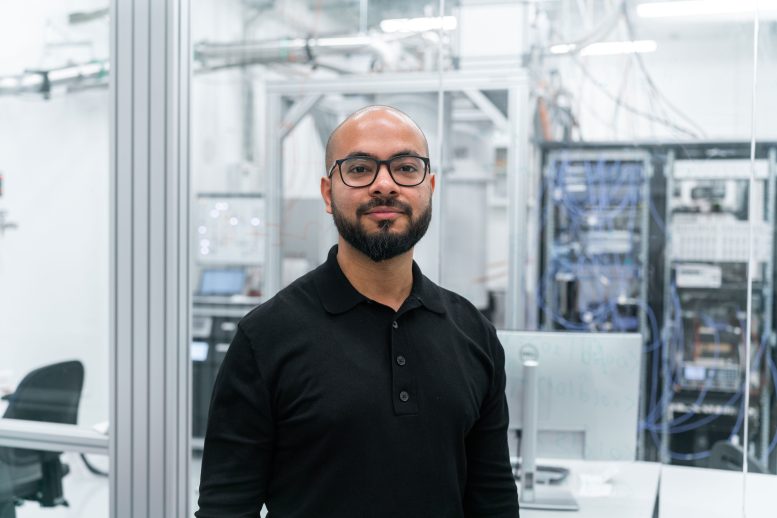
"We see this as an important step towards controlling heat directly inside quantum circuits, at a scale that conventional cooling systems can't reach," says Aamir Ali, a co-author on the study. "Being able to remove or redirect heat at this tiny scale opens the door to more reliable and robust quantum technologies."
The concept of using random thermal fluctuations to produce cooling — called Brownian refrigeration — has been theorized for decades. This is the closest anyone has come to making it real. If it scales, it could reshape how quantum computers are physically designed, moving from a top-down cooling approach to something that manages heat intelligently at every layer of the circuit.