
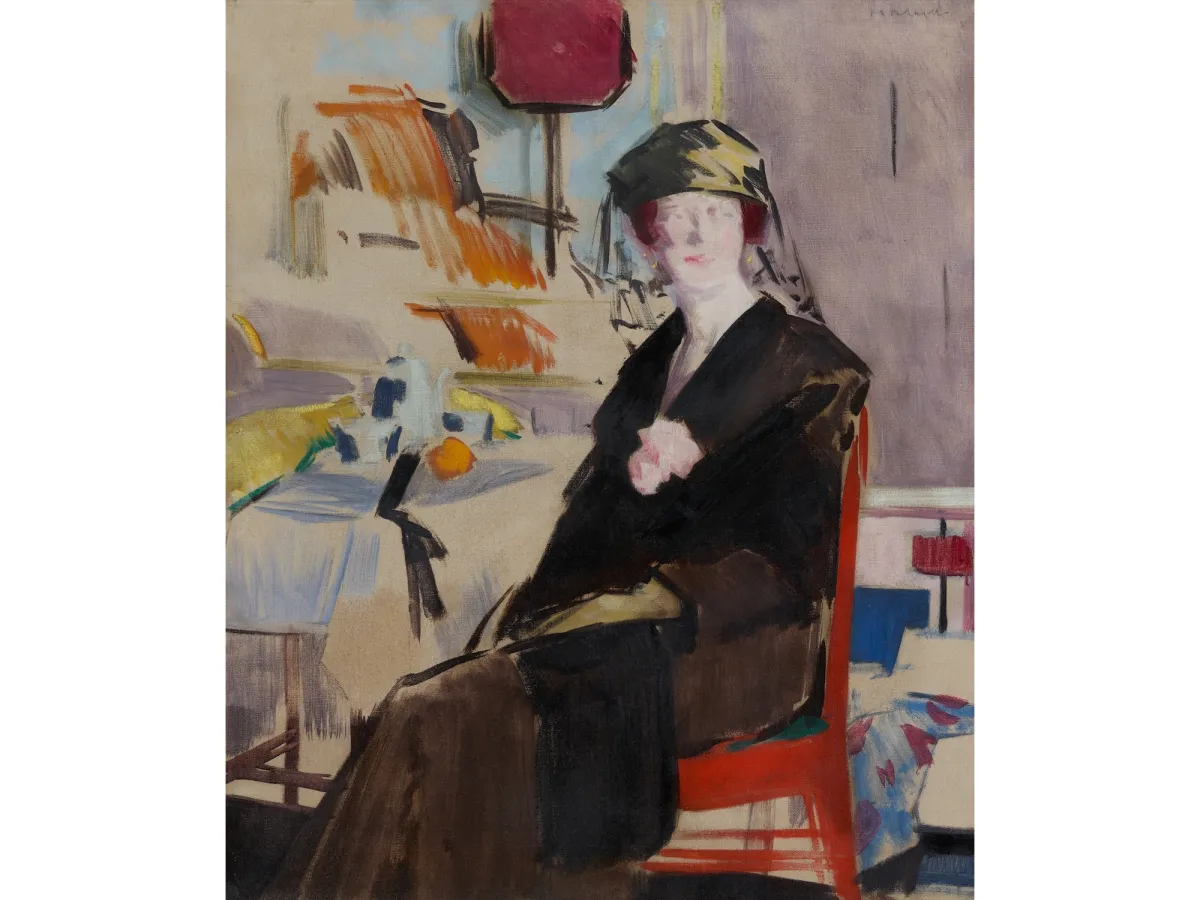
Sixty years ago, Helene Plotkin, then an art student, bought a painting because she liked the colors. The brushwork was nice, the price was right (under $100), and it looked good. She loved it. That was the extent of her analysis.
Fast forward to today: Helene, now 88, is still admiring her painting. But thanks to her son's sudden curiosity and a well-placed question to Google's AI chatbot, Gemini, that painting just sold for over $250,000 at auction. Let that satisfying number sink in.
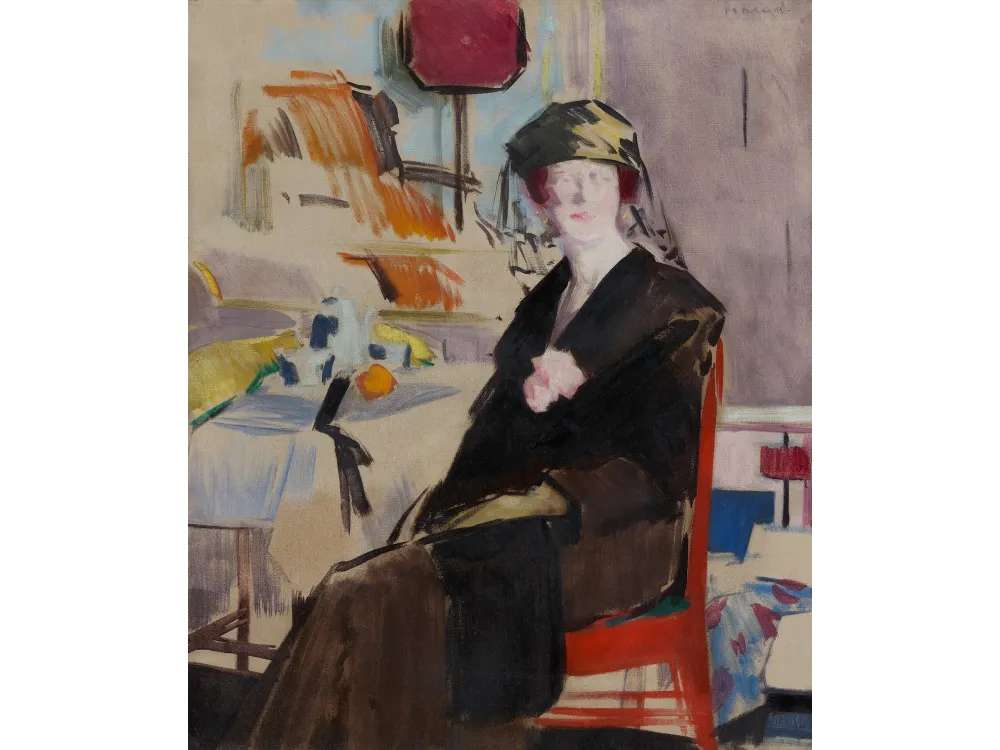
Her son, Barry, decided last December to play art detective. The back of the canvas clearly stated, "Portrait of Miss Don Wauchope," but the signature was a bit of a squiggly mystery. So, like any good citizen of the 21st century, he turned to AI.
We're a new kind of news feed.
Regular news is designed to drain you. We're a non-profit built to restore you. Every story we publish is scored for impact, progress, and hope.
Start Your News DetoxHe snapped a photo, uploaded it to Gemini, and asked the chatbot for its take. "It was amazing how much information came out of that," he told the New York Times. Gemini, apparently a connoisseur of fine art, immediately flagged the painting's vibrant orange hues and distinct Art Deco vibe. It then dropped the name: F.C.B. Cadell.
Not only did Gemini identify the artist, a prominent Scottish Colorist, but it also helpfully listed his contemporaries (John Duncan Fergusson, George Leslie Hunter, and Samuel John Peploe, if you're keeping score at home). Then, for good measure, it suggested Barry contact Nick Curnow and Alice Strang at Lyon & Turnbull, an auction house in Edinburgh. Because apparently that's where we are now: your AI assistant is also your art-world matchmaker.
Strang and Curnow confirmed the AI's brilliant deduction. Though, in a slight plot twist, they noted the stylish woman in the dark dress and 1920s turban wasn't Miss Don Wauchope, but another of Cadell's models, May Easter. The painting has since been re-christened, and declared one of Cadell’s masterworks. Just imagine: a piece hanging on a wall for decades, loved for its colors, only to be unmasked by an algorithm as a quarter-million-dollar treasure.
"This painting is a magnificent bringing together of many of his most celebrated motifs," Ms. Strang told the Independent. Which, if you think about it, is both impressive and slightly terrifying. What other masterpieces are lurking in living rooms, just waiting for an AI to scroll by?