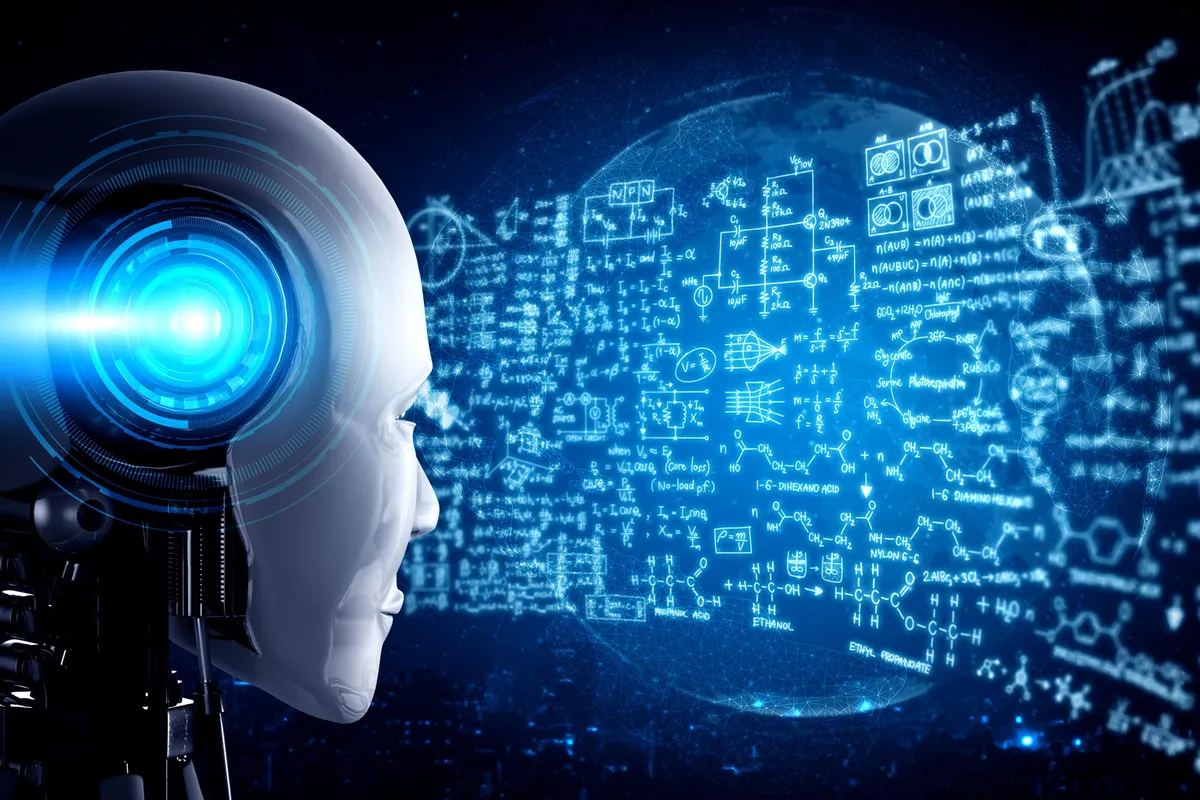
Scientists have created a new AI method that can figure out the hidden forces behind natural patterns. This breakthrough could help research in genetics, aging, and weather forecasting.
AI Uncovers Hidden Forces
Engineers at the University of Pennsylvania developed an AI technique called "Mollifier Layers." It helps solve tough math problems used to study nature.
This method tackles "inverse partial differential equations" (PDEs). These equations let scientists look at visible patterns and work backward to find out what caused them. Such problems appear in many fields, from genetics to weather prediction.
We're a new kind of news feed.
Regular news is designed to drain you. We're a non-profit built to restore you. Every story we publish is scored for impact, progress, and hope.
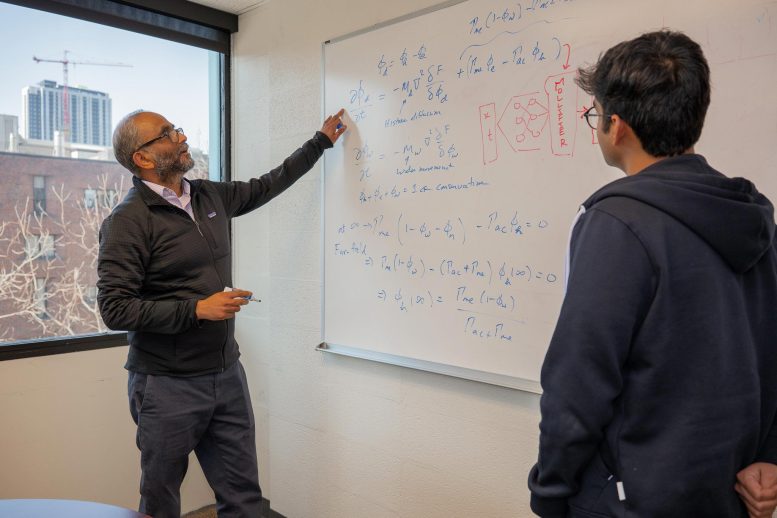
Start Your News DetoxVivek Shenoy, a professor at the University of Pennsylvania and lead author of the study, explained it simply. "Solving an inverse problem is like looking at ripples in a pond and working backward to figure out where the pebble fell," he said. "You can see the effects clearly, but the real challenge is inferring the hidden cause."
Instead of using bigger, more powerful AI systems, the team improved the math itself. Vinayak Vinayak, a doctoral student and co-author, noted that some scientific problems need better math, not just more computing power.
The Challenge of Inverse PDEs
Differential equations help scientists describe how things change over time. PDEs go further by describing changes across both time and space. They are used for complex systems like weather and DNA organization.
Inverse PDEs are tricky because they reverse the process. Instead of predicting outcomes from known rules, scientists start with observations and try to find the hidden dynamics that caused them.
Shenoy's lab studies how chromatin, which is DNA folded inside cells, organizes itself. "We could see the structures and model their formation, but we could not reliably infer the epigenetic processes driving this system," Shenoy said. These are chemical changes that control which genes are active. He realized the math needed to change.
Mollifier Layers: A New AI Approach
The main difficulty lies in differentiation, a math process that measures change. Standard AI systems for inverse PDEs use "recursive automatic differentiation." This repeatedly calculates changes in a neural network.
However, this method becomes unstable with complex systems or noisy data. It also needs a lot of computing power. The researchers compared it to zooming in on a jagged line, where each step makes imperfections worse. They needed a way to smooth the data first.
Their solution came from "mollifiers," mathematical tools developed in the 1940s by Kurt Otto Friedrichs. Mollifiers smooth out rough or noisy functions.
The team adapted this idea for AI, creating a "mollifier layer." This layer smooths signals before the system calculates changes. Ananyae Kumar Bhartari, another co-author, said they realized the problem was with the differentiation process itself, not the AI network's design.
This new layer greatly reduced noise and improved how efficiently the system computed. Bhartari noted that it allowed them to solve these equations more reliably without needing as much computing power.
Impact on DNA and Beyond
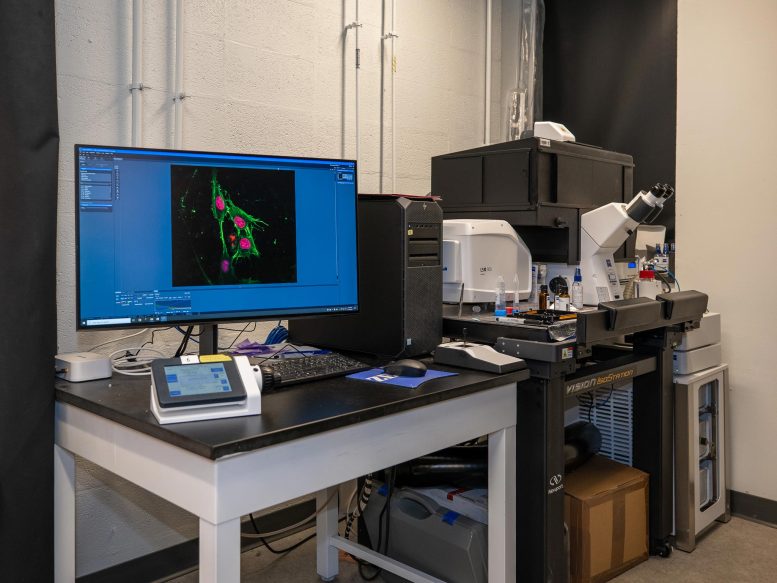
One of the first uses for this new method is studying chromatin. These tiny structures, about 100 nanometers in size, control gene activity and are vital for health and disease.
The AI framework could help scientists understand the epigenetic reaction rates that drive these changes. This would reveal how chromatin evolves and affects gene expression.
Vinayak believes that tracking these reaction rates during aging, cancer, or development could lead to new therapies. If these rates control how cells behave, changing them could guide cells to desired states.
The researchers think mollifier layers could also benefit other scientific fields. Many complex systems in materials science and fluid mechanics involve noisy data and complex equations. This framework offers a more stable and efficient way to uncover hidden factors in these systems.
Shenoy concluded that the goal is to move from observing complex patterns to truly understanding the rules that create them. "If you understand the rules that govern a system, you now have the possibility of changing it," he said.
Deep Dive & References
Mollifier Layers: Enabling Efficient High-Order Derivatives in Inverse PDE Learning - TMLR, 2026